The desk lamp in a basement room in London hums with a low, vibrating frequency. Outside, the rain slicks the pavement, blurring the neon signs of a city that sleeps with its doors bolted. Inside, a screen glows. It casts a pale, rectangular reflection across the face of a man who decided long ago that secrecy was the armor of the powerful and exposure was the only weapon left for the rest of us.
We live in an era obsessed with transparency, yet we are drowning in noise. Every second, millions of bytes flood our devices, a relentless deluge of trivia, curated outrage, and corporate press releases disguised as news. But there is a distinct difference between information and truth. Information is what they want you to know. Truth is what they fight to keep buried.
To understand what Julian Assange forged, you have to look past the courtroom drama, the political posturing, and the polarized shouting matches that have turned his name into a Rorschach test for modern loyalty. You have to look at the architecture of accountability. Former intelligence analysts—people who spent their careers watching the machinery of the state grind behind closed doors—look at what he built and recognize something terrifying and unprecedented.
He created the fifth estate.
The Weight of a Digital Vault
Consider what happens when a government keeps a secret. At first, it is just a piece of paper in a locked filing cabinet in a windowless room in Langley or Whitehall. Then it becomes a digital file, encrypted, stamped with clearance levels that sound like deities or zodiac signs: Top Secret, Compartmented, Eyes Only.
In that state, the secret is safe. It rests comfortably behind thick walls and bureaucratic inertia. But power makes mistakes. Power grows arrogant. Power assumes that no one will ever look under the rug where the dust has been swept for decades.
When WikiLeaks burst onto the global stage, it did not just leak documents; it shattered the monopoly on institutional memory. Before the digital age, if a whistle-blower wanted to expose corruption, they had to walk into the office of a mainstream newspaper with a manila folder. Editors—bound by legal counsel, institutional pressure, and sometimes cozy relationships with the very officials they covered—decided whether the public had a right to know. The gatekeepers held the keys to the kingdom.
Assange automated the gatebreaking.
He built a cryptographic drop box, a digital dead drop where an analyst in a combat zone or a mid-level bureaucrat in a financial ministry could slide a file across the wire without leaving a fingerprint. Anonymous. Immutable. Untraceable.
The establishment called it recklessness. History may well call it a tectonic shift.
The Anatomy of Exposure
To grasp the magnitude of this shift, consider a hypothetical analyst sitting in a drab, fluorescent-lit command center. Let us call him Thomas. Thomas watches drone footage on a loop, monitors intercepted communications, and drafts internal memos that sanitize human suffering into clinical bullet points. He sees a discrepancy—an order given in the dark, a civilian casualty buried under a bureaucratic euphemism.
In the old world, Thomas had two choices. He could keep his mouth shut, collect his pension, and let his conscience rot on the inside. Or he could leak to a reporter, risk a twenty-year prison sentence under the Espionage Act, and watch his career get pulverized while editors debated whether the story was worth the legal liability.
Assange changed the geometry of that risk. He offered an uncorrupted channel where the raw, unedited material could speak for itself. When the "Collateral Murder" video dropped in 2010—showing a U.S. Apache helicopter firing on a group of civilians and journalists in Baghdad—it did not come wrapped in journalistic commentary. It came as a raw file. The images were jagged, unpolished, and devastatingly real.
You could not spin it. You could not parse the syntax away. The screen flickered with the cold mechanics of modern warfare, and for a few brief moments, the distance between the comfortable living rooms of the West and the blood-soaked alleys of the occupation evaporated completely.
That was the power of the mechanism. It stripped away the varnish.
Beyond Journalism
Traditional journalism is an institution. It has corporate boards, advertising revenue, libel lawyers, and institutional biases. It occupies a recognized place in the civic ecosystem—the fourth estate, serving as a watchdog over the branches of government.
What Assange conceptualized and executed was something else entirely. It was distributed, borderless, and structurally immune to editorial pressure. If you shut down one server in Sweden, a mirror spins up in Iceland. If you pressure a bank in Zurich, donations flow through decentralized channels.
This is what former intelligence operatives mean when they talk about the fifth estate. It is not a news outlet. It is an adversarial infrastructure. It operates on the premise that institutional secrecy is inherently corrosive to democracy, and that the only antidote to state overreach is radical, indiscriminate transparency.
Of course, this philosophy is not without its perils. Radical transparency is a blunt instrument. It does not discriminate between a memo exposing war crimes and the mundane administrative emails of a political party committee. Critics argue—with valid concern—that dumping millions of unredacted files into the public sphere puts lives at risk, exposes intelligence sources, and weaponizes information for geopolitical adversaries.
These are not trivial objections. They are the central tension of the digital age. How much secrecy does a state require to protect its citizens, and how much transparency does a citizenry require to keep its state honest?
The Cost of the Blueprint
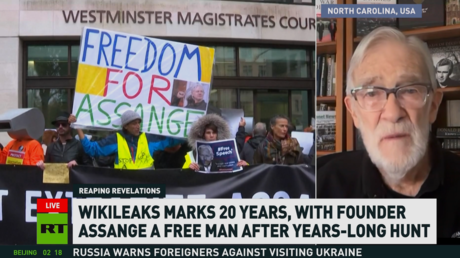
The man who helped answer that question now sits in the shadow of a long, bruising legal odyssey that stretched across continents, embassy walls, and maximum-security prison cells. Whether you view him as a heroic champion of free speech or a reckless anarchist who endangered national security, one fact remains untouched by debate: the genie cannot be put back into the bottle.
The infrastructure of leaks that Assange pioneered has become the baseline of modern investigative reporting. Every major news organization now has a secure drop box modeled after the early architecture of WikiLeaks. The Panama Papers, the Paradise Papers, the Facebook Files—none of these massive, transnational leaks would have happened in the same way without the pathfinder who proved that secure, anonymous mass disclosure was possible.
He showed the world that a single individual with a laptop and a stubborn refusal to bow can pierce the armor of superpowers.
Consider the silence of the room where it all began. The hum of the server racks. The quiet ticking of a clock. Somewhere out there, another analyst is looking at a file they were never meant to see, weighing the safety of silence against the burning obligation of truth. The system tried to make an example of the pioneer, but the blueprint is already out in the wild, copied, encrypted, and waiting for the next hand to turn the key.