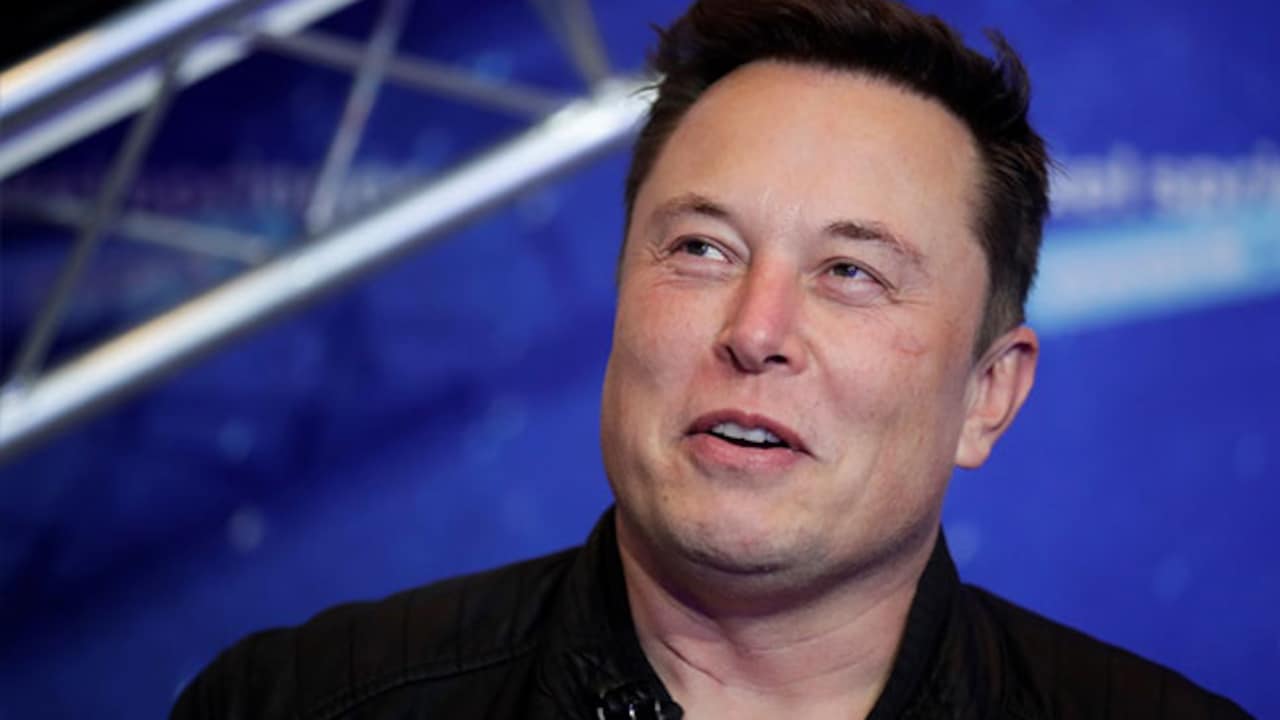
The desk is clean. Too clean. In the quiet hours before the morning markets open in Santa Clara, the glow of a dozen monitors casts a pale, spectral blue across a room where the rules of the future are being written. Jensen Huang wears his signature leather jacket even when the cameras are off. It is a kind of armor. A statement that the man inside the machine is not just an engineer, but something closer to a rock star of silicon.
And right now, the rock star is telling us to put down the lawbooks.
When the chief executive of Nvidia stands up to declare that artificial intelligence does not need a new scaffolding of federal statutes, it is easy to hear the sound of a tollbooth operator shouting that traffic is moving just fine. After all, the company he built from a garage project into a trillion-dollar titan makes the pickaxes for this modern gold rush. Every graphics processing unit humming in a subterranean data center, every rack of chips chewing through billions of parameters, is a brick in the empire he helped erect.
To ask for regulation when you own the foundry is to ask for a speed limit on a highway where you sell the sports cars.
Yet, reducing his argument to mere corporate self-interest misses the darker, more tangled reality of what is actually happening inside the code. The truth is stranger, and far more urgent. He is not entirely wrong about the laws.
Consider what a law does. A law is a fence. It is a static line drawn in the dirt by lawmakers who often have to ask their grandchildren how to clear their browser cache, attempting to corral a force that reinvents itself every four months. When you pass a statute governing a moving target, you usually end up binding the hands of the sculptors while leaving the vandals completely untouched. A heavy-handed compliance regime doesn't stop malicious code from being compiled in a basement in Bucharest; it just ensures that small startups in Austin or Berlin drown in legal fees before they can write their first competitive algorithm.
We have lived this script before.
Think back to the dawn of the commercial internet. In the mid-nineteen-nineties, politicians panicked. They looked at the wild, chaotic expanse of Usenet groups, early chat rooms, and embryonic web portals and felt the primal urge that every governing body feels when faced with the unknown: they wanted to rope it, brand it, and cage it. If they had succeeded—if they had clamped down with heavy, preemptive utility-style regulations—the modern web of open-source collaboration, bootstrapped innovation, and decentralized voice would have been strangled in its crib.
Instead, we got Section 230 of the Communications Decency Act—a clumsy, imperfect shield, but one that gave the infant ecosystem room to breathe and make terrible mistakes.
So when the voice from Nvidia argues that existing product liability laws, intellectual property frameworks, and safety standards are already sufficient to handle the fallout of artificial intelligence, there is a historical echo there. If a self-driving car crashes, tort law exists. If an algorithm defames someone, libel law exists. If software leaks trade secrets, corporate espionage statutes apply. Why invent an entirely new legislative apparatus for every new shade of electricity?
But here is where the analogy breaks down, and where the silence in the Santa Clara boardroom grows deafening.
The internet was a medium of human communication. Artificial intelligence is an engine of human replacement.
When you type a prompt into an LLM and watch a coherent, beautifully structured essay materialize in three seconds, you are not watching a printing press spin faster. You are watching the externalization of human cognition. You are taking the accumulated literary, artistic, and scientific output of a thousand generations, compressing it into multidimensional vector spaces, and letting a probabilistic engine spin out facsimiles that feel dangerously, hauntingly alive.
The stakes are no longer just about data privacy or network neutrality. They are about the ownership of thought itself.
Walk through a design studio in downtown Seattle or a financial bullpen in lower Manhattan today. The mood is not the manic, champagne-soaked exuberance of the dot-com boom. It is a quiet, heavy suspension. People are looking at their monitors with the blank expression of workers standing outside a factory gate that has suddenly locked itself from the inside.
A mid-level copywriter watches a neural net generate fifty distinct campaign variations in the time it takes to sip an espresso. A radiologist looks at an imaging model that spots micro-fractures invisible to the human eye, processing ten thousand scans an hour without blinking, without coffee breaks, without burnout.
This is the invisible crisis that no corporate press release captures. The debate over AI regulation isn't really about whether Nvidia can sell more H100 chips or whether compliance officers will have job security. It is about the psychological shock of obsolescence.
When Jensen Huang argues that market forces and existing safety guardrails are enough, he is speaking from the perspective of the machine architect. To the architect, the system is a triumph of scaling laws, transformer blocks, and tensor cores. If a model hallucinates, you fine-tune it with reinforcement learning from human feedback. If a data center draws too much power, you build a nuclear microreactor next door. Every problem has a technical fix. Every bottleneck can be brute-forced with more compute.
Human beings, however, cannot be fine-tuned with human feedback. We do not scale with more parameter counts.
We break.
We break when the economic floor drops out from under entire professions that took decades to master. We break when the lines between what is real and what is synthetically conjured become so blurred that a teenager can no longer trust a voicemail from their own mother. We break when trust—the invisible social glue that holds democracies, contracts, and friendships together—is dissolved in an acid bath of deepfakes and hyper-personalized propaganda.
Saying we don't need new laws because the free market will sort it out is like telling a community living downstream from a chemical plant that they don't need environmental regulations because the company promises to test the water themselves.
Yet, the counter-argument remains stubborn. If Congress steps in tomorrow with a comprehensive, sweeping Artificial Intelligence Act, who writes it? The lobbyists from the very tech giants who can afford a hundred lawyers to navigate the compliance maze. Regulation, in the real world, is almost always captured by incumbents. A startup cannot afford a compliance department the size of a university faculty. By fighting off new laws, big tech keeps the door open—even if they claim it's for the public good, while secretly knowing that a heavy regulatory moat is the ultimate weapon to crush upstart competitors.
It is a devil's bargain.
On one side, you have the chaotic, frictionless expansion of silicon intelligence, concentrating power into the hands of a half-dozen trillion-dollar monopolies who dictate the terms of our intellectual future. On the other side, you have the paralyzing grip of bureaucratic oversight, where innovation dies in committee rooms while other nations—less burdened by ethical hand-wringing or democratic process—race ahead to claim dominance over the next epoch of human history.
There is no clean exit from this dilemma.
We are standing at the edge of a cliff, arguing about whether we need a fence while the ground beneath our boots is already turning to glass. The Nvidia boss looks out over the valley of accelerators and sees a glorious, frictionless frontier of limitless productivity. The rest of us look at our children's textbooks, our fading career paths, and the flickering light of our screens, wondering who we are supposed to become when the machine can do everything we ever learned how to do, only faster, cheaper, and without ever getting tired.
The laws we write—or choose not to write—will not stop the math. The matrices will multiply. The parameters will grow. The models will crawl deeper into the architecture of daily life whether the regulators nod their assent or not.
The real question is not whether we need new laws to govern the code.
It is whether we will still recognize ourselves when the story is finished.