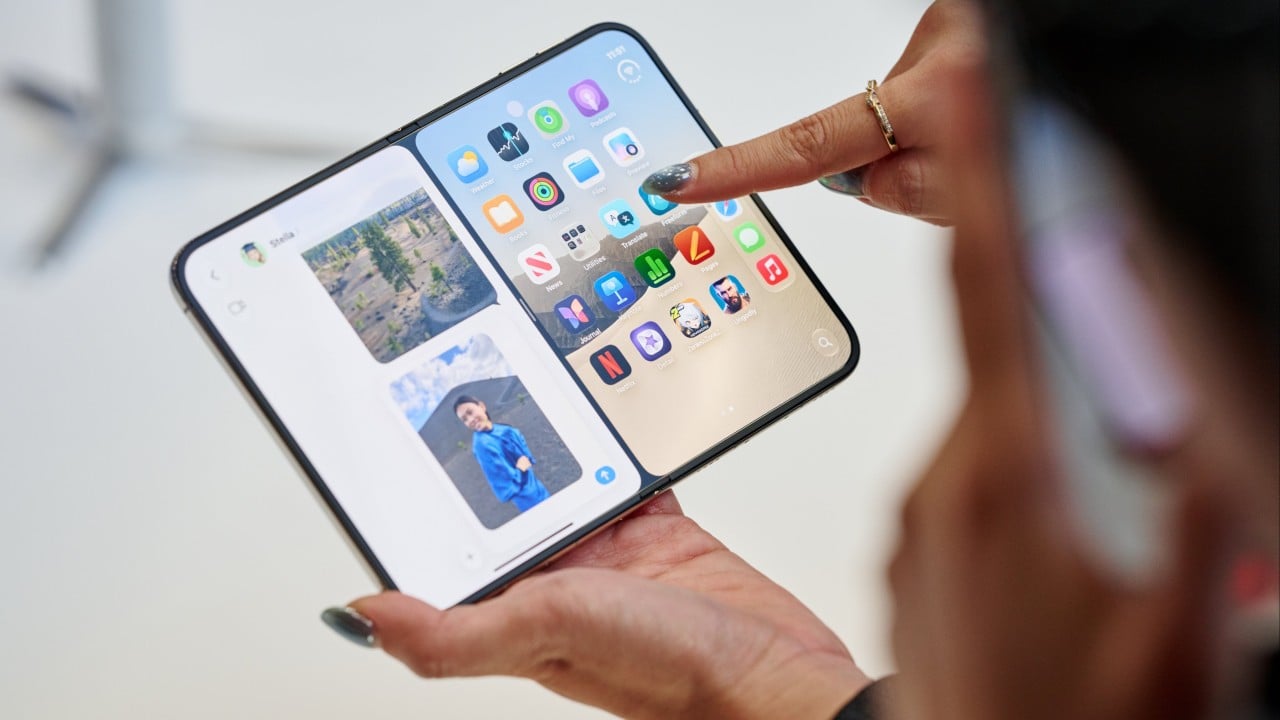
Apple finally broke its silence on foldable hardware by introducing the iPhone Duo. Cupertino waited years while Samsung, Huawei, and others ironed out early hardware wrinkles. Now, Apple is walking straight into the most brutal smartphone arena on the planet. China is home to the world's most mature foldable market, and local giants aren't going to roll out the red carpet.
If you think brand loyalty alone will hand Apple an easy victory in Beijing or Shanghai, you're missing how fast domestic competitors move. Let's look at the actual battlefield.
The Local Titan Holds the High Ground
Huawei doesn't just sell foldables in China; it practically owns the category. Market data shows Huawei commands a massive chunk of local foldable shipments, hovering near sixty to seventy percent. Just days before Apple took the wraps off the iPhone Duo, Huawei dropped its Mate XT2 tri-fold device, pricing it near 19,999 yuan.
Chinese consumers are used to bleeding-edge hardware iterations. While Apple is just now releasing its first folding book-style device with a 5.4-inch outer screen and a 7.6-inch interior panel, local brands are already on their third or fourth generation of slim hinges, multi-folding screens, and massive battery integrations. Apple is arriving late to a party where everyone else knows the host's name.
Regulatory Walls and Missing Software
Hardware is only half the battle. Software ecosystems dictate daily usability, and Apple faces a massive regulatory roadblock in mainland China.
Right now, Apple Intelligence and localized AI features aren't cleared for use on new iPhones in mainland China. Buyers dropping upwards of 15,999 yuan ($2,250) on an iPhone Duo won't get the core artificial intelligence tools marketed in the West. Meanwhile, local competitors bake deeply integrated AI assistants and customized multitasking software directly into their devices from day one.
Fortunately, a major operational hurdle cleared just in time. China's three major telecom operators—China Mobile, China Telecom, and China Unicom—officially confirmed eSIM support on launch day. Without local carrier backing for an eSIM-only device, Apple would have been dead on arrival. Even so, running a luxury foldable without native AI leaves a glaring feature gap compared to domestic flagships.
Can Apple's Brand Power Win Over Skeptics?
Price tags in the ultra-premium tier rarely deter hardcore Apple fans, but the Chinese market behaves differently than it did five years ago. Domestic pride is high, and brands like Huawei, Xiaomi, and Honor offer serious hardware craftsmanship.
Apple's strategy relies on refined execution. The iPhone Duo bypasses the awkward "two phones taped together" feel of early generation foldables by focusing on a passport-like form factor, minimal crease reduction, and Apple Pencil compatibility. Analysts expect Apple to secure a decent portion of global niche shipments simply because millions of iOS users refuse to switch operating systems.
Yet, translating that loyalty into dominance in China requires more than a shiny hinge. Local buyers demand bleeding-edge innovation, local software integration, and aggressive value propositions. Apple is playing catch-up in a race where the frontrunners are already sprinting.
If you are eyeing the new foldable market, look past the marketing hype. Weigh whether a high-end hardware fold justifies the cost when software limitations restrict your daily experience.

