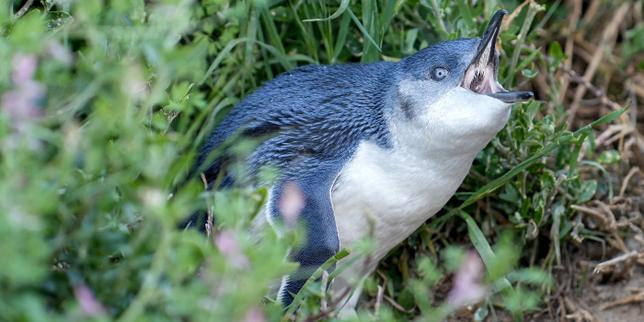
Wildlife immunization at population scale is an operational failure by default. Free-ranging animals defy spatial containment, evade repeated capture, and impose prohibitive labor costs that break municipal budgets before a fraction of a target cohort receives protection. When the state of Victoria initiated a targeted intervention to hand-vaccinate five thousand wild little penguins against the H5N1 avian influenza strain across Phillip Island and St Kilda, it bypassed traditional wildlife management bottlenecks through a single variable: absolute behavioral predictability.
This initiative represents the largest wild bird vaccination deployment ever attempted. Deconstructing its architecture reveals the underlying mechanics of high-stakes epidemiological triage, exposing the exact operational constraints, biological dependencies, and economic trade-offs that dictate modern conservation logistics.
The Behavioral Arbitrage of Targeted Populations
The core constraint in wildlife disease management is capture friction. Locating, restraining, and releasing individual animals introduces labor expenditures that scale exponentially with population dispersion. Most avian species present high mobility vectors, rendering prophylactic injection campaigns mathematically impossible outside of controlled captive environments.
Little penguins, or Eudyptula minor, present a rare operational anomaly. Their biological lifecycle enforces three strict physical constraints that convert an intractable free-ranging problem into a localized pipeline:
- Spatial concentration: Colonies aggregate in dense coastal rookeries, with Phillip Island alone supporting an estimated forty thousand birds.
- Diurnal rhythmicity: Individuals forage at sea during daylight hours and return uniformly to fixed subterranean burrows after sunset.
- Flightlessness: Complete loss of aerial locomotion eliminates vertical escape vectors, bounding physical retrieval zones strictly to shoreline interfaces.
Wildlife officers exploit this temporal bottleneck by establishing intercept funnels along established coastal pathways. As the cohort returns from daily marine foraging, teams process individuals within a narrow nocturnal window. This behavioral fixedness functions as an unpaid logistics engine, reducing the cost per unit of capture close to the theoretical minimum for wild fauna.
The Two-Dose Operational Bottleneck and Immunological Reality
Deploying a vaccine in a controlled clinical trial differs vastly from administering biologics in a marine environment. The H5N1 vaccine protocol requires a two-dose series separated by a multi-week interval to stimulate adequate memory B-cell proliferation and sustained antibody titers.
This dual-administration requirement squares the operational complexity of the campaign. Wildlife teams cannot treat the deployment as a single-pass event. Every targeted penguin must be captured, injected, microchipped for longitudinal tracking, and released, then recaptured weeks later to receive the booster shot.
Microchipping serves as the primary data integrity mechanism. Without persistent digital identification, duplicate dosing of aggressive individuals and omission of elusive specimens would distort herd immunity thresholds. The microchip transforms an anonymous mass into a monitored cohort, allowing epidemiologists to measure exact coverage percentages against the five-thousand-bird threshold.
However, immunological protection is probabilistic rather than absolute. Vaccination suppresses viral replication efficiency and lowers mortality rates; it does not construct an impenetrable physiological barrier. Government epidemiological modeling from prior threat assessments indicated that a worst-case H5N1 infiltration could decimate between eight thousand and sixteen thousand individuals on Phillip Island alone. The intervention does not seek zero mortality; its objective is damping transmission velocity to preserve core breeding stock above the extinction threshold.
The Timing Asymmetry of Epizootic Intervention
Epidemiological interventions are strictly bounded by temporal thresholds. If prophylaxis begins after the pathogen achieves high prevalence within a closed colony, the intervention yields diminishing returns. The detection of H5N1 mortalities on Phillip Island immediately preceding the rollout signals a narrow margin of error.
When a virus outpaces logistically constrained vaccine delivery, the intervention shifts from prevention to damage mitigation. The operational velocity of catching five thousand birds twice is constrained by manual handling limits per technician hour. If viral transmission rates exceed the processing capacity of the wildlife teams, natural infection outruns artificial immunization. This dynamic introduces a harsh economic reality: conservation capital is frequently deployed reactively rather than proactively, driven by political urgency rather than optimal epidemiological scheduling.
The Macroeconomic Externalities of Regional Biosecurity
The justification for protecting Eudyptula minor extends beyond intrinsic ecological value into regional economic stabilization. Phillip Island operates as an anchor for wildlife tourism, characterized by the nightly penguin parade that draws hundreds of thousands of annual visitors. A localized epizootic crash directly threatens regional tourism revenue, where a significant percentage of commercial enterprise ties directly to marine wildlife visibility.
Concurrently, the emergence of avian influenza within mammalian vectors—evidenced by recent detections in Australian seals—elevates the ecological stakes from avian conservation to cross-species biosecurity. The penguin vaccination campaign functions as an upstream firewall. By suppressing viral load in high-density bird populations, the state reduces the frequency of viral shedding into the shared coastal ecosystem, mitigating the probability of spillover events into terrestrial mammals and commercial livestock corridors.
Strategic Resource Allocation
Deploy finite veterinary stockpiles to high-density, highly accessible sentinel colonies to maximize immunological coverage per labor hour, while accepting baseline mortality risks in dispersed, unmanageable populations where capture friction exceeds ecological yield.