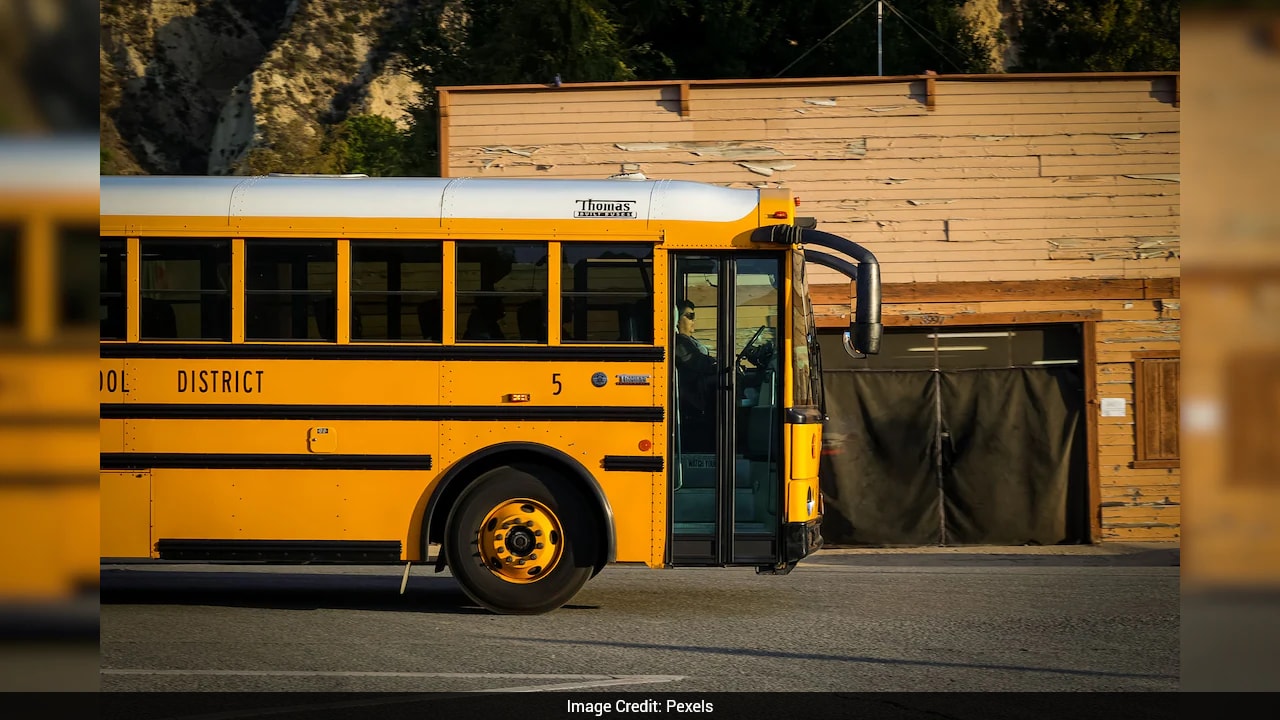
Transporting children through public or contracted transit systems is a high-stakes logistics operation where a single point of failure can trigger a cascading crisis. The recurring phenomenon of children left unattended inside transit vehicles—exemplified by recent events involving a young student falling asleep and waking up alone at an empty bus depot—is frequently categorized as a mere lapse in human attention. This reductionist view obscures the structural vulnerabilities inherent in the student transport supply chain. Safe student transit is not sustained by vigilance alone; it requires fault-tolerant operational architecture, deterministic compliance protocols, and verifiable hand-off mechanisms. When a child remains undetected on a vehicle after the final route leg, the failure points trace directly back to broken feedback loops, deficient process engineering, and misaligned incentives within transportation management.
The Operational Anatomy of Route Completion
The lifecycle of a standard school bus route consists of three discrete operational phases: inbound transit, depot return, and final parking. Each phase introduces specific operational friction points that increase the probability of an unobserved passenger remaining on board.
Inbound transit functions under time-compressed constraints. Drivers navigate variable traffic patterns, adhere to rigid bell schedules, and manage behavioral variables within a confined cabin space. The cognitive load placed on a single operator during peak morning hours is substantial. As the vehicle nears its final destination—typically a school drop-off zone or a centralized maintenance depot—the primary objective shifts from passenger management to schedule adherence and parking execution.
The transition from route execution to depot parking introduces a dangerous operational blind spot. Once the final passenger is scheduled to disembark, the operating environment changes from dynamic passenger transport to static vehicle positioning. Human error research demonstrates that routine tasks performed in repetitive environments induce a phenomenon known as tunnel vision or habituation. If a driver expects an empty bus because the manifest indicates all stops are complete, visual confirmation bias often overrides actual sensory input. The driver looks down the aisle, sees what they expect to see—an empty floor—and processes the scene through the lens of completion rather than verification.
[Route Termination] --> [Driver Expectation: Empty Cabin] --> [Confirmation Bias] --> [Omission of Physical Sweep]
This cognitive shortcut is the primary driver behind post-trip abandonment incidents. Mitigating this risk requires stripping discretion away from the operator. Security protocols cannot rely on voluntary compliance or visual glances from the driver's seat.
The Failure of Point Solutions and Human-Centric Oversight
Organizations managing student transit often attempt to resolve abandonment incidents through punitive measures or vague policy mandates. Directives instructing drivers to "check the back of the bus" fail because they lack deterministic validation. A mandate without a mechanism for enforcement is merely a suggestion.
To understand why traditional oversight fails, we must examine the cost function of transportation management. School districts and private contractors operate under tight financial margins. Labor shortages, high turnover rates, and competitive wage pressures lead to compressed training cycles. When onboarding is expedited, procedural compliance training is often diluted. Drivers absorb the operational mechanics of vehicle handling while failing to internalize fault-tolerant safety protocols.
Furthermore, accountability structures are frequently diffused across multiple entities. Responsibility is split between the school district administration, the contracted bus provider, route dispatchers, and individual drivers. When an incident occurs, this fragmentation creates a diffusion of responsibility where every stakeholder can point to another's procedural gap. Establishing genuine accountability requires consolidating oversight into a single operational ledger where every route termination is digitally signed off before a vehicle can be powered down.
Technological Intervention and The Redundancy Imperative
Relying on human memory in a high-fatigue environment is an engineering anti-pattern. High-reliability organizations—such as aviation and nuclear power—manage safety not by expecting perfection from individuals, but by implementing redundant, error-tolerant systems. Student transport must adopt this exact paradigm shift.
Technological countermeasures fall into two distinct categories: active detection and mandatory verification.
Active detection systems utilize hardware such as motion sensors, thermal imaging, or infrared arrays installed throughout the cabin interior. While effective in localized scenarios, these systems face environmental vulnerabilities, including dust accumulation, vandalism, and hardware degradation over time.
Mandatory verification systems—often referred to as electronic child check reminders—approach the problem through behavioral forcing functions. A standard implementation requires the driver to walk to the rear of the vehicle to physically deactivate a switch or scan a tag before exiting. If the switch is not triggered within a specified time window after ignition shutdown, an external alarm engages. This mechanism forces physical traversal of the cabin space, neutralizing the confirmation bias that occurs when looking down the aisle from the driver seat.
+---------------------------+     +-------------------------------+     +--------------------------------+
| Ignition Power Deactivated| --> | Rear-Cabin Timer Initiated    | --> | Driver Must Press Reset Switch |
+---------------------------+     +-------------------------------+     +--------------------------------+
                                                                                       |
                                                                                       v
                                                 [Failure to Reset] <------------------+
                                                          |
                                                          v
                                        [External Siren / Dispatch Alert]
The economic argument against retrofitting fleets with these redundant systems collapses under basic liability analysis. The financial cost of installing hardware-backed verification systems is negligible when weighed against the catastrophic cost of operational failure, legal liability, and reputational damage.
Systemic Redesign for Risk Mitigation
Eliminating transport vulnerabilities requires a transition from reactive compliance to proactive risk engineering. Fleet operators must dismantle the traditional assumptions governing route closure and rebuild their operational frameworks around three core pillars: automation of verification, reduction of cognitive load, and absolute traceability of route status.
Operational protocols must mandate that no vehicle is cleared for parking without a cryptographic or hardware-verified sweep log transmitted to a central dispatch dashboard. If a bus arrives at the depot without a corresponding sweep confirmation, the dispatch system must trigger an automated escalation workflow, contacting both the driver and the depot supervisor immediately.
Training programs must also evolve. Instead of focusing exclusively on defensive driving and student management, training modules should incorporate human factors engineering principles. Operators must be explicitly educated on how fatigue, routine habituation, and visual confirmation bias distort spatial awareness at the end of a shift.
Ultimately, safety in student transit is an engineering problem, not a moral one. Blaming individual operators for systemic design flaws guarantees recurrence. The path forward requires eliminating single points of failure through hardware enforcement, closing communication loops between field operators and central dispatch, and treating every completed route as an unverified hazard until proven otherwise through mandatory operational telemetry.
:max_bytes(150000):strip_icc()/ar-American-Cheese-taste-test-horizon-4x3-54cc339550cd44b9a818c17bdfd5428d.jpg)