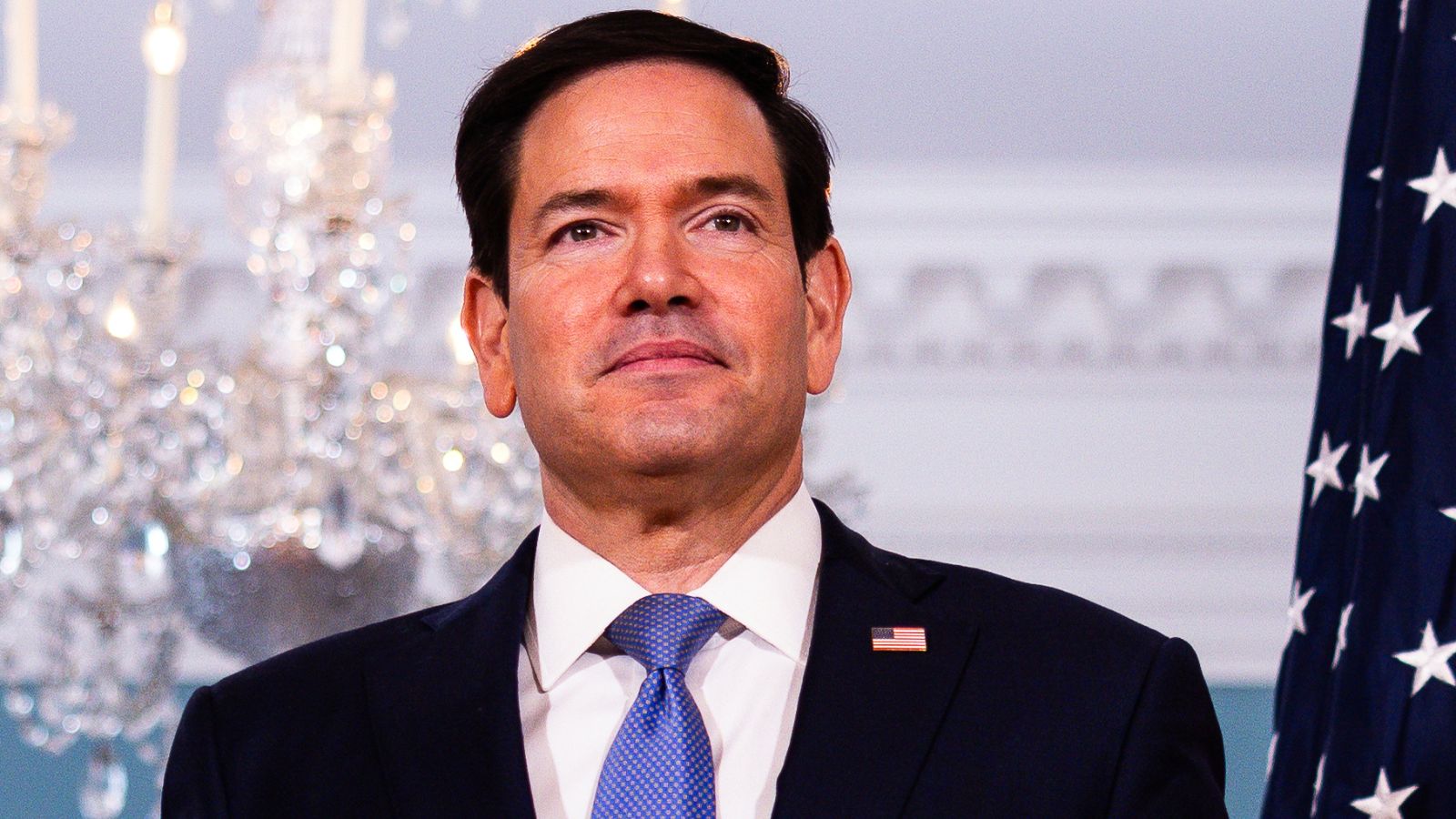
Political adaptation to systemic environmental collapse follows a predictable path of tactical avoidance. When leaders transition from regional executives to national administrators, their communicative priorities shift away from long-term horizon threats toward immediate volatility mitigation. Examining the current posture of Prime Minister Andy Burnham reveals a striking divergence from his former municipal carbon targets in Manchester to a marked conversational reticence regarding the climate crisis at the national level. This silence is not an accidental oversight or a simple communication failure; it represents a rationalized risk management strategy dictated by institutional constraints, electoral calculus, and structural institutional unpreparedness.
Evaluating this shift requires moving past normative complaints about political courage and instead analyzing the underlying mechanics of statecraft under pressure. Three primary variables govern why national leaders suppress climate dialogue during compounding environmental extremes: the allocation cost of political capital, the structural vulnerability of public infrastructure, and the erosion of cross-party consensus.
The Allocation Cost of Political Capital
In executive governance, attention is a finite resource. Every unit of political capital expended on a contentious horizon risk subtracts from the capital available to manage immediate economic friction.
National administrations operate under severe bandwidth limitations. When an executive steps into office amid systemic cost-of-living pressures, housing deficits, and healthcare strains, the administrative machinery prioritizes high-velocity feedback loops. Climate adaptation and mitigation policies inherently feature high front-loaded costs and delayed return horizons.
- The Electoral Discount Rate: Voters and opposition parties heavily discount benefits that materialize outside a standard legislative cycle.
- The Salience Asymmetry: Immediate utility shocks—such as energy price spikes or supply chain interruptions—trigger immediate electoral punishment, whereas chronic environmental degradation registers as an ambient background condition until a threshold event occurs.
By keeping climate policy out of the primary conversational loop, an administration reduces the surface area for ideological friction. Discussing systemic climate collapse requires acknowledging the inadequacy of current fiscal baselines, which immediately forces difficult conversations about taxation, resource rationing, and industrial transformation. Silence functions as a temporary shield against these trade-offs.
The Infrastructure Deficit and Institutional Exposure
A central driver of political reticence is the widening gap between rhetorical ambition and operational capacity. Leaders avoid drawing attention to systemic vulnerabilities when the state apparatus lacks the structural readiness to address them.
Decades of underinvestment have left public assets exposed to thermal extremes and hydrological volatility. The physical manifestations of this deficit are severe:
- Critical institutional nodes, including healthcare facilities and educational structures, routinely exceed safe internal temperature thresholds during summer heat events.
- Regulatory and environmental protection agencies operate with skeleton crews dedicated to long-term adaptation planning.
- Supply chain vulnerabilities in domestic agriculture face compounding pressures from topsoil degradation and erratic precipitation.
When a government inherits an institutional stock that is physically incapable of withstanding baseline climatic shifts, open acknowledgment of the crisis becomes an indictment of state capacity. To speak candidly about climate chaos without the fiscal mechanisms to insulate the population is to invite immediate vulnerability. Silence serves as a defense mechanism for an administrative state that has deferred structural maintenance for generations.
The Fracture of the Cross-Party Consensus
Political communication on environmental policy relies heavily on stable elite consensus. For decades, the structural framework of net-zero targets and carbon reduction timelines enjoyed broad, if superficial, bipartisan alignment in the United Kingdom. That consensus has fractured.
The breakdown of elite alignment has introduced high variance into climate discourse. Right-wing populist factions and opposition elements have weaponized environmental mandates, framing decarbonization policies as culturally elite impositions that penalize working-class stability. This dynamic transforms technical policy into a cultural flashpoint.
When a consensus collapses into polarization, the risk calculus for executive leadership shifts from proactive optimization to defensive containment. Engaging with the climate crisis on systemic terms risks activating a hostile opposition playbook that successfully frames green transitions as inflationary or regressive. Rather than stepping into a manufactured culture war over clean air zones or industrial phase-outs, a risk-averse administration opts for strategic omission.
The Strategic Path Forward
Overcoming this communicative paralysis requires altering the institutional cost function of climate action. Leaders will not voluntarily court political backlash without structural cover.
The mechanism for breaking the silence involves decoupling long-term adaptation from short-term electoral vulnerability through binding institutional delegation. Independent fiscal and environmental watchdogs must be granted statutory authority to mandate adaptation spending outside the annual budgetary wrestling match. Furthermore, climate interventions must be structurally re-engineered as direct improvements to material living standards—such as localized thermal retrofitting that reduces baseline energy expenditure—rather than abstract global targets.
Until the structural incentives of executive office reward long-term horizon planning over immediate volatility management, administrative silence in the face of environmental extremes will remain the default rational strategy.