Paper feels different when it is the only thing standing between you and an open door. It is thin, often cool to the touch, printed with official stamps and bureaucratic language that looks heavy enough to hold weight. But paper has no gravity. It can blow away in a single gust of wind.
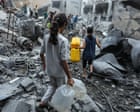
Consider a hypothetical woman named Layla, sitting in a room in Deir al-Balah where the dust never quite settles on the windowsill. Outside, the world is a compressed rhythm of distant concussions and the low, constant hum of surveillance drones. Inside, her phone screen glows with a fragment of news translated into Arabic: a new pathway, a designated corridor of safety, a policy whispered across parliamentary desks thousands of miles away in London. For a fraction of a second, the air in the room feels different. It feels breathable.
That is what hope does to a person living under siege. It alters the chemistry of the lungs.
Yet hope, when manufactured from afar by governments seeking to project benevolence without incurring obligation, is a dangerous currency. When the UK government announced frameworks intended to address the plight of refugees and create safe routes for those displaced from conflict zones like Gaza, the announcement was met with a complex mixture of disbelief and desperate longing. Headlines heralded humanitarian progress. Officials spoke of compassion and structured pathways.
Then came the fine print.
The reality of immigration policy is rarely found in the press release. It lives in the friction between rhetoric and mechanics. To understand why critics accused the British administration of offering an illusion rather than a lifeline, you have to look past the ministerial podium and examine the architecture of the system itself.
Borders are not merely geographical lines on a map; they are filters designed to let very little through. When a humanitarian crisis unfolds at a scale that overwhelms regional infrastructure, nations often respond with what policy analysts call gesture politics. They design schemes with impossibly narrow apertures. They announce safe routes that require documents which can no longer be issued, biometric data that cannot be collected in active combat zones, and sponsorships that demand resources ordinary civilians displaced by war simply do not possess.
It is akin to throwing a life preserver to a drowning swimmer, but attaching it to a ten-ton anchor on the seabed.
To call this a safe route is to misunderstand the geometry of survival. In places like Gaza, civil registries have been damaged or destroyed. Embassies are closed. Consular services do not exist. To apply for a visa under standard bureaucratic protocols requires movement—movement across closed checkpoints, through active security perimeters, and into physical offices that have long since ceased to function.
When people trapped in a war zone are told that a legal route exists, but that accessing it requires navigating a labyrinth of red tape that assumes a baseline of stability, the message sent is contradictory. It says: You are welcome, provided you can achieve the impossible.
This disconnect is not accidental. It is the product of a persistent tension in modern governance: the desire to satisfy domestic legal and moral obligations to international human rights standards while simultaneously maintaining an intensely restrictive domestic migration posture. Governments craft policies that look humane from the outside, viewed through the soft lens of television broadcasts, while constructing administrative barriers so dense that they function as functional bans.
The psychological toll of this dynamic is rarely quantified in policy papers. False hope is not a neutral error; it is an active weight. When a family spends days attempting to load a digital application over an intermittent internet connection powered by a failing generator, clinging to the belief that a distant government might recognize their humanity, they are expending emotional and physical energy that could otherwise be directed toward immediate survival. Every rejected application, every broken link, every automated rejection email serves as a quiet devastation.
It chips away at the baseline of endurance.
History is filled with instances where institutional empathy was measured by volume rather than efficacy. We create frameworks that prioritize administrative neatness over human rescue. We demand that victims of catastrophe conform to the administrative neatness of office workers in peaceful capitals.
Layla does not know the parliamentary terminology for restrictive visa caps or exclusionary eligibility criteria. She only knows that the portal is frozen, that the phone battery is at four percent, and that the sound outside is getting closer.
The distance between a policy announced in London and a reality lived in Gaza is measured not in miles, but in systemic indifference. Until nations are willing to match their humanitarian rhetoric with operational mechanisms that meet people where they actually are—rather than where it is convenient for bureaucrats to process them—these safe routes will remain what critics have long claimed they are.
Mirages.
They shimmer on the horizon, beautiful and distinct, promising water to those dying of thirst. But when you reach out to touch them, your hand closes on nothing at all. Just hot air, and the dry, settling dust of a promise made from a safe distance.


