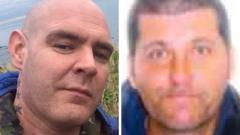
The discovery of two bodies inside a residential property on Chancellor Street in the Partick area of Glasgow shifted an initial police response from an unexplained death inquiry into a designated double murder investigation. Victims Paul Lafferty, 50, and Gary Beatson, 54, were found with severe injuries at approximately 4:40 PM on Sunday, August 16, 2026, and pronounced dead at the scene by emergency responders.
Deconstructing the operational steps taken by Police Scotland reveals how major incident teams isolate variables, manage forensic recovery windows, and structure chronological timelines during the critical initial forty-eight hours of a homicide investigation.
The Forensic Recovery Window and Crime Scene Architecture
When Police Scotland Major Investigation Teams secured the perimeter around Chancellor Street near Byres Road, they established a multi-tiered containment zone. The physical architecture of a urban residential flat presents distinct tactical hurdles for forensic pathology and trace evidence preservation.
The primary objective within the first operational cycle is the mitigation of cross-contamination. Investigators deploy protective suits and establish strict ingress and egress logs long before forensic anthropologists or pathologists enter the inner perimeter. In closed-environment settings like the Partick flat, trace evidence preservation operates under strict decay curves. DNA transfer, latent friction ridge analysis, and biological fluid degradation dictate the immediate sequencing of recovery operations.
Detectives systematically divided the location into operational sectors:
- The primary point of entry where forced entry was executed.
- The immediate vicinity of the bodies where trauma patterns intersect with bloodstain pattern analysis.
- Secondary egress routes including communal stairwells, back courts, and adjacent alleys where discarded materials or biological transfer might exist.
Outside the immediate building envelope, forensic teams executed grid searches through local drains, tree lines, and exterior street furniture. This wide-radius sweep addresses the probability of secondary deposition, where suspects discard weapons, garments, or tools during flight.
Establishing the Chronological Timeline
Detective Superintendent Cheryl Kelly, leading the inquiry, issued specific public appeals focusing on movements starting from Friday morning, August 14, at 9:00 AM through Sunday afternoon. Establishing a reliable timeline requires the synthesis of disparate digital and analog data streams.
The investigative framework relies on three parallel tracks to reconstruct the final hours of the victims:
Digital footprint mapping involves extracting telemetry data from mobile devices, local cellular tower handshakes, and Wi-Fi probe requests. This establishes device proximity and usage patterns within the flat.
CCTV canvassing requires a spatial-temporal grid of the West End of Glasgow. Investigators harvest digital video feeds from commercial enterprises along Byres Road, private residential ring cameras, and municipal traffic monitoring systems. The objective is vector analysis—determining the entry and exit vectors of all individuals who approached the target property during the seventy-two-hour window.
Witness corroboration bridges gaps where technical data fails. Door-to-door inquiries conducted along Chancellor Street and Dalcross Street serve to test the validity of digital traces against human observation, isolating anomalies such as uncharacteristic acoustic signatures or unfamiliar vehicular traffic.
Post-Mortem Mechanics and Cause-of-Death Determination
The transition of the case from unexplained deaths to a formal murder investigation hinged on the findings generated by forensic pathologists. Post-mortem examinations provide the empirical foundation required to establish the mechanism of injury, approximate time of death, and toxicology profiles.
In cases involving sharp force trauma or fatal assaults within confined spaces, pathologists analyze wound architecture to determine weapon characteristics, angle of attack, and whether defensive injuries are present on the victims. This data points directly toward behavioral aspects of the assault, differentiating between targeted execution and dynamic, disorganized struggle.
Toxicology screens run concurrently to assess the physiological state of both individuals at the time of the incident, feeding data back into the behavioral timeline constructed by the incident room.
Operational Next Phases and Investigative Bottlenecks
The progression of the Chancellor Street manhunt depends on the elimination of variables and the exploitation of forensic yields returned from the laboratory. As house-to-house operations conclude and initial CCTV logs are fully processed, the investigation enters a phase governed by database queries and informant management.
The primary bottleneck in modern homicide investigations is the scale of digital ingestion. Sifting through terabytes of closed-circuit footage and telecommunication records demands automated filtering tools paired with manual validation by trained analysts.
Police Scotland continues to process localized intelligence through non-emergency channels and direct incident lines, emphasizing that information deemed minor by the public often closes critical gaps in the evidentiary matrix. The ultimate resolution rests on aligning physical trace evidence recovered from the Partick flat with verified movements in the surrounding West End corridor.