The kitchen was supposed to be a place of warmth. Instead, it became a crime scene that defied our language.
When the news broke about the Duxbury tragedy—about three young lives extinguished in a suburban home by a mother whose mind had fractured under the crushing weight of invisible agony—the world did what it always does. It reached for a hammer. We needed a villain. We needed a saint. We desperately craved a simple, clean narrative to explain how a woman who baked birthday cakes could suddenly step across a terrifying threshold.
What we got instead was a mirror. And nobody wanted to look into it.
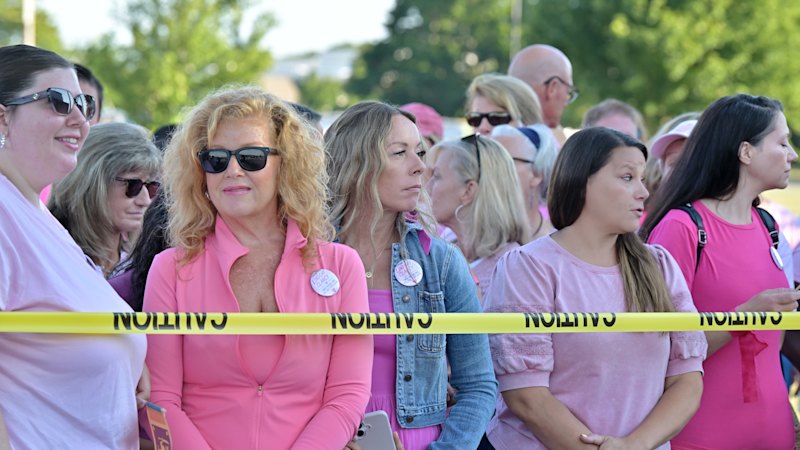
Within days, a strange and unsettling phenomenon took shape online and on the airwaves. A defense network materialized out of the static, stretching from exhausted mothers wearing pink sweatshirts in suburban Facebook groups to right-wing commentators behind glowing microphones. They called her a victim of the system. They blamed the medical establishment, the sheer brutality of modern motherhood, the callousness of a pharmaceutical industry that hands out pills like Tic Tacs and calls it healthcare.
To understand how a horrific act of filicide could become a rallying cry, you have to understand the modern ecosystem of outrage and identification.
Imagine a young mother sitting on her living room floor after her children have finally fallen asleep. The house is quiet, save for the hum of the refrigerator. Her shoulders are knotted. Her mind is a tempest of racing thoughts, sleepless nights, and an overwhelming, suffocating sense of inadequacy. She reads the headlines about Lindsay Clancy. She doesn't see a monster. She sees herself on a bad Tuesday. She sees the dark, lonely precipice where postpartum psychosis whispers that everyone would be better off without you.
That recognition is powerful. It is terrifying. And it is the emotional bedrock upon which an entire movement was built.
When millions of women whispered online that there but for the grace of God go I, they were speaking a profound, vulnerable truth about the desperate isolation of contemporary parenting. We have built a culture that demands mothers perform like corporate executives while isolated like hermits, devoid of the ancient tribal safety nets that once caught the falling. Medical experts call it postpartum depression, postpartum anxiety, or the rare, catastrophic break of postpartum psychosis. But lived experience calls it something else: a slow-motion drowning in plain sight.
Yet, as the narrative spread, it mutated.
The pink sweatshirts of sympathetic mothers rubbed shoulders with digital culture warriors looking for a new vector of institutional distrust. Right-wing podcasters seized the microphone, turning a medical tragedy into a culture war cudgel. They weren't necessarily interested in the nuances of psychotropic medication or the failure of inpatient psychiatric beds in Massachusetts. They wanted a weapon. They wanted to prove that modern institutions are corrupt, that psychiatric medicine is a poison, and that cultural elites are blind to the quiet desperation of ordinary families.
The tragedy was hijacked. The complex, agonizing reality of mental illness was flattened into a political football.
This is where the anatomy of the fracture reveals itself. We live in a society that refuses to hold two contradictory truths at the same exact time. We want our tragedies neat.
Truth the first: The children who died are gone, and their absence is an unmitigated, unforgivable horror. No explanation can resurrect them. No diagnosis can soften the finality of their empty beds.
Truth the second: The human brain is a fragile, biological organ capable of catastrophic malfunctions that can strip a person of their very identity, replacing maternal instinct with delusional terror.
When we pit these truths against each other, empathy becomes a zero-sum game. If you feel sympathy for the mother, the internet screams that you are erasing the victims. If you focus entirely on the horror of the crime, you are accused of ignoring the systemic failures of a mental health apparatus that treats mothers like disposable commodities until they snap.
Consider what happens when we stop listening to the medical professionals and start listening exclusively to the loudest voices in the algorithmic room.
During the trial and the public fallout, forensic psychiatrists tried to explain the mechanics of homicidal ideation driven by severe psychiatric illness. They spoke of auditory hallucinations, of catatonia, of a mind so warped by over-medication and severe depression that reality dissolved entirely. But medical jargon doesn't fit on a Twitter graphic. It doesn't generate clicks. Nuance is boring. Outrage is addictive.
And so the "army" grew.
It was never a unified militia. It was a chaotic coalition of the grieving, the ideological, the deeply frightened, and the chronically online. For the mothers in pink, the movement was a desperate plea for recognition: See us before we break. For the commentators, it was content. It was engagement metrics. It was another brick in the wall of institutional skepticism.
We are left standing in the wreckage of this discourse, wondering how we lost the plot so completely.
The real danger isn't that people took sides. The danger is that we used a mother's psychotic break to validate our own preexisting biases. We looked at a horrific domestic tragedy and asked, How does this serve my argument? instead of asking, How do we keep this from ever happening again?
The kitchen remains quiet now. The digital noise has faded to a dull roar, replaced by the next outrage, the next viral flashpoint, the next cultural war. But the underlying rot remains untouched. The mothers are still exhausted. The psychiatric wards are still overcrowded. The stigma around maternal mental illness is still a suffocating shroud worn in absolute silence.
Until we learn to sit in the uncomfortable dark without looking for a hero or a villain, until we admit that human fragility is far more terrifying than any monster story we can invent, we will keep building our armies on the graves of the fallen. And the silence that follows will be deafening.