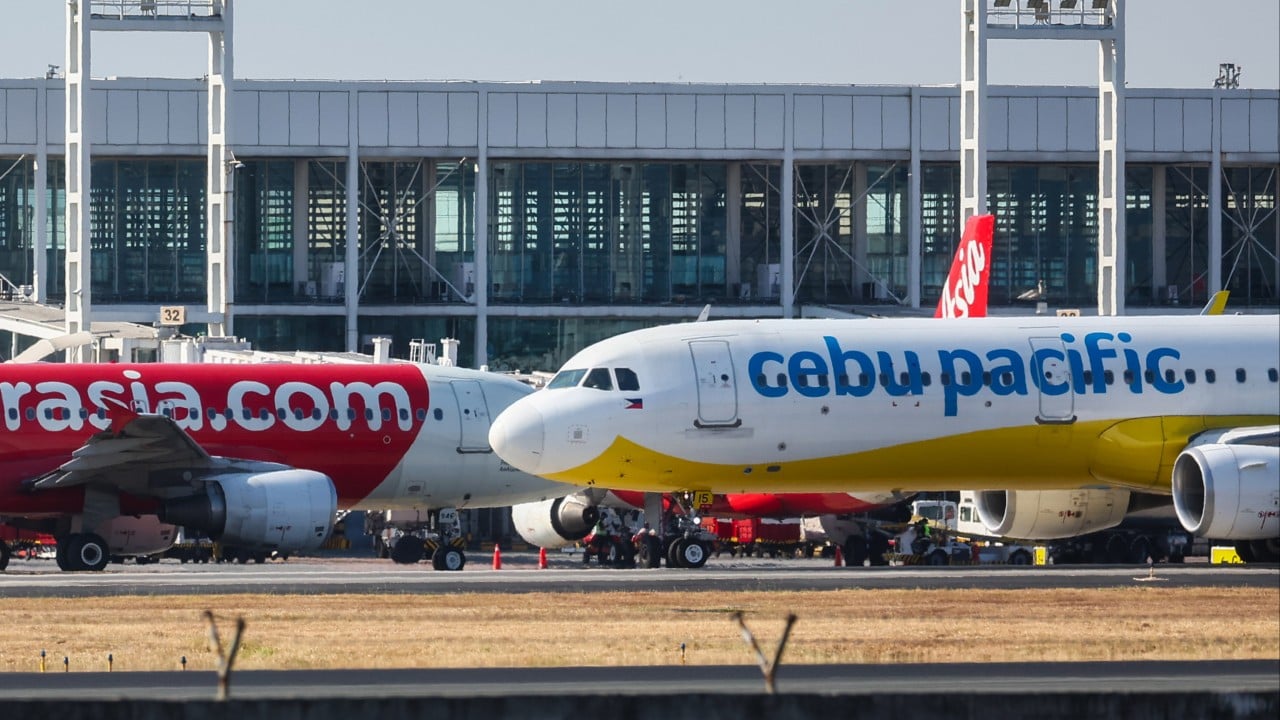
An aircraft returning to its departure point immediately after takeoff represents a maximum-stress event for an airline operator. When a Manila-bound commercial flight turns back to Hong Kong International Airport due to a suspected cargo door anomaly, the incident exposes the tight margins governing modern aviation safety protocols. This analysis deconstructs the structural, operational, and mechanical variables driving a commercial flight turnback, mapping the cascading decisions required when a primary containment boundary encounters a physical irregularity at altitude.
The Operational Mechanics of an Immediate Return
Every commercial flight operates under a strict decision matrix once airborne. When a crew identifies an abnormal condition—such as a cargo door indication warning—they evaluate the situation through two competing risk categories: the hazards associated with continuing to the destination versus the hazards of an immediate return.
A cargo door indication is rarely just a mechanical latch issue. Modern transport category aircraft utilize pressurized hulls operating at pressure differentials often exceeding eight pounds per square inch relative to outside ambient pressure. The cargo compartment represents a massive volume within this pressurized envelope. While structural doors are engineered with mechanical locks, proximity sensors, and electronic monitoring systems to prevent uncommanded opening, any anomaly flagged by the sensory architecture triggers immediate, conservative operational responses.
The sequence of events following a cockpit warning of this nature involves distinct operational phases:
- Diagnostic Validation: The flight crew cross-references electronic Centralized Fault Display Systems (CFDS) with physical instrument readings to isolate whether the warning represents a genuine mechanical failure or a corrupted sensor input.
- Mass and Balance Re-evaluation: Returning immediately means the aircraft is carrying maximum or near-maximum fuel load. Landing above maximum structural landing weight requires an overweight landing checklist, subsequent mandatory inspections, and potential brake energy absorption limits.
- Air Traffic Management Interfacing: The flight deck coordinates with local air traffic control to establish holding patterns for fuel burn-off, if necessary, or executes an immediate priority vector back to the origin field depending on the perceived severity of the structural threat.
The Cost Function of Unscheduled Disruptions
An unscheduled return to an origin airport introduces severe friction into airline schedule integrity and cost economics. The financial impact extends far beyond immediate fuel burn and maintenance man-hours.
Network disruption models measure the true cost of an operational interruption through secondary and tertiary effects:
- Asset Utilization Displacement: The specific airframe is removed from service for mandatory maintenance checks. This creates a ghost slot in the downstream schedule, forcing cancellations or equipment swaps across the carrier's network.
- Passenger Reaccommodation Overhead: Duty of care regulations mandate passenger feeding, hotel accommodations, and rebooking logistics. For widebody operations on international trunk routes, these costs escalate rapidly.
- Crew Duty Time Constraints: Flight and cabin crews operate under strict legal limits regarding cumulative hours. An extended delay on the ground forces crew substitution, which can ground subsequent rotations if reserve pools are depleted.
Mechanical Realities of Pressurization and Containment
The physical forces acting on a cargo door at cruising altitude are immense. A standard widebody cargo door measures several feet across, translating to thousands of pounds of total outward force exerted by cabin pressurization against the door seals and locking pins.
Safety architectures rely on redundancy rather than single-point security. When a warning light illuminates, the flight crew treats the system as potentially compromised because the consequence of complete cargo door separation at altitude—rapid decompression combined with potential structural damage to control surfaces—is catastrophic.
Flight crews do not troubleshoot complex structural anomalies in flight; they manage the aircraft configuration to minimize stress on the affected area. This frequently involves reducing airspeed, descending to a lower altitude where cabin pressure differential is minimized, and establishing a stable flight path back to a maintenance base equipped with the specific engineering support required for that aircraft type.
Strategic Maintenance and Safety Protocols
The response to an in-flight turnback underscores the systemic resilience of civil aviation, yet it also highlights vulnerabilities in ground-handling quality control. Cargo doors are almost exclusively manipulated by ramp handling agents at the departure gate. Human factors, procedural shortcuts, or mechanical wear on latching mechanisms during turnaround windows frequently contribute to these anomalies.
Airlines must evaluate ground turnaround compression against safety margins. As turnaround windows shrink to maximize fleet utilization, the probability of improper cargo door latching or misaligned microswitches increases. Mitigating this operational risk requires decoupling turnaround time targets from critical safety-of-flight procedures, ensuring that ramp personnel execute mandatory dual-inspection sign-offs on all major pressure doors regardless of schedule pressure.