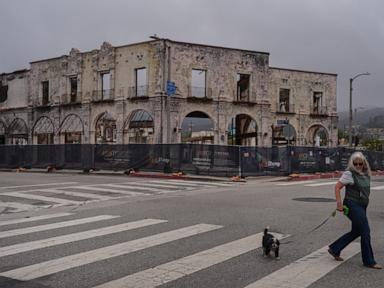
The federal arson trial of Jonathan Rinderknecht, opening in Los Angeles, presents far more than a criminal determination for an individual facing decades in prison. It functions as a stress test for two conflicting frameworks of systemic liability: the individual intent of an alleged arsonist versus the operational efficacy of municipal emergency response systems. Rinderknecht has pleaded not guilty to sparking the January 2025 Palisades Fire, a disaster that claimed 12 lives, destroyed over 6,800 structures across Pacific Palisades and Malibu, and fundamentally destabilized the regional property insurance market.
The prosecution’s case hinges on a linear chain of causality linking a small brush fire on New Year's Day to a catastrophic conflagration one week later. The defense, conversely, seeks to exploit the operational gap between those two events, framing the destruction as a failure of municipal containment. By examining the evidentiary boundaries established by the court, the underlying thermodynamic mechanisms of the fire, and the broader socioeconomic fallout, we can map the true structural mechanics of this trial.
The Evidentiary Ring Fence: Isolating Individual Intent
The legal parameters of the trial have been tightly circumscribed by U.S. District Judge Anne Hwang. In a series of critical pretrial rulings, the court constructed an evidentiary ring fence designed to isolate the defendant's actions from the subsequent operational choices made by the Los Angeles Fire Department (LAFD).
The defense strategy relies on establishing a break in the chain of proximate cause. Lead defense attorney Steve Haney sought to introduce deposition testimony from a firefighter, a fire captain, and a state park ranger—originally gathered in a civil lawsuit filed by fire victims against the city. This testimony asserted that the initial New Year’s Day blaze, known as the Lachman Fire, was still visibly smoldering when first responders vacated the scene. The defense intended to argue that the municipal failure to fully extinguish the initial 8-acre fire constitutes an intervening, superseding cause of the catastrophic Palisades Fire that flared up on January 7.
Judge Hwang rejected this framework, ruling the testimony inadmissible on the grounds that alleged municipal negligence is legally irrelevant to whether the defendant willfully and maliciously set the initial fire. This ruling creates a structural bottleneck for the defense. By decoupling the act of ignition from the efficacy of the containment strategy, the court has narrowed the jury’s focus to a binary determination of individual criminal liability.
Simultaneously, the court restricted the prosecution’s evidentiary scope by barring the introduction of AI-generated images depicting a city burning, which Rinderknecht allegedly created via ChatGPT months prior to the incident. The court deemed these images highly prejudicial and decoupled from the immediate timeline of the offense. The prosecution must therefore rely on a triad of foundational evidence:
- Spatial-Temporal Data: Geolocation tracking from Rinderknecht’s mobile phone placing him at the Skull Rock Trailhead near the exact coordinates of the initial ignition point at midnight on January 1.
- Physical Evidence: A standard Bic barbecue lighter recovered from the defendant’s vehicle, which he admitted to possessing while on the trail.
- Behavioral Indicators: Statements from an April 29 pretrial memo detailing erratic behavior, including anti-wealth rhetoric delivered to Uber passengers and a digital search history focused on anti-billionaire retaliation and high-profile violent crimes.
The Thermodynamic Mechanism: Holdover Fires and Root Containment
To secure a conviction on the most severe charges, federal prosecutors must bridge a seven-day temporal gap. The core mechanism explaining how an 8-acre controlled brush fire transforms into a historic disaster after a week of apparent dormancy is a phenomenon known as a holdover fire.
When a wildfire interacts with dense, old-growth chaparral—which had not experienced a major burn acreage in the region for decades—the combustion process shifts from flaming surface consumption to smoldering subterranean consumption. The heat penetrates deep into the duff layer and organic root systems, where low oxygen levels restrict open flames but sustain high thermal energy.
$$Q = m \cdot c \cdot \Delta T$$
In this thermodynamic system, the thermal energy ($Q$) remains stored within the root mass ($m$) due to the high specific heat capacity ($c$) of the surrounding soil and dense organic material, maintaining an elevated temperature ($\Delta T$) insulated from surface weather conditions.
This creates a hidden energy reservoir. For seven days, the fire burned undetected underground, migrating through root networks beneath the surface. On January 7, a shift in meteorological conditions occurred. High-velocity, low-humidity offshore wind events—characteristic of Southern California's microclimate—increased surface evaporation and introduced rapid oxygenation to the smoldering root systems. The wind acted as a mechanical pump, drawing the subsurface heat back to the surface, igniting the hyper-dry canopy, and initiating a high-intensity crown fire that bypassed standard surface containment lines.
The prosecution’s burden is to prove that this thermodynamic continuum was unbroken. If the defense can introduce reasonable doubt regarding whether the January 7 fire was sparked by an entirely separate ignition source—such as the fireworks reported by first responders in the vicinity—the legal link between Rinderknecht's alleged lighter and the destruction of Malibu is severed.
Socioeconomic Cascades: The Reinsurance Crisis and Electoral Vulnerability
While the federal court isolates the legal variables, the physical destruction of 6,800 structures has triggered extensive macroeconomic and political fallout across California. The trial unfolds against the backdrop of an active municipal election cycle and a collapsing residential property insurance market.
The Insurance Bottleneck and Reconstruction Stagnation
The scale of the asset destruction has exposed a profound vulnerability in the regional real estate economy. In the year and a half since the fire, the recovery curve has been exceptionally flat.
| Metric of Recovery | Quantitative Value |
|---|---|
| Total Structures Destroyed | > 6,800 |
| Active Reconstruction Permits | ~ 450 |
| Occupancy Certifications Issued | 17 |
This stark asymmetry—where fewer than 4% of active rebuilds have achieved occupancy—is driven by a structural capital strike. Private insurers have systematically restricted underwriting capacity in high-wildfire-risk zip codes. Homeowners seeking to rebuild face an environment where traditional policies are unavailable, forcing them onto the California FAIR Plan—the state-mandated insurer of last resort.
Because the FAIR Plan offers capped coverage limits that frequently fall short of the high per-square-foot reconstruction costs in Pacific Palisades and Malibu, a severe capital deficit has emerged. Homeowners cannot secure the construction loans necessary to rebuild without showing proof of full hazard insurance, creating a systemic bottleneck that leaves hundreds of prime residential lots vacant and overgrown.
Electoral Exploitation of Municipal Efficacy
The intersection of the trial and the Los Angeles mayoral race highlights how physical infrastructure failures translate into political vulnerability. Incumbent Mayor Karen Bass faces a challenge intensified by the optics of her absence during the initial crisis, having been in Ghana on a presidential delegation when the fire escalated.
The political opposition, led by challenger Spencer Pratt—who directly lost his residential asset in the fire—has weaponized the concept of municipal ineptitude. By shifting the narrative from individual criminality to organizational failure, the opposition uses the trial as a proxy debate on the city's capacity to manage its core infrastructure. The sentiment shared by local business owners underscores this political reality: a conviction offers no structural remedy for an economy devastated by what many perceive as a failure of local government to manage a localized, 8-acre ignition event before it breached the wildland-urban interface.
Systemic Risk Mitigation
The legal resolution of the Rinderknecht trial will provide a judicial conclusion, but it offers zero systemic resilience against future holdover fires. Relying on the criminal justice system to deter arson or mitigate wildfire risk represents a fundamental misallocation of strategic resources. To prevent the next structural breakdown at the wildland-urban interface, municipal leaders and emergency management agencies must pivot from reactive containment to proactive, technology-driven mitigation.
First, municipal authorities must mandate the deployment of continuous subsurface thermal imaging and IoT-enabled ground sensors across high-risk ignition zones. Relying on visual confirmation from first responders to declare a fire fully extinguished is an obsolete operational protocol. Infrared drone sweeps must become standard operating procedure during the mop-up phase of any brush fire, mapping underground thermal anomalies before units are cleared to leave the scene.
Second, the structural bottleneck in the housing market requires a state-level capital intervention. The California insurance market cannot stabilize under the current regulatory framework. The state must expand the risk capacity of the FAIR Plan while simultaneously tying reinsurance credits to verifiable parcel-level mitigation, such as mandatory automated ember-resistant venting and hardened building envelopes.
Ultimately, the Palisades Fire trial demonstrates that in complex urban ecosystems, individual malice and institutional inertia are deeply intertwined. A strategy focused solely on punishing the initiator of a crisis, while ignoring the systemic vulnerabilities that allowed a localized spark to consume an entire region, ensures that the underlying system remains fragile, unstable, and exposed to the next inevitable ignition event.