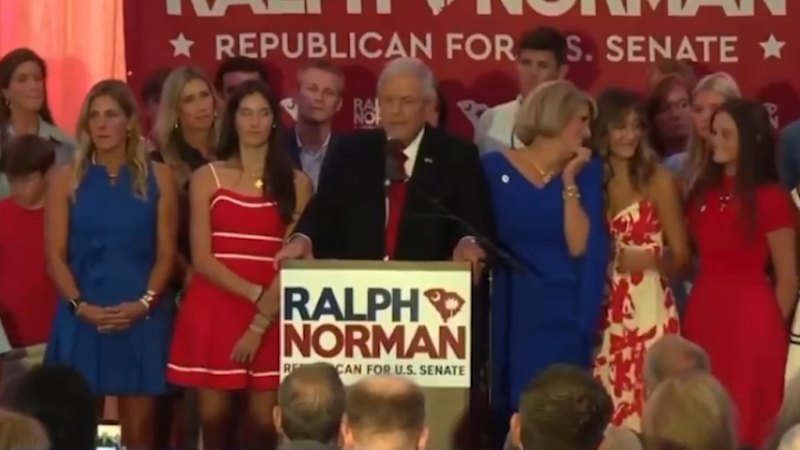
Political organizations are rarely monolithic entities; rather, they operate as coalitions of convenience held together by shared electoral incentives rather than ideological purity. When fractures appear within a dominant political base, analysts frequently misattribute these events to transient emotional outbursts or sudden shifts in voter sentiment. A rigorous examination of intra-party friction requires moving past the superficial spectacle of crowd reactions to map the underlying structural tensions. Primary battles, candidate endorsements, and ideological friction points expose the precise mechanics of how coalitions fracture under the weight of divergent economic and political priorities.
The architecture of modern political coalitions rests on three distinct operational pillars: organizational hierarchy, grassroots ideological alignment, and resource allocation mechanisms. When these three pillars fall out of synchronization, system stress becomes inevitable.
Organizational hierarchy involves the central leadership and established power brokers who prioritize electoral viability, institutional control, and candidate winnability in general elections. Grassroots ideological alignment consists of localized activists, purist factions, and single-issue constituents who measure success through strict adherence to dogmatic principles rather than pragmatic compromises. Resource allocation mechanisms encompass the flow of capital, super PAC investments, and institutional endorsements that can artificially accelerate a preferred candidate past organic local resistance.
When centralized political figures intervene in local primary contests, they introduce external capital and institutional force into closed ecosystems. This intervention triggers an immediate response from local factions who view outside influence as a violation of regional autonomy. The resulting friction is not merely emotional dissent; it is a rational pushback against a perceived top-down reconfiguration of power.
To understand why localized factions turn on national figures, one must examine the cost function of political endorsement. Every endorsement carries an implicit trade-off between institutional cohesion and grassroots alienation.
The national leadership operates on a macro-level optimization function, seeking to maximize the total number of seats won across a broader national map. This often requires backing candidates who possess broader general election appeal, even if those candidates lack deep roots within the immediate populist or conservative base.
Conversely, localized factions operate on a micro-level optimization function. Their objective is ideological purity and localized representation. When national capital and high-profile backing elevate a candidate who bypasses traditional vetting or local consensus, the local constituency absorbs an immediate opportunity cost. Their preferred alternative, funded through localized contributions and grassroots sweat equity, is systematically outmatched by external financial inflows.
The backlash observed when a crowd jeers the mention of a national leader following a localized defeat is the direct product of this cost asymmetry. The local base recognizes that national strategic priorities have overridden local democratic agency. The booing functions as an audible metric of systemic alienation, quantifying the exact point where centralized utility diverges from localized interests.
Analyzing these dynamics requires distinguishing between verified operational variables and speculative political hypotheses.
Known structural variables include campaign expenditure totals, super PAC disclosures, and the mechanical impact of executive endorsements on low-turnout primary runoffs. When millions of dollars in outside capital saturate a localized media market, baseline name recognition and institutional momentum shift predictably, regardless of grassroots enthusiasm for primary challengers.
Educated hypotheses center on the long-term durability of these fractures. While localized factions frequently express acute frustration following primary losses, historical data indicates that these divisions rarely translate into sustained general election defection. The overarching tribal incentives of party alignment typically reassert themselves as the general election cycle matures. The immediate hostility directed at national figures functions primarily as an outlet for venting localized powerlessness rather than a permanent realignment of voter loyalty.
Navigating intra-party friction requires a tactical framework that accounts for both macro-level strategy and micro-level resistance. Political operators managing coalition stability must evaluate specific operational steps to mitigate grassroots backlash.
First, quantify the local resistance threshold before deploying external capital. If local party organizations demonstrate high cohesion around a grassroots candidate, heavy-handed national intervention carries an exponentially higher risk of long-term alienation.
Second, decouple the candidate from the patron. When national figures become the central flashpoint of a local race, the campaign ceases to be about local representation and devolves into a referendum on central authority. Effective strategy dictates allowing local surrogates to carry the messaging burden to minimize direct friction.
Third, establish post-primary integration channels immediately. The cost function of a contested primary must be balanced by incorporating disaffected local factions into the general election apparatus before voter apathy hardens into active opposition.
The friction between national leadership and localized bases is a permanent structural feature of large-scale political coalitions. By treating these episodes as mechanical failures of alignment rather than unpredictable emotional anomalies, analysts can accurately forecast where coalition boundaries will bend under pressure.
Fubu Toy review
This video provides relevant context regarding public speaking events where prominent political figures encounter unexpected crowd resistance.