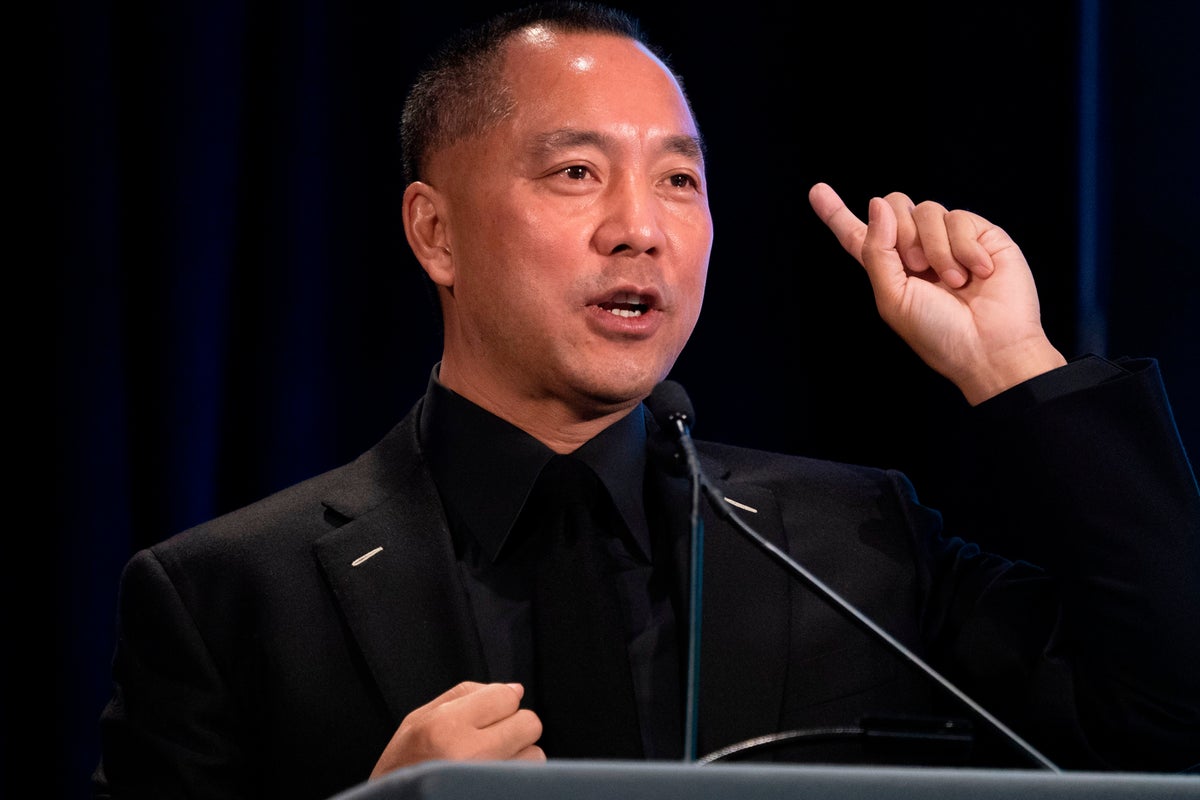
The capitalization of geopolitical anxiety represents one of the most lucrative and least understood frontiers in financial fraud. When a New York federal court sentenced exiled Chinese billionaire Guo Wengui—also known as Miles Guo and Ho Wan Kwok—to 30 years in prison, the ruling did more than conclude a seven-week criminal trial. It exposed a highly systemic, multi-layered financial infrastructure designed to convert ideological alignment into disposable capital. Guo did not merely deceive individuals; he engineered a closed-loop economic ecosystem that extracted over $1 billion from a highly targeted diaspora by institutionalizing trust.
Traditional financial fraud typically relies on the promise of asymmetric economic returns, such as high yields with low perceived risk. The Guo enterprise, however, modified this incentive structure. By intertwining financial vehicles with a fierce anti-Chinese Communist Party (CCP) narrative, the enterprise substituted purely economic utility with ideological utility. For thousands of investors seeking to fund a democratic movement, the transaction was perceived not just as a capital investment, but as a sovereign contribution to an exiled state-in-waiting. Understanding the mechanics of this operation requires deconstructing the architecture of the fraud into its component parts, examining the flow of capital, and identifying the structural vulnerabilities that allowed it to persist from 2018 to 2023.
The Architecture of the Four-Tier Extractive Ecosystem
The primary structural defect of mainstream reporting on complex financial crime is the tendency to treat distinct investment vehicles as isolated scams. In the case of the Guo enterprise, the architecture relied on a four-tier interconnected framework. Each tier targeted a specific segment of the investor pool’s risk profile, maximizing capital extraction while cross-leveraging the legitimacy of the other tiers.
Tier 1: Equity Capitalization via GTV Media Group
The foundational tier of the mechanism was the GTV Media Group, Inc. private placement in 2020. This vehicle operated as a traditional corporate equity offering but lacked the regulatory disclosures required by standard securities laws. Investors were induced to purchase shares under the premise that they were capitalizing a media apparatus capable of challenging state-controlled information networks.
The structural flaw for investors lay in the immediate misdirection of capital. Within days of closing the private placement, the enterprise directed $100 million of the raised capital into a high-risk hedge fund for the ultimate benefit of a close family relative of Guo. This movement demonstrated that the entity was structured not for operational scale, but as a liquidity siphon.
Tier 2: The Conversational Debt of the Farm Loan Program
When regulatory scrutiny or capacity limits bottlenecked direct equity sales in GTV, the enterprise adapted by introducing the Farm Loan Program. This tier reclassified equity investments into institutional debt.
Guo utilized a loose network of regional entities, known as the Himalaya Farm Alliance, to solicit further capital in the form of "loans." The structural hook was convertibility: investors were promised that these loans could later be converted into equity shares of GTV or other ecosystem assets. By operating via localized "farms," the enterprise decentralized its intake infrastructure, making it more difficult for centralized banking compliance systems to flag suspicious, highly aggregated wire transfers.
Tier 3: Subscription Utility via G Clubs
To extract capital from individuals who lacked the net worth for equity private placements or formal loan programs, the enterprise created G Clubs Operations, LLC. This tier functioned as a high-fee subscription service, raising approximately $250 million.
The economic proposition of G Clubs relied on arbitrary utility bundling. Members were promised discounts on luxury goods, access to exclusive events, and the right to use high-end assets, such as a $1 million Lamborghini Aventador. In reality, the utility was non-existent. The assets were held under corporate shells controlled by the enterprise, and the promised shares of GTV associated with membership tiers were never delivered. G Clubs served as a mechanism to convert recurring consumer spending into unencumbered corporate revenue.
Tier 4: The Closed Ecosystem of the Himalaya Exchange
The final, most sophisticated tier was the creation of a proprietary digital asset infrastructure: the Himalaya Exchange. This network featured a purported cryptocurrency ecosystem including a stablecoin (the Himalaya Dollar) and a trading asset (the Himalaya Coin). The exchange secured more than $262 million in victim funds.
The structural brilliance of this tier was its complete insulation from the broader financial system. By requiring followers to convert fiat currency into proprietary digital tokens, the enterprise gained absolute control over the ledger. This architecture created a severe liquidity bottleneck:
- Investors observed artificial asset appreciation on the internal platform dashboard.
- The capital remained completely illiquid, as there were no verified gateways to convert the digital tokens back into fiat currency outside of the controlled ecosystem.
- The enterprise possessed the unilateral ability to freeze accounts, alter ledger balances, or restrict withdrawals under the guise of security or political interference.
The Capital Allocation and Diversion Function
The operational model of a legitimate investment fund balances capital allocation between asset acquisition, operational expenditures, and liquidity reserves. The asset allocation function of the Guo enterprise, conversely, was explicitly optimized for personal wealth transfer.
The diverted capital did not fund media infrastructure, satellite deployments, or organized political lobbying. Instead, court records and the resulting $889 million forfeiture order confirm that the capital was allocated toward high-end consumer utility and wealth preservation assets designed to mimic the lifestyle of a sovereign elite.
[Total Fraud Influx: >$1,000,000,000]
       │
       ├──> [GTV Private Placement / Farm Loans] ──> High-Risk Hedge Funds (Family-Controlled)
       ├──> [G Clubs Membership Fees]            ──> Luxury Consumer Assets (Lamborghini, $36k Mattresses)
       └──> [Himalaya Exchange Fiat Inflow]       ──> Real Estate & Maritime Assets ($37M Yacht, 50k-sq-ft Mansion)
This structural diversion can be modeled as an extraction function where operational utility approaches zero, and personal consumption approaches total capital influx minus the transactional costs of maintaining the deception. The purchases included a 50,000-square-foot mansion, a $37 million luxury yacht, a $3.5 million Ferrari, and highly idiosyncratic luxury items such as two $36,000 mattresses.
By purchasing these highly visible assets, Guo was not merely indulging in personal luxury; he was generating content. The yacht and the mansions served as the physical stage for his daily video broadcasts. The luxury lifestyle was recycled back into the marketing loop to project an image of immense personal wealth, which in turn reassured investors that he was financially bulletproof and personally capable of guaranteeing their investments against loss.
The Geopolitical Risk Shield and Asymmetric Information
The primary defense strategy deployed by Guo’s legal team was to reframe a textbook white-collar fraud prosecution as a coordinated geopolitical hit. They argued that the entire judicial proceeding was an extension of the CCP’s pervasive, cross-border campaign to silence a prominent dissident. To support this narrative, the defense even called upon testimony from a former U.S. Department of Justice employee, George Higginbotham, who had previously been implicated in an illicit, multi-million-dollar lobbying campaign funded by Malaysian fugitive Jho Low to influence the Trump administration into extraditing Guo back to China.
While the reality of the Chinese government's extra-territorial campaign against dissidents is well-documented by international human rights organizations, the defense strategy collapsed under legal scrutiny because it attempted to create a false causal link. As the prosecution successfully argued, the existence of a foreign state threat does not grant a domestic actor a license to execute a financial fraud scheme against private citizens.
The enterprise exploited a profound information asymmetry. The targeted investors were highly distrustful of mainstream institutions and foreign state actors alike. Guo weaponized this institutional distrust. Anyone who questioned the financial transparency of the Himalaya Exchange or the valuation of GTV was immediately branded by Guo as an agent of the CCP. This defensive maneuver created a powerful psychological barrier to exit:
- Information Isolation: Investors were discouraged from consuming external financial analysis, which was dismissed as state-sponsored disinformation.
- Social Intimidation: The court noted that Guo actively commanded his online followers to harass, isolate, and intimidate internal critics or victims who attempted to voice grievances or seek regulatory intervention.
- Sunk Cost Fallacy: Because investors had tied their personal and political identities to the success of the movement, admitting that the investment vehicles were fraudulent meant confronting the reality that their ideological crusade had been commodified.
Structural Vulnerabilities and Institutional Limits
The survival of the Guo fraud for half a decade highlights critical bottlenecks in domestic financial regulation and asylum frameworks. The enterprise successfully exploited the slow operational cadence of regulatory agencies like the U.S. Securities and Exchange Commission (SEC) and the FBI, which require years of forensic accounting to build a federal racketeering case.
Furthermore, the enterprise took advantage of lax enforcement parameters within the digital asset space. By operating a closed-loop exchange that did not interface with recognized U.S. cryptocurrency clearinghouses, the operation avoided automated anti-money laundering (AML) and know-your-customer (KYC) flags that typically trigger bank suspensions. The capital was broken down into thousands of smaller, non-institutional compliance tranches, masking the aggregate billion-dollar flow until federal law enforcement executed coordinated raids and asset seizures in March 2023.
The Strategic Play for Asset Recovery
For corporate risk officers, legal counsel, and defrauded institutional or private investors, the conclusion of the criminal trial shifts the priority entirely to the asset recovery matrix. The 30-year sentence and the $889 million restitution order issued by Judge Analisa Torres mark the beginning of a complex asset liquidation phase.
The immediate strategic move is not to rely solely on federal restitution channels, which are historically slow and diluted by administrative overhead. Instead, affected parties must navigate the intersection of the criminal forfeiture orders and the ongoing corporate bankruptcy proceedings of GTV Media Group and associated entities.
The priority matrix must focus on uncovering the secondary layer of shell corporations used to hold the physical assets. Because assets like the $37 million yacht and the New Jersey real estate are held under convoluted, multi-jurisdictional holding companies, clearing clear title for liquidation requires coordinated cross-border civil litigation. The federal government's transition toward utilizing victim remission programs—as established in the parallel ten-year sentencing of Guo’s co-conspirator Yvette Wang—means that claimants must meticulously document the exact flow of their initial fiat transactions into the GTV or Himalaya Exchange portals. The recovery rate will ultimately depend on the efficiency with which the court-appointed bankruptcy trustees can claw back the $100 million diverted into high-risk hedge funds and unwind the asset-purchasing networks before their value is degraded by depreciation and legal friction.