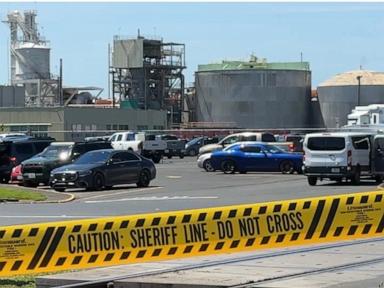
Rust does not sleep. It does not rage, or threaten, or announce its arrival with the sudden violence of a storm. It breathes. A quiet, oxidation breath, eating away at the atomic bonds of human ambition, one microscopic flake at a time.
Walk along the industrial waterfronts of the Pacific Northwest, and you can smell it—a sharp, metallic tang mixed with the damp weight of river silt. We build our civilizations out of heavy things. We weld colossal hulls, cast thick-walled vessels, and pump caustic, volatile agents into their bellies, trusting that thickness equals eternity. We tell ourselves that steel is permanent. We are wrong.
Before a chemical tank ruptures, before the sirens begin their high-pitched wail, before the toxic plume drifts lazily over residential rooftops and forces families to seal their windows with damp towels, there is a very long, very quiet period of bureaucratic neglect.
Consider a hypothetical inspector standing inside a cavernous industrial facility on an overcast Tuesday morning. Let us call him Mark. Mark has spent twenty-five years listening to the hollow ring of a ball-peen hammer striking metal, learning to diagnose the health of a vessel by the pitch of its echo. On this particular morning, Mark looks up at a massive containment structure holding dangerous industrial fluids. He sees the warning signs. The pitting on the exterior shell. The subtle, treacherous thinning of the walls where moisture has pooled away from the reach of maintenance crews. The historical maintenance logs that read like a comedy of deferred responsibilities.
He writes it down. He flags it. He stamps the paperwork with words that carry the heavy gravity of an approaching collision: unfit for service.
And then, nothing happens.
That is the terrifying part of the modern mechanical age. The failure is rarely a surprise. The collapse is almost always cataloged. In the cold calculus of corporate budgeting, a dangerous tank is rarely treated as a ticking bomb; it is treated as a line item on a spreadsheet, a calculation of risk versus replacement cost, weighted heavily toward keeping the liquid flowing just a little bit longer.
When that Washington chemical tank finally breached, the official reports would later use terms like structural degradation, material fatigue, and inadequate oversight. They would fill hundreds of pages with dense metallurgical analyses, charts showing tensile strength loss, and transcripts of meetings that took place in fluorescent-lit rooms months before the rupture.
They will make it sound like a complex engineering riddle. It was not.
It was the predictable outcome of ignoring the obvious.
To understand what happens when a tank fails, you have to look past the official inquiry and drop down into the sensory reality of the moment. Imagine the split second before the breach. The ambient hum of the plant—the pumps, the valves, the distant rumble of highway traffic. Then, a sound like a gunshot echoing through an empty cathedral. A single bolt shears. The stress load redistributes instantly, finding the next weakest link, which snaps in a fraction of a millisecond.
The metal does not gently leak. It tears.
Millions of gallons of aggressive, industrial-strength chemistry surge outward, tasting freedom for the first time in decades, eating through secondary containment berms designed for a lesser disaster, and meeting the open air with a violent hiss.
In the neighborhoods downwind, the air changes instantly. It catches in the back of the throat. It tastes like pennies and bleach.
This is where the human element crashes violently into the abstract world of industrial compliance. We talk about safety thresholds and regulatory frameworks as if they are pure mathematics. They are not. They are moral choices made by people sitting miles away from the hazard. Every neglected weld, every delayed inspection, every signed-off waiver is a tiny deposit into a debt account that must eventually be paid in full, with interest, by the people living in the shadow of the smokestacks.
History is littered with these footnotes of foresight. Time and again, investigators comb through archives after a disaster and unearth the prophetic warnings of engineers who were ignored, inspectors who were overruled, and whistleblowers who were marginalized. The tragedy is never that we lacked the knowledge to prevent the catastrophe. The tragedy is that we possessed the exact blueprint of the disaster long before it struck, and we simply chose to wait and see if we could get lucky.
Luck is a terrible engineering strategy.
The report on the Washington tank failure will sit on digital shelves, gathering its own kind of digital dust. New committees will form. New recommendations will be drafted with earnest language and bold headings. The damaged vessels will be hauled away, cut into manageable pieces by plasma torches, and melted down into something new.
Yet the underlying vulnerability remains. As long as we treat the preservation of human safety as a negotiable expense rather than an absolute baseline, the rust will keep breathing. And somewhere out there, in the dark, another bolt is slowly losing its grip.