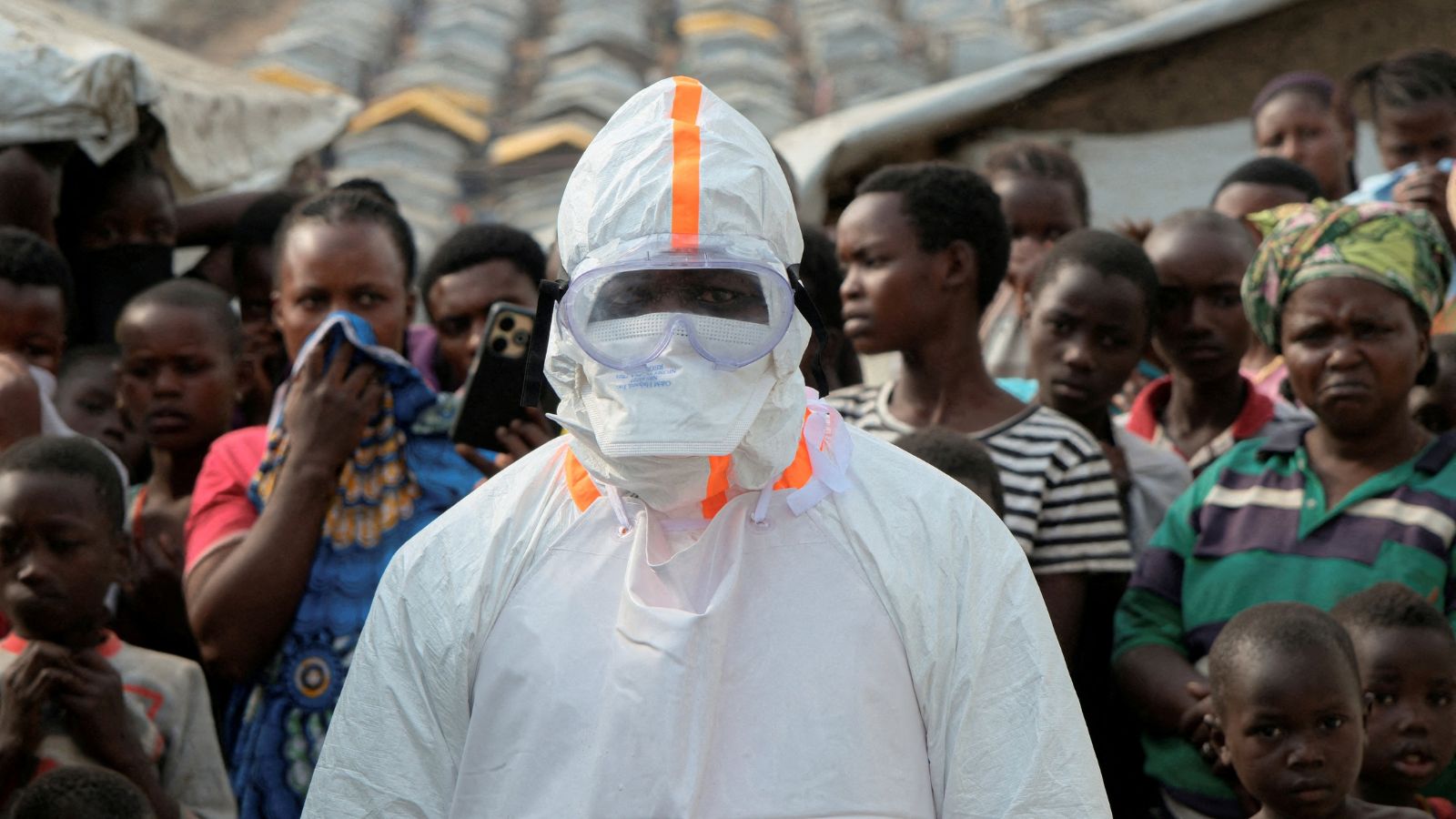
Epidemiological crises in the Democratic Republic of the Congo reveal structural vulnerabilities that extend far beyond simple viral transmission rates. When cumulative mortalities cross critical thresholds in high-density provinces, standard reporting metrics obscure the underlying operational friction points. Deconstructing the mechanics behind rapid pathogen dispersion requires moving past surface-level incident counts to analyze the specific socio-environmental vectors, supply chain failures, and strain mutations that govern public health outcomes.
The Three Vectors of Operational Friction
Public health intervention models often fail because they treat containment as a uniform variable rather than a multi-layered equation. The velocity of an outbreak is dictated by three structural friction points.
1. Geographic and Security Bottlenecks
Provinces such as Ituri and North Kivu combine high population mobility with active regional conflict. These conditions produce systemic data lag. When medical teams cannot safely access remote mining settlements or border transit hubs, epidemiological tracking shifts from active surveillance to passive estimation. This creates an invisible propagation window where transmission chains multiply unmonitored before formal health authorities register the initial cluster.
2. Pathogen Divergence and Treatment Mismatch
Viral evolution introduces severe complications when standard-of-care therapeutics target specific species variants while the active pathogen belongs to another. For instance, outbreaks driven by the Bundibugyo ebolavirus rather than the traditional Zaire species render existing monoclonal antibody stockpiles structurally ineffective. Medical logistics must immediately pivot to alternative interventions, creating treatment delays that directly inflate case fatality rates during the critical initial weeks of an epidemic.
3. Nosocomial Amplification and Traditional Practice Friction
Hospital-acquired infection rates serve as a primary accelerator for regional spread. Under-resourced clinics lacking basic sanitation infrastructure inadvertently convert medical facilities into contagion nodes. Simultaneously, community burial customs that involve direct physical contact with bodily fluids generate superspreading events. Public health strategies that enforce top-down restrictions without integrating community leadership structurally guarantee non-compliance, forcing populations underground and blinding contact tracers.
The Cost Function of Contact Tracing Coverage
The efficacy of containment is mathematically linked to the proportion of active contacts successfully isolated within defined temporal windows. If the contact tracing coverage percentage drops below a critical threshold, exponential growth outpaces intervention capacity.
The mathematical relationship governing this dynamic relies on the basic reproduction number alongside the tracing efficiency coefficient. When population density increases in active conflict zones, the friction coefficient rises exponentially. Field teams must navigate security vacuums while managing distrust rooted in historical marginalization. Consequently, every percentage point drop in contact follow-up rates produces a disproportionate surge in secondary infections.
Resource Allocation and Supply Chain Failures
Deploying infrastructure to regional hotspots requires navigating severe logistical decay. Cold-chain maintenance for sensitive vaccines and therapeutics fails when electrical grids are unstable or nonexistent.
The deployment of specialized treatment centers depends on heavy transport networks that degrade during seasonal weather shifts or active hostilities. When a 120-bed treatment facility takes weeks longer to operationalize than projected, local isolation capacities saturate immediately. Unhospitalized patients remain within family compounds, ensuring continuous domestic transmission cycles.
Strategic Interoperability and Cross-Border Surveillance
Pathogens do not recognize administrative boundaries. Porous borders shared with neighboring states like Uganda transform localized outbreaks into international health emergencies.
Effective containment demands synchronized cross-border screening protocols, shared telemetry data, and standardized diagnostic thresholds. When neighboring jurisdictions operate on disparate reporting frequencies or employ incompatible testing kits, containment efforts fracture at the frontier.
To break this cycle, health authorities must transition from reactive crisis management to permanent regional intelligence networks. Decentralize diagnostic capabilities to the point of care, pre-position strain-agnostic therapeutics, and embed community-led surveillance units directly within high-mobility trade corridors before the next transmission vector activates.