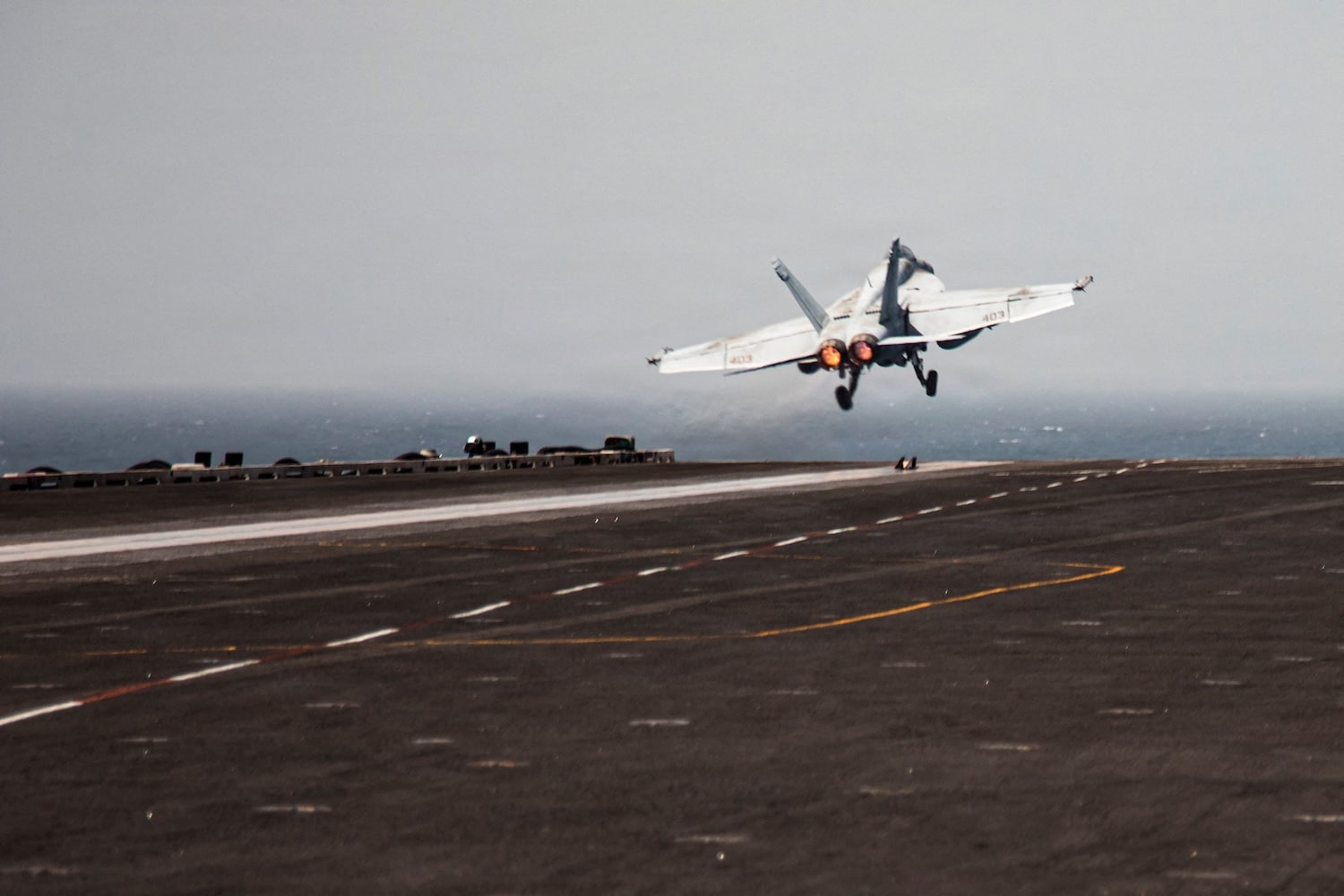
Global economic expansion is entering a phase of structural deceleration, with real GDP growth projected to compress to 2.5% in 2026 down from 2.7% in 2025. This contraction represents the lowest baseline expansion rate since the 2020 pandemic downturn. The primary catalyst is not a traditional demand-side recession, but a supply-side shock originating from geopolitical conflict in West Asia, specifically the military friction involving the United States, Israel, and Iran. By evaluating this disruption through the mechanics of logistical choke points, commodity cost-curves, and monetary transmission channels, we can map exactly how a localized conflict scales into a systemic global slowdown.
The Primary Choke Point: The Structural Cost Function of the Strait of Hormuz
The primary transmission vector of the West Asia crisis is the operational closure of the Strait of Hormuz, a maritime transit corridor responsible for the daily passage of roughly one-fifth of global liquid petroleum consumption and one-third of global liquefied natural gas (LNG). When maritime chokepoints close, the economic impact is governed by immediate transport asset misallocation and supply inelasticity.
The baseline economic model assumes the worst of these energy supply disruptions will abate by July 2026. Under this assumption, Brent crude oil prices are modeled to average $94 per barrel for the year, which represents a 36% escalation over 2025 baseline levels.
The economic cost function of this energy shock propagates through two distinct structural channels:
1. Direct Input Inelasticity
Industrial and transport sectors cannot rapidly substitute petroleum-based fuels or feedstocks in the short term. Consequently, a 36% increase in crude costs forces an immediate upward shift in the marginal cost curves of manufacturing, freight logistics, and chemical synthesis. Corporations must either absorb these costs, compressing corporate margins, or pass them downstream, accelerating consumer price index (CPI) metrics.
2. The Fertilizer-Agricultural Linkage
The Strait of Hormuz is a critical artery for global synthetic fertilizer components, notably ammonia and sulfur derivatives. The closure has halted approximately one-third of global fertilizer supply shipments. Because agricultural yields are heavily dependent on nitrogen, phosphorus, and potassium inputs, the physical scarcity of fertilizer shifts the agricultural production frontier inward. The mechanism is chronological: a fertilizer shortage in the current quarter restricts planting density and soil productivity, yielding higher food prices globally in subsequent quarters.
Macroeconomic Transmission Channels: From Supply Disruption to Capital Scarcity
The transformation of a physical supply shock into global macroeconomic deceleration operates through two primary transmission vectors: the inflationary feedback loop and the monetary policy response function.
The Inflationary Feedback Loop
Global headline inflation is projected to climb to 4.0% in 2026, up from 3.3% in 2025. This rise is driven entirely by cost-push dynamics rather than demand-pull expansion. When core inputs like energy and food rise simultaneously, the structural floor of global pricing elevates.
The Monetary Policy Response Function
Central banks manage inflation through nominal interest rate adjustments. In response to cost-push inflation, monetary authorities are forced to maintain or increase terminal policy rates to prevent de-anchoring long-term inflation expectations. This introduces a structural bottleneck:
$$\text{Higher Policy Rates} \rightarrow \text{Increased Cost of Capital} \rightarrow \text{Compressed Capital Expenditure (CapEx)} \rightarrow \text{Decelerated GDP Growth}$$
This creates an environment where credit-dependent sectors, such as commercial real estate and industrial manufacturing, face high borrowing costs precisely when their operational input costs are peaking.
Asymmetrical Regional Impact: Mapping the Divergence
The structural slowdown is not distributed evenly across the global economy. The World Bank has downgraded growth forecasts for two-thirds of all nations, with the severity of the revision dictated by a nation's status as a net importer of commodities and its fiscal vulnerability.
| Region / Economy | 2025 Growth Rate | 2026 Projected Growth (Baseline) | Primary Structural Vulnerability |
|---|---|---|---|
| Global Baseline | 2.7% | 2.5% | Energy and transport cost escalation |
| Developing Economies | 4.4% | 3.6% | Import reliance, capital flight, high debt service |
| Gulf Co-operative Council (GCC) | 3.9% | Close to 0% | Physical export halts, infrastructure damage |
| Middle East & North Africa (MENA) | 4.0% | 1.6% | Direct localized conflict destruction, supply chain severance |
| South Asia | 7.0% | 6.3% | High dependence on imported hydrocarbons and minerals |
| Sub-Saharan Africa | Slightly higher | 4.0% | Extreme exposure to fertilizer and grain price inflation |
The Gulf and MENA Contraction
The economies closest to the conflict zone face direct supply-side halts. Gulf economies are experiencing a near-total stoppage in output growth, moving from 3.9% in 2025 to near 0% in 2026. This is an asset-utilization crisis: the energy is in the ground, but the maritime infrastructure required to monetize it is inaccessible. A projected rebound to approximately 5% in 2027–2028 is entirely contingent on post-conflict reconstruction spending and the restoration of shipping lanes.
The Developing World's "Lost Decade"
For developing market and developing economies (EMDEs) excluding China and India, the current shock cements a long-term structural trap. Growth in these nations is dropping to a post-pandemic low of 3.6%. The mechanism driving this stagnation is a sovereign debt squeeze.
Unlike advanced economies that borrow in domestic currencies, many developing nations hold significant dollar-denominated debt. As the Federal Reserve maintains elevated interest rates to combat domestic inflation, capital flees emerging markets toward higher-yielding, lower-risk US Treasury instruments. This capital flight depreciates local currencies, making the servicing of external dollar-denominated debt significantly more expensive in real terms. The result is fiscal crowding out: states must divert tax revenues away from infrastructure and education to pay international creditors.
The Downside Stress Scenario: Systemic Financial Contagion
The baseline projection of 2.5% growth assumes the conflict remains geographically localized and shipping friction eases by mid-summer. However, a quantitative risk assessment requires modeling a severe downside scenario.
If the military friction intensifies or broadens, the baseline assumptions fail. In a severe stress scenario, where energy supply disruptions extend past the third quarter of 2026 and spark systemic financial market instability, global growth is projected to collapse to 1.3%.
[Geopolitical Escalation]
       │
       ▼
[Prolonged Choke Point Closure]
       │
       ▼
[Oil Sustained at $115/bbl] ──► [Global Inflation Hits 4.4%] ──► [Aggressive Monetary Tightening]
       │                                                                      │
       ▼                                                                      ▼
[Asset Volatility & Margin Calls] ────────────────────────────────► [Sovereign & Corporate Defaults]
                                                                              │
                                                                              ▼
                                                                  [Global Growth Drops to 1.3%]
The progression from localized conflict to a 1.3% growth collapse follows a specific sequence:
1. Oil Volatility and the $115 Threshold
Persistent closure of transit routes pushes Brent crude to a sustained average of $115 per barrel. Global headline inflation responds by scaling to 4.4%.
2. Risk-Off Asset Realignment
Sustained energy spikes shock equity and corporate bond markets. As corporate valuations adjust downward to reflect permanently higher input costs, systemic margin calls occur across institutional portfolios.
3. Credit Crunch Transition
High asset volatility combined with elevated sovereign debt stress triggers an abrupt repricing of risk by commercial lenders. Credit spreads widen significantly, banking liquidity tightens, and corporate defaults accelerate, converting a physical supply chain crisis into a systemic financial freeze.
Capital Allocation and Liquidity Provisioning Limits
To mitigate the immediate downside risks, multilateral intervention is scaling up. The World Bank Group has deployed an immediate response framework, releasing $50 billion to $60 billion through existing financial instruments, including $25 billion in pre-arranged crisis financing. This funding can scale up to $100 billion over a 15-month horizon if the disruptions persist.
The deployment structure targets three critical vulnerabilities:
- Sovereign Fiscal Capacity: Direct capital injections to prevent balance-of-payments crises in net commodity-importing nations.
- Social Safety Net Stabilization: Subsidizing food and energy costs for populations in vulnerable regions like Sub-Saharan Africa and conflict-affected MENA states (Syria, Lebanon, Yemen) to prevent systemic domestic collapse.
- Enterprise Working Capital: Providing liquidity guarantees to domestic agricultural and industrial firms cut off from standard commercial credit lines.
The limitation of this intervention is structural: multilateral capital injections provide liquidity, not capacity. They can prevent immediate sovereign insolvency, but they cannot replace missing millions of barrels of oil or millions of tons of synthetic fertilizer. The physical productive capacity of the global economy remains structurally lower as long as the trade infrastructure is compromised.
Corporate Allocation Strategy and Risk Positioning
Operating in an environment defined by a 2.5% global growth baseline and a non-trivial probability of a 1.3% stress event requires corporate treasurers and supply chain officers to abandon optimization models designed for open trade eras. Capital preservation and operational resilience dictate a three-part strategic adjustments matrix.
De-risk the Input Cost Function
Organizations must immediately adjust their treasury operations to account for sustained cost-push inflation. This requires executing long-dated forward contracts on core energy and transport components to lock in pricing below the projected $115 per barrel stress threshold. Companies reliant on agricultural inputs must diversify sourcing away from regions dependent on West Asian fertilizer components, shifting procurement toward North American or domestic alternatives despite higher nominal spot prices.
Reconfigure Capital Structure and Leverage
With central banks locked into a restrictive monetary stance due to 4.0% global inflation, the cost of debt will remain structurally elevated. Corporate financial strategies must prioritize debt reduction and the conservation of cash reserves over aggressive capital expenditure or share buyback initiatives. Capital allocation should favor projects with immediate cash-generation capability over long-horizon strategic plays that depend on low-cost credit refinancing.
Supply Network Redundancy over Just-in-Time Efficiency
The closure of the Strait of Hormuz demonstrates that single-point-of-failure logistics networks are untenable in a fragmented geopolitical environment. Supply chain architectures must transition to a dual-sourcing or near-shoring model. This requires holding higher levels of safety stock for critical components, effectively accepting a higher carrying cost on the balance sheet to insulate production lines from sudden maritime corridor shutdowns.