The Cadiz Valley Water Conservation, Recovery, and Storage Project represents one of the most persistent exercises in speculative resource economics in modern American infrastructure history. Promoted by its parent corporation, Cadiz Inc., as an innovative water-scarcity solution for Southern California and the broader Southwest, the project relies on a fundamental misalignment between hydrological science, infrastructure realities, and public policy.
To evaluate this project objectively, one must strip away both the corporate marketing of "water conservation" and the superficial political theater surrounding its federal permits. This analysis deconstructs the project across four critical pillars: the physics of the hydrological mass balance, the structural imbalances of the corporate business model, the mechanics of regulatory arbitrage, and the thermodynamic costs of transport. Discover more on a similar issue: this related article.
The Hydrological Mass Balance and the Evaporation Myth
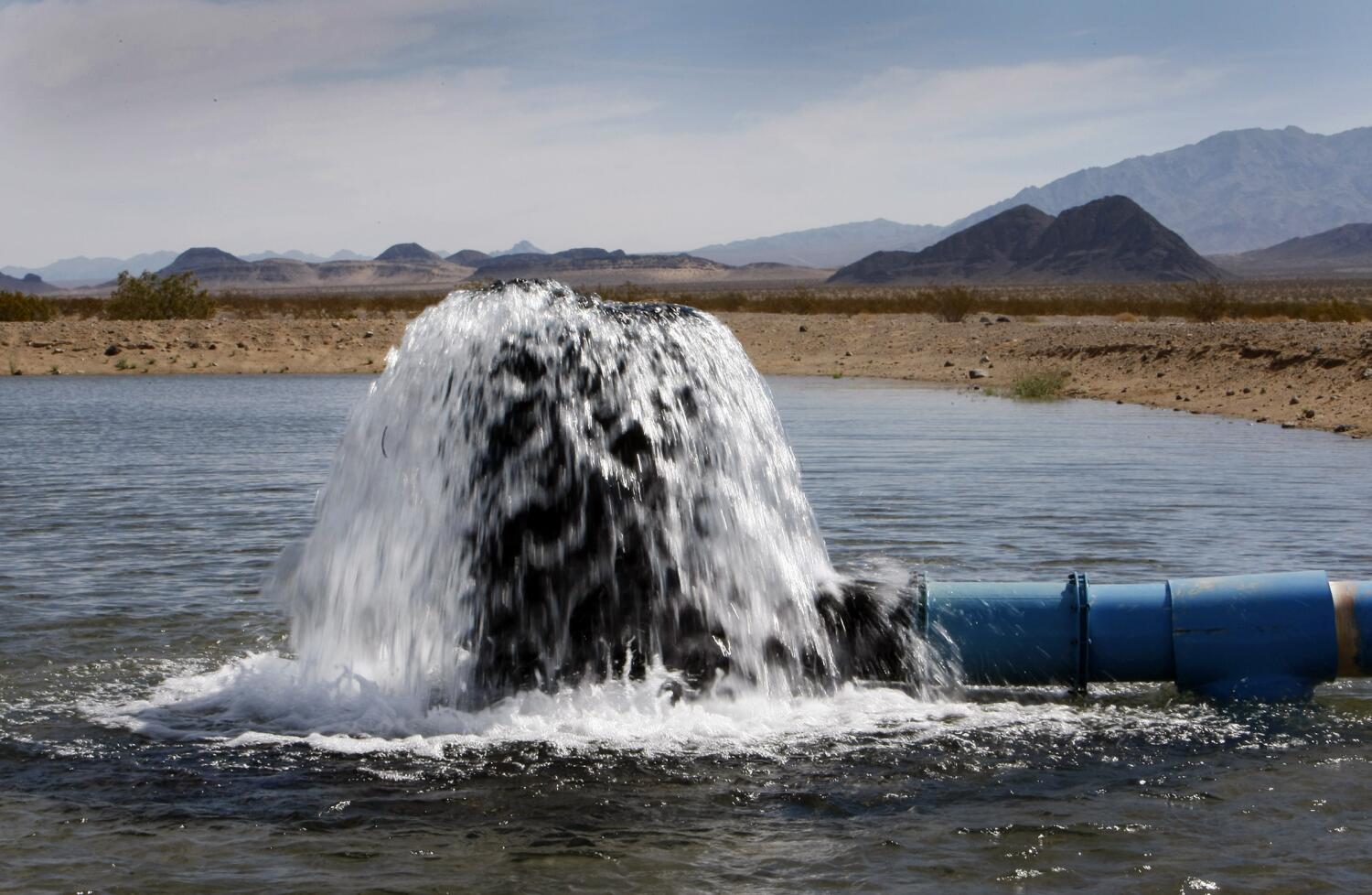
The core scientific justification put forward by Cadiz Inc. rests on a singular premise: that billions of gallons of fresh groundwater beneath the Cadiz and Fenner valleys are currently migrating toward saline dry lakes (Cadiz and Danby dry lakes), where the water evaporates and becomes unusable. The company frames its extraction plan as a "conservation" measure designed to intercept this water before it is lost.
This narrative violates established groundwater hydraulics and the conservation of mass. To understand the depletion mechanics, we can model the aquifer's state using a fundamental water balance equation: Additional journalism by Business Insider explores similar perspectives on the subject.
$$\Delta S = I - (ET + Q)$$
Where:
- $\Delta S$ is the net change in groundwater storage.
- $I$ is the natural recharge/inflow (primarily from mountain block precipitation runoff).
- $ET$ is natural evapotranspiration (discharge to dry lakes and desert vegetation).
- $Q$ is anthropogenic extraction (the proposed pumping).
In a pre-development, steady-state system, the system is in equilibrium where $\Delta S = 0$, meaning natural inflow equals natural discharge ($I = ET$).
The Recharge Rate Discrepancy
The economic viability of the project requires the long-term extraction of approximately 50,000 acre-feet of water per year (equivalent to roughly 16.3 billion gallons annually) over a 50-year contract period.
[Cadiz Claimed Recharge Rate]   50,000 to 32,000 acre-feet / year
===================================================================>

[USGS / National Park Service]   2,000 to 10,000 acre-feet / year
===>
Independent hydrological assessments conducted by the United States Geological Survey (USGS) and the National Park Service establish that the actual natural recharge rate ($I$) of the basin is between 2,000 and 10,000 acre-feet per year. The extraction rate planned by Cadiz ($Q = 50,000$) is five to twenty-five times greater than the natural recharge rate of the aquifer.
When $Q \gg I$, the system undergoes severe storage depletion:
$$\Delta S \ll 0$$
This deficit cannot be offset by "intercepting" evaporation. Desert groundwater moves extraordinarily slowly. Forcing artificial drawdowns of this magnitude lowers the local water table, creating a cone of depression that reverses regional hydraulic gradients.
The physical consequences of this hydrological deficit are predictable:
- The Desiccation of Critical Seeps and Springs: The drawdown of the water table disconnects the regional aquifer from surface springs, such as Bonanza Spring in the Mojave Trails National Monument. Peer-reviewed geochemical fingerprinting confirms that these elevated springs rely on the deep aquifer pressure to maintain flow. Lowering the water table destroys these ecological oases.
- The Mobilization of Saline and Toxic Plumes: Reversing the hydraulic gradient draws hyper-saline water from beneath the dry lakebeds back into the freshwater aquifer. Furthermore, the aquifer contains naturally occurring hexavalent chromium and arsenic. Pumping at high volumes alters the chemical equilibrium, risking the mobilization of these contaminants into the municipal supply lines.
The Financial Engineering of a Speculative Utility
A critical reading of Cadiz Inc.’s financial structure reveals that the company functions less as a traditional water utility and more as a speculative land and regulatory option play.
Unlike operating municipal water districts or established private water companies with diverse asset bases, Cadiz's primary asset is the underlying land and speculative water rights in the Mojave Desert. An examination of the company's historical financial performance shows a persistent structural deficit:
- De Minimis Operating Revenue: Historically, the company’s operating revenues—generated primarily from limited agricultural leases on its desert properties—are dwarfed by its administrative, legal, and lobbying expenses.
- High Capital Burn Rate: The company has accumulated hundreds of millions of dollars in accumulated deficits over its multi-decade operational history. It has sustained itself through continuous equity dilution and debt issuance, relying on the periodic appreciation of its stock price driven by favorable regulatory developments.
- Debt Servicing Pressures: The capital expenditure required to build the necessary 43-mile pipeline connection to the Colorado River Aqueduct is estimated to run into the hundreds of millions of dollars. Without secured, long-term water purchase agreements (off-take contracts) from municipal water districts, the company cannot secure the non-dilutive debt financing required for construction.
The business model relies on converting public regulatory decisions into private capital gains. Each incremental regulatory approval—such as a Bureau of Land Management (BLM) pipeline permit or a favorable court ruling—serves as a catalyst to boost equity valuation, allowing the firm to refinance its debt and issue more shares. The actual physical delivery of water is secondary to the preservation of the project's legal viability as an asset on paper.
Regulatory Arbitrage and the Exploitation of Legal Loopholes
The survival of the Cadiz project over three decades is a case study in regulatory arbitrage—the practice of exploiting jurisdictional gaps and shifting legal standards between local, state, and federal oversight.
                     [REGULATORY MATRIX]

        FEDERAL LEVEL                  STATE LEVEL (CALIFORNIA)
  +-----------------------+           +-----------------------+
  |  BLM / NEPA Review    |           |  CEQA / SB 307        |
  |  - Bypassed via       |           |  - Stricter standards |
  |    Railroad ROW       |           |  - State Lands Comm.  |
  |    Loophole           |           |    veto power         |
  +-----------+-----------+           +-----------+-----------+
              |                                   |
              +-----------------+-----------------+
                                |
                    [Jurisdictional Conflict]
The Railroad Right-of-Way Loophole
The most notable regulatory maneuver executed by Cadiz was its attempt to bypass the National Environmental Policy Act (NEPA) review. Under the General Railroad Right-of-Way Act of 1875, railroad companies hold rights-of-way across federal public lands. Cadiz proposed routing its 43-mile water conveyance pipeline entirely within an existing Arizona and California Railroad right-of-way.
The legal maneuver relied on an administrative policy interpretation: if the pipeline "derived from or furthered railroad operations," it would not require a separate federal permit or NEPA review. Cadiz argued the pipeline would supply water for railroad fire suppression and track-washing.
- During the Obama administration, the BLM ruled that the pipeline did not serve a valid railroad purpose, thereby triggering a full NEPA review.
- During the first Trump administration, the Department of the Interior reversed this stance, lifting the requirement for a federal environmental review.
- Subsequent federal court rulings vacated this administrative reversal, restoring the requirement for federal oversight due to the obvious absence of a legitimate railroad-related need for a utility-scale water pipeline.
Lead Agency Manipulation Under CEQA
Under the California Environmental Quality Act (CEQA), public projects require an Environmental Impact Report (EIR) certified by a "lead agency." Typically, the lead agency is the public body with the greatest direct connection to the project, such as the county where the extraction occurs (San Bernardino County).
Cadiz bypassed San Bernardino County’s strict groundwater management ordinance by designating the Santa Margarita Water District (SMWD)—located in Orange County, nearly 200 miles away—as the lead agency. SMWD was a prospective buyer of the water, creating an inherent conflict of interest. By utilizing a distant, friendly water district to certify its EIR, Cadiz secured an environmental approval that minimized regional desert conservation concerns.
State Legislative Walls: SB 307
The state of California neutralized this regulatory arbitrage in 2019 by passing Senate Bill 307. The law prohibits any transfer of water from desert basins unless the State Lands Commission, in consultation with the Department of Fish and Wildlife, certifies that the extraction will not unreasonably affect, dry up, or harm the natural resources of surrounding public lands. This statute effectively shifts the final decision-making power away from compromised local water districts and federal agencies, placing it firmly under state conservation science mandates.
Thermodynamic and Distribution Bottlenecks
Even if Cadiz overcomes its hydrological and legal hurdles, the project faces severe physical and thermodynamic distribution bottlenecks.
The Out-of-State Pivot and the Wheeling Conflict
As coastal Southern California has increasingly prioritized water recycling, desalination, and local storm-water capture, the domestic market for expensive, high-risk imported groundwater has diminished. In response, Cadiz rebranded its project as the "Mojave Groundwater Bank," attempting to pivot its target market to out-of-state buyers, notably in Arizona.
This pivot faces a physical distribution bottleneck: wheeling rights. To move water from the Mojave Desert to Arizona or other metropolitan areas, Cadiz must use existing public aqueduct infrastructure, primarily the Colorado River Aqueduct, which is controlled by the Metropolitan Water District of Southern California (MWD).
Under California Water Code Section 1810-1814, public agencies are prohibited from denying unused capacity in water conveyance facilities to private entities, provided that:
- Fair compensation is paid.
- No physical harm is done to other users.
- The transfer does not diminish the water quality of the receiving system.
The physical chemistry of the Cadiz groundwater poses a significant threat to MWD's system. The high levels of total dissolved solids (TDS) and the presence of chromium require intensive treatment before they can be introduced into public aqueducts without degrading the water quality for downstream municipal users. The cost of treatment, combined with the wheeling fees demanded by MWD, erodes the project's economic competitiveness relative to alternative supplies.
The Energy Intensity of Conveyance
Pumping groundwater from deep subterranean wells and pushing it across miles of desert topography requires a massive expenditure of energy. Unlike gravity-fed water systems, the Cadiz project is net-energy negative. The carbon footprint associated with generating the electricity required to pump and convey 50,000 acre-feet of water annually runs counter to California’s decarbonization mandates.
This energy cost function acts as a permanent tariff on the water, ensuring that it remains one of the most expensive marginal water sources in the western United States, viable only during periods of extreme, prolonged drought when spot prices for water reach historic highs.
Strategic Forecast and the Terminal Value of the Asset
The Cadiz Water Project is fundamentally a stranded asset in waiting. The strategy of relying on cyclical federal political regimes to bypass environmental regulations has reached its structural limit.
The state-level regulatory framework in California, anchored by SB 307 and the Sustainable Groundwater Management Act (SGMA), provides a localized backstop that federal permits cannot override. Because the State Lands Commission holds veto power over water transfers crossing state lands, any federal BLM pipeline approvals are effectively non-executable without state-level scientific certification—a certification that the hydrological reality of groundwater overdraft makes impossible to obtain.
Financially, the project's terminal value is rapidly decaying. As municipal water districts invest heavily in resilient, local, closed-loop supply options (such as direct potable reuse), the market's willingness to pay a premium for speculative, environmentally destructive desert groundwater will continue to decline. The most probable outcome for Cadiz Inc. is not the construction of a major regional water delivery system, but rather the eventual liquidation of its land assets or the conversion of its underground basins into a highly regulated, federally monitored emergency storage facility—one that is restricted to storing imported water rather than mining the ancient, irreplaceable resources of the Mojave.