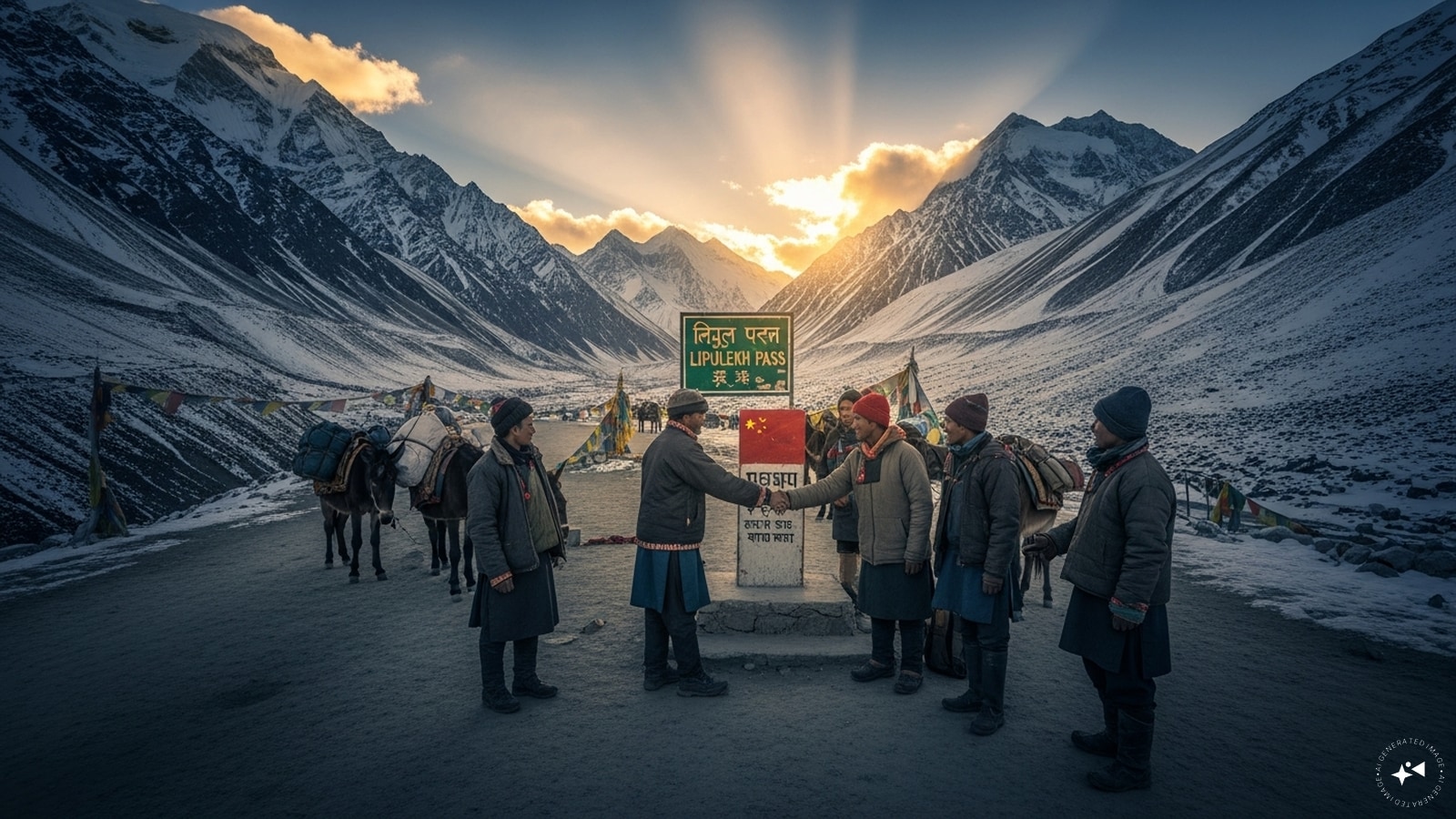
The resumption of bilateral trade between India and China through the Lipulekh Pass on June 26, 2026, after a six-year structural freeze, presents an analytical intersection of macro-geopolitics and microeconomic local logistics. This restart is not merely an operational opening of a mountain road; it is a calculated de-escalation mechanism operating underneath a broader framework of strategic competition.
By analyzing the mechanics of this trade revival, three critical structural elements emerge: the friction of high-altitude logistics, the unresolved asset liabilities from the 2019 shutdown, and the trijunction sovereignty friction involving Nepal. Understanding these dynamics requires looking past the administrative surface—such as the initial allocation of 26 trade passes—to evaluate the economic and systemic forces shaping the Himalayan border.
The Microeconomic Cost Function of Border Trade
To understand why local traders are pushing back into Tibet despite lingering geopolitical volatility, one must analyze the stark economic realities of remote Himalayan border villages. High-altitude border trade operates on a completely different cost function than standard international commerce.
Prior to the 2020 suspension, the trade volume via Lipulekh Pass was modest in absolute terms, valued at approximately Rs 3 crore in 2019 (consisting of Rs 1.25 crore in exports and Rs 1.90 crore in imports). However, for the regional economy of Pithoragarh and Dharchula in Uttarakhand, this trade represents a vital liquidity engine. The commerce relies on a specific basket of highly specialized, low-weight or high-value items, including jaggery, spices, tobacco, and specialized flour exported from India, balanced against sheep wool, raw silk, and livestock imported from Tibet.
The financial viability of this trade is bound by strict logistical constraints. Historically, the movement of goods was bottlenecked by a reliance on pack animals, specifically mules and horses. This year, the local administration has established an updated transit hub near Nabhidhang, from which animals must still transport goods across the final 600-meter elevation gap to the physical pass.
The introduction of vehicle access close to the pass significantly reduces the primary variable cost: transit time. By transitioning the primary leg of transport from animal caravans to motorized vehicles, traders compress their supply chain cycle, reducing the risk of weather-related spoilage and lowering the cost per ton-kilometer. This structural change explains the sudden spike in localized commercial interest, evidenced by 103 new permit applications submitted to the Dharchula administration for the current June-to-September season.
Capital Asset Displacement and Market Access Asymmetry
A major hidden friction point in the resumption of trade is the problem of stranded capital assets. When the border abruptly closed in 2020 due to the pandemic and escalating bilateral tensions, approximately 45 Indian traders were forced to abandon commercial property and inventory. Over Rs 1 crore worth of goods has remained locked in warehouses within the Taklakot market in Tibet for six years.
This prolonged closure created an asset displacement dynamic:
- Market Share Erosion: During the six-year Indian absence, Chinese authorities reallocated physical retail and warehouse space within the old Taklakot market to Nepali and domestic Tibetan traders.
- Depreciation and Sunk Costs: Indian traders returning this season face immediate balance sheet uncertainty. Inventory left behind in 2020 has suffered severe physical depreciation due to sub-zero high-altitude storage conditions.
- Structural Adjustments: To accommodate returning Indian businesses, a new, separate trade market has been constructed for Indian and Nepali entities. While the local trade association notes this new facility provides superior spatial layout and storage capacities, it forces Indian traders to absorb fresh setup costs, sparking local demands for subsidized rent and state-backed logistical support to offset historical losses.
The first batch of 26 authorized entities—comprising 17 principal traders and 9 assistants crossing on June 26—functions as an operational scouting party. Their primary mandate is asset evaluation rather than immediate commercial expansion; they must determine whether stranded assets can be liquidated or salvaged before committing new capital to the market.
The Trijunction Sovereignty Bottleneck
The resumption of trade via Lipulekh Pass cannot be evaluated purely through a bilateral India-China lens. The geographical reality of the pass places it directly at the sensitive trijunction of India, China, and Nepal, introducing a persistent geopolitical friction point.
                  [ TIBET / CHINA ]
                     (Taklakot)
                        /\
                       /  \
     Lipulekh Pass -->/    \
                     /      \
                    /        \
 [ INDIA ] --------+----------+-------- [ NEPAL ]
 (Gunji / Kalapani)             (Tinkar Valley)
The Kalapani territory, a 35-square-kilometer area encompassing Lipulekh, is actively administered by India but fundamentally claimed by Nepal based on its interpretation of the 1816 Sugauli Treaty. This underlying cartographic dispute escalated in 2020 when Nepal updated its official map via a constitutional amendment to include the region.
Consequently, the bilateral decisions made between New Delhi and Beijing to reopen the pass generate immediate diplomatic friction with Kathmandu. The government of Nepal and regional political factions have repeatedly lodged formal protests, stating that any trade or pilgrimage agreements concerning Lipulekh executed without Nepal's explicit consent infringe upon its sovereign rights.
This trijunction dispute creates a fragmented operating environment for logistics and security. While India has set up robust institutional structures at Gunji—including dedicated customs clearing, border security forces, and specialized banking channels for currency exchange—the long-term security of the route depends on maintaining a delicate diplomatic balance. Any sudden change in Nepal's political alignment or an escalation in its cartographic protests could disrupt the broader stability of the corridor.
A Strategic Framework for Himalayan Trade Infrastructure
The current operational blueprint implemented by the local administration provides a short-term framework for seasonal trade, but it contains clear structural limitations. To scale this economic corridor beyond its current restrictive parameters, the state must transition from a defensive border management model to an active infrastructure integration strategy.
The following targeted structural interventions are necessary to secure the viability of the Lipulekh route:
- Mechanized Intermodal Transshipment Yards: The current 600-meter animal-reliant bottleneck at the summit must be replaced. Constructing permanent, weather-resilient mechanical conveyor networks or specialized heavy-duty freight lifts would eliminate reliance on pack animals, stabilizing transport costs.
- Bilateral Cold-Chain Warehousing: Given the high volatility of alpine weather, the state must establish climate-controlled storage facilities at Gunji. This would decouple trade operations from daily weather conditions, protecting high-value agricultural exports and incoming raw silks from severe moisture damage.
- Trilateral Economic Transit Agreements: To mitigate the persistent sovereign risk posed by Nepal's objections, the trade framework should be expanded into a formal trilateral transit agreement. Incorporating Nepali traders directly into the newly constructed trade marts, and formalizing transit rights for communities in the adjacent Tinkar Valley, would convert a geopolitical flashpoint into a shared economic interest.
- Structured Freight Subsidies: The returning trade cohort cannot absorb the combined weight of capital depreciation from 2020 and new market setup fees on their own. Implementing a targeted, three-year declining freight subsidy would help stabilize local businesses while they rebuild their supply chains in Tibet.
Ultimately, the revival of the Lipulekh Pass trade route serves as a practical experiment in functional cooperation amid systemic geopolitical rivalry. The survival of this corridor will not be determined by administrative approvals or historical sentiment, but by whether the underlying infrastructure can be hardened against both severe weather conditions and regional political disputes.