The teacup did not rattle, but Farid watched the surface of the dark, cardamom-scented liquid anyway. In Tehran, you learn to read the vibrations of the world through the small things. A sudden shift in the traffic pattern on Valiusr Avenue. The tone of a street vendor's voice. Or, on this particular morning, the precise weight of the words coming across the satellite feed.
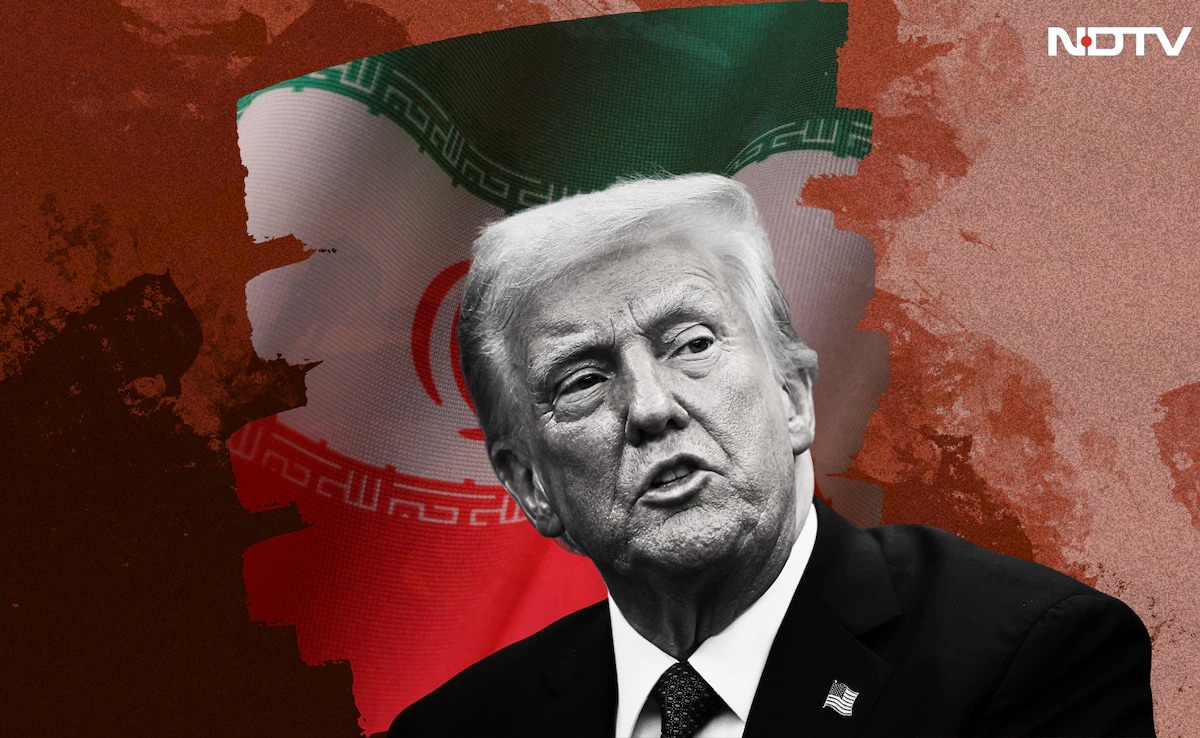
Thousands of miles away, a microphone picked up a jagged phrase. Will hit harder. The threat from Washington was not new, but it carried a different kind of velocity this time. It felt less like diplomacy and more like physics—an accelerating mass hurtling toward a fragile wall. Farid, who spent his days translating foreign press wires in a cramped office with peeling paint, felt the air in the room grow heavy. He knew what happened when these giant gears ground against each other. Prices at the local grocery store would climb by afternoon. A pharmacy three blocks over would suddenly run out of a specific European heart medication. The grand choreography of global geopolitics always left its deepest bruises on the skin of ordinary people.
Shortly after the threat arrived, the counter-move followed. It did not come with fire or fury. It arrived as an instruction, delivered with the practiced, chilling calm of an older brother holding a younger one by the wrist.
Be careful.
This is how nations speak when the margin for error shrinks to zero. It is a dialogue stripped of syntax, reduced to raw posture. On one side, the promise of overwhelming momentum. On the other, the quiet warning of a hidden trapdoor.
The Language of the Precipice
When powerful states communicate during a crisis, they rarely use the language of negotiation. They use the vocabulary of the schoolyard, amplified by a billion-dollar apparatus of mass destruction.
Consider the mechanics of a threat. To say a country will strike with greater force is an attempt to claim the future. It is an assertion that you control the narrative arc, that your adversary has only one choice: submit or be erased. But this kind of rhetoric assumes the other side views the world through the same lens of logic.
It ignores the architecture of pride.
In the ministries of Tehran, the response was calculated to neutralize the weight of the American warning. By telling a superpower to watch its step, the smaller nation effectively flips the power dynamic. It shifts the burden of responsibility. If something goes wrong, the warning implies, it will not be because we fought back; it will be because you stumbled into a room you did not understand.
Farid watched the state television broadcast analyze the statements. The commentators spoke with a practiced, detached confidence, their voices steady beneath the glare of studio lights. They spoke of strategic patience and regional deterrence. They used large, comfortable abstractions that shielded the mind from the reality of iron hitting concrete.
But outside the studio, the city was moving with a frantic, quiet urgency.
The High Cost of Posturing
The true tragedy of brinkmanship is that it forces everyone to live in a state of suspended animation. You cannot plan a wedding when the sky might change color tomorrow. You do not invest in a new business when the currency is tethered to a string of late-night proclamations.
Think about a crowded room where two men are holding open blades. They are not swinging yet. They are just standing there, muscles locked, eyes tracking the slightest twitch of a hand or a shoulder. Everyone else in the room is frozen, holding their breath, waiting for the sound of the first cut.
That frozen breath is where millions of people live their daily lives.
The American perspective often treats these exchanges as a game of chess, a series of moves designed to test the resolve of an ideological opponent. The calculations are made in sterile, windowless rooms in Virginia or Washington, using data models and satellite imagery. From that distance, a city of nine million people looks like a grid of heat signatures and logistical nodes. The human element is compressed into a spreadsheet.
But look closer at the grid.
In a small apartment in the north of the city, a woman named Maryam was counting her savings. The numbers had not changed since yesterday, but their value had eroded by five percent in the hours following the news broadcast. She had been saving for a plane ticket to visit her daughter in Germany. Now, the ticket felt like an artifact from a different era, a luxury belonging to a world where words did not have the power to devalue paper.
She did not care about the geopolitical balance of power. She did not care who looked stronger on the international stage. She only knew that two men across an ocean were having an argument, and her daughter was getting further away with every syllable they spoke.
The Mirage of Control
There is a dangerous illusion at the heart of this kind of conflict—the belief that escalation can be precisely managed.
Diplomats often speak of an "escalation ladder," a neat, conceptual diagram where each rung represents a measured increase in pressure. You tighten a sanction here. You move an aircraft carrier there. You deliver a sharp speech at a summit. The theory suggests that you can climb up and down this ladder at will, controlling the temperature of the room with the turn of a dial.
It is a fantasy.
In reality, the ladder is made of rotted wood, and the ground beneath it is slick with mud. A misunderstanding at a checkpoint, a stray drone with a malfunctioning navigation system, or a nervous commander with a finger on a trigger can instantly burn the ladder to ash.
When one side warns the other to be careful, they are acknowledging the presence of this chaos. It is an admission that neither side truly owns the situation. The machine has grown too big, too complex, and too fast for any single leader to guide its path with certainty.
Farid walked home that evening as the sun dipped below the Alborz mountains, casting long, purple shadows across the concrete. The city was still alive, humming with the defiant energy of a place that had survived revolutions, wars, and decades of isolation. People were buying flatbread, laughing at jokes, and arguing over football scores.
Yet, beneath the noise, there was a collective listening. Everyone was waiting for the next transmission, the next phrase that would determine whether the fragile peace would hold for another twenty-four hours.
The world does not break all at once. It fractures in the quiet spaces between threats, in the moments where human beings look at each other across an ideological chasm and realize they have forgotten how to speak in any language other than violence. The tragedy is not just the potential for destruction; it is the slow, daily theft of a normal life from those who only ever asked for the right to breathe without fear.
Farid reached his door, turned the key, and stepped inside, leaving the darkening street behind. On the table, the teacup was cold.