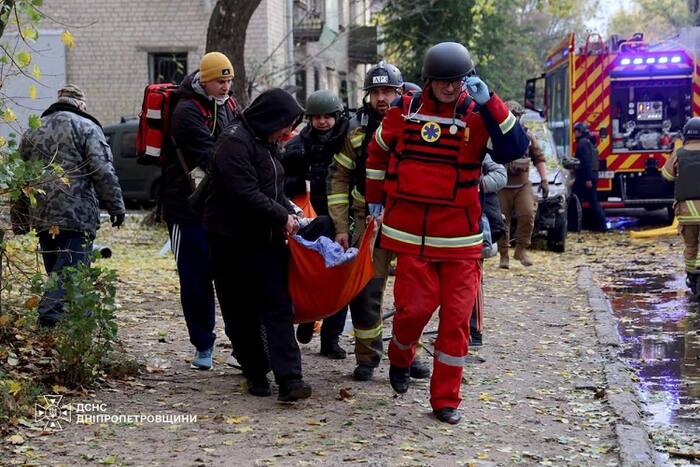
An unverified bomb threat aboard a commercial flight linking London Heathrow and Warsaw Chopin Airport triggers a deterministic, multi-agency operational shutdown that prioritizes tail-risk elimination over schedule integrity. Standard news coverage treats these events as chaotic spectacles of flashing lights and stranded passengers. In reality, a runway closure resulting from an airborne security alert is a calculated execution of international aviation protocols designed to isolate kinetic risk, preserve forensic evidence, and manage cascading network delays across European airspace.
The Anatomy of an Airborne Security Escalation
When a credible or unverified bomb threat emerges on a flight corridor between the United Kingdom and Poland, decision-making shifts immediately from commercial dispatch to state-level crisis management. Under the Chicago Convention (Annex 17) and European Union aviation security regulations, the Pilot in Command (PIC) holds ultimate authority over the aircraft in flight, while ground control assumes responsibility for airspace clearing and perimeter containment. Don't forget to check out our previous article on this related article.
The operational sequence divides into three distinct phases:
- Threat Triage and Airspace Segregation: Upon receiving a threat notification—whether via cabin discovery, air traffic control (ATC) relay, or intelligence intercept—the flight crew executes a non-normal checklist. ATC assigns a discrete transponder squawk code (typically 7500 for unlawful interference or 7700 for general emergency) and clears lower flight levels to expedite descent. Military air policing units may scramble to establish visual contact and escort the airframe to prevent deviation toward populated urban centers.
- Remote Isolation Parking: Landing at Warsaw Chopin Airport does not equate to normal terminal arrival. Standard taxiways and jet bridges present unacceptable blast-radius exposure to terminal infrastructure and adjacent aircraft. Ground control directs the aircraft to a designated Isolated Aircraft Parking Position (IAPP). At major international hubs, the IAPP sits at the extreme perimeter of the airfield, separated by blast walls or open terrain to protect critical navigation aids and fuel farms.
- Rapid Deplaning and Perimeter Lockdown: Emergency services—comprising airport rescue and firefighting (ARFF), border guard pyrotechnic units, and national police—establish a concentric exclusion zone. Passengers evacuate via mobile stairs or emergency slides depending on the urgency of the threat assessment. The immediate cessation of parallel runway operations occurs not merely out of caution, but because emergency vehicle transit across active taxiways invalidates sterile runway safety areas.
The Cascading Cost Function of a Runway Closure
Closing a primary hub like Warsaw Chopin Airport creates an immediate capacity shock across the Central European aviation network. Unlike point-to-point regional airfields, Warsaw functions as a concentrated hub-and-spoke node, particularly for LOT Polish Airlines and connecting Star Alliance traffic. To read more about the history of this, Reuters offers an in-depth summary.
The economic and operational penalty of a full ground stop compounds across four variables:
- Diversion Fuel Burn and Crew Duty Timeouts: Inbound flights holding in Warsaw’s Terminal Maneuvering Area (TMA) face strict fuel minimums. Once holding patterns exceed contingency reserves, aircraft must divert to secondary airports such as Łódź, Katowice, Poznań, or Kraków. A single diversion frequently pushes flight crews past their legal Flight Duty Period (FDP) limits under EASA regulations. Once a crew times out, the airframe is grounded at the diversion field until a replacement crew can be positioned, turning a two-hour security closure into a 24-hour fleet dislocation.
- Slot Misalignment at Slot-Coordinated Hubs: London Heathrow operates under Level 3 slot coordination, running near 99% runway capacity. An outbound delay or cancellation from Warsaw disrupts the return leg into Heathrow. Missing an allocated arrival slot at Heathrow forces aircraft into extended airborne holding over the North Sea or triggers outright cancellation to avoid breaching night-flight curfews.
- Baggage Reconciliation Bottlenecks: Security protocols following a bomb threat require 100% physical screening of all hold luggage, cargo, and mail, alongside secondary screening of passengers and crew. Standard automated baggage handling systems cannot process an isolated aircraft's load without risking cross-contamination of sterile zones. Border guard explosives teams must manually inspect every container using trace detection and canine units, freezing aircraft turnaround for four to eight hours minimum.
- Passenger Duty of Care Liabilities: Under EU Regulation 261/2004, extraordinary circumstances such as verified security threats exempt carriers from paying fixed cash compensation for delays. The carrier remains legally obligated to provide "Duty of Care"—meals, hotel accommodation, and rebooking. When hundreds of connecting passengers miss onward long-haul departures to North America or Asia, rebooking inventory evaporates across competing alliances, forcing airlines to absorb high-yield hotel and ground transport expenses.
Information Asymmetry and Operational Friction
A recurring failure point in aviation security incidents is the divergence between internal operational reality and external public communication. Emergency commanders operate on a need-to-know basis to preserve investigative integrity and prevent panic during evacuation.
During the initial ninety minutes of an airport closure, three distinct information gaps emerge:
- Media Sensationalism vs. Protocol Execution: External observers see dozens of emergency vehicles surrounding an isolated fuselage and infer an imminent detonation. In practice, standard operating procedure mandates full-scale staging for any unverified explosive threat. The presence of bomb disposal robots and ambulances reflects baseline compliance with International Civil Aviation Organization (ICAO) emergency response plans, not necessarily confirmation of a device.
- Passenger Telemetry Leaks: Modern airliners equipped with satellite Wi-Fi allow passengers to broadcast real-time cabin conditions before the flight deck can brief ground authorities. Unverified social media posts create secondary operational hazards by alerting potential perpetrators on the ground or triggering misinformation cascades that overwhelm airport customer service channels.
- Inter-Agency Handoff Delays: Resuming normal airport operations requires formal sign-off from multiple jurisdictions. Aviation authorities control the runway, border guards control immigration and security sweeps, and prosecutors hold authority over potential crime scenes. If a threat proves to be a hoax—such as a written note left in a lavatory—law enforcement must still process the aircraft as an active crime scene to collect forensic evidence, delaying the release of the airframe back to the airline's maintenance team.
Limitations of Current Aviation Threat Mitigation
While post-9/11 screening infrastructure has virtually eliminated the smuggling of conventional metallic weapons and large explosive devices through primary airport checkpoints, the Heathrow-to-Warsaw incident architecture exposes persistent vulnerabilities in threat verification.
Physical screening cannot stop non-physical threats. A hoax call placed to an airline call center, an anonymous message sent via social media, or a note written mid-flight achieves the exact same operational disruption as a physical device. Because aviation safety doctrine forbids dismissing any threat without physical verification, bad actors hold an asymmetric advantage: zero-cost threat generation forces multi-million-dollar systemic shutdowns.
Furthermore, secondary screening technologies—such as advanced imaging and explosive trace detection—operate with strict throughput limits. Scaling these checks to clear an entire widebody or narrowbody manifest simultaneously at a remote stand creates unavoidable physical bottlenecks. Mobile power units, portable X-ray scanners, and shelter facilities for evacuated passengers in inclement weather frequently lag behind the speed of the initial emergency response.
Strategic Imperatives for Aviation Stakeholders
To compress recovery timelines and insulate network schedules from unverified security alerts, airport operators and carriers must shift focus from reactive emergency staging to rapid forensic clearance and automated passenger recovery.
- Deploy Mobile Forensic Clearance Units: Major hubs must pre-position self-contained, weather-protected screening trailers adjacent to Isolated Aircraft Parking Positions. Integrating rapid-deployment computed tomography (CT) baggage scanners and portable biometric passenger verification at the perimeter eliminates the need to bus hundreds of unscreened passengers back through sterile terminal corridors.
- Automate Dynamic Rebooking Triggers: Airlines must decouple passenger rebooking from manual gate-agent intervention. The moment an aircraft diverts or enters an IAPP lockdown, automated inventory algorithms should proactively re-accommodate connecting passengers onto alternative routings and issue digital hotel vouchers before the passengers even deplane, neutralizing terminal congestion.
- Establish Standardized Digital Threat Attribution: Aviation authorities and intelligence agencies must accelerate the integration of real-time telecommunications and digital forensics into airport operations centers. Rapidly tracing the origin of electronic or telephonic threats allows security commanders to calibrate the response tier—distinguishing between low-credibility automated hoaxes and high-risk intelligence alerts—without compromising baseline physical safety protocols.