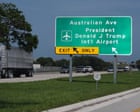
The physical rebranding of a major commercial aviation hub presents a unique friction point between political symbolism and capital allocation. On July 9, 2026, Palm Beach International Airport (PBI) officially transitioned to President Donald J. Trump International Airport under Florida Senate Bill 919. While political commentary frames this shift through a purely ideological lens, a structural analysis reveals that the true operational and financial friction lies within the underlying cost functions, regulatory bottlenecks, and shifting market dynamics of the South Florida aviation ecosystem.
The strategic execution of this transition exposes a deep divergence between symbolic intent and municipal operational realities. By categorizing the elements of this aviation rebrand, we can isolate the friction points that prevent such an initiative from achieving immediate economic velocity.
The Three Pillars of Aviation Rebranding Friction
Renaming a commercial airport cannot be accomplished by a mere change of exterior signage. It demands the alignment of three distinct operational layers, each governed by independent timelines and regulatory authorities.
1. The Legal and Regulatory Layer
The statutory mandate signed by Governor Ron DeSantis preempted local county authority, transferring naming rights to the State of Florida. However, state legislation is subservient to federal operational compliance. The Federal Aviation Administration (FAA) operates on rigorous, multi-month data cycles to update global aeronautical charts, instrument approach procedures, and navigation databases.
The primary friction here is the lag between statutory enactment and technical execution. Although the name change took effect in July, the migration of the International Air Transport Association (IATA) three-letter identifier from PBI to DJT was deferred to August 18, 2026. This deliberate delay prevents catastrophic data mismatches across global distribution systems (GDS) used by legacy commercial airlines.
2. The Operational Infrastructure Layer
The physical transition of an airport handling approximately 8.6 million passengers annually requires significant capital deployment. Palm Beach County aviation officials project the total rebranding cost at up to $5.5 million. This capital is allocated across:
- Physical roadway and terminal signage replacement.
- Digital display network overhauls (FIDS/BIDS systems).
- Software integration for local baggage handling and ticketing assets.
The financial mechanism behind this expenditure reveals a structural constraint. While the State of Florida appropriated $2.75 million to subsidize the transition, the remaining capital must be absorbed by the Department of Airports’ operating budget and capital improvement programs. This creates an immediate opportunity cost, diverting millions from localized infrastructure optimization or passenger experience upgrades to cover a non-operational branding pivot.
3. The Commercial and Intellectual Property Layer
A highly unusual complexity of this specific rebrand is the intellectual property landscape. Because the name involves a protected personal brand, the Palm Beach County Board of County Commissioners had to execute a formal Naming Rights and License Agreement on May 5, 2026.
While the Trump Organization explicitly stated that no royalties or licensing fees would be collected from the municipality, the legal framework introduces a governance bottleneck. The county remains the sole owner and operator of the facility, meaning the financial liabilities, maintenance costs, and operational obligations rest entirely on local taxpayers and airport revenues, entirely decoupled from the entity holding the trademark rights.
Market Distortions and Airline Counter-Strategies
The introduction of a highly polarized political figure into a critical piece of infrastructure introduces immediate market anomalies. The traditional commercial objective of an airport is to maximize enplanements and attract carrier capacity by positioning itself as a frictionless gateway.
The structural prose of network economics dictates that airlines prioritize passenger volume over localized politics. However, customer sentiment can force defensive operational shifts. A prime example is the internal protocol quietly enacted by United Airlines following the renaming.
The carrier issued a directive empowering reservation agents to wave change fees and fare differentials for passengers expressing aversion to flying into the newly named facility, redirecting them to Fort Lauderdale-Hollywood International (FLL) or Miami International (MIA). This dynamic introduces a localized demand distortion matrix:
[Passenger Name Aversion] ──> [Carrier Fee Waivers] ──> [Passenger Leakage to FLL/MIA]
                                                                  │
                                                                  ▼
                                                      [Diminished PBI/DJT Yields]
This structural leakage undermines the facility's competitiveness within the South Florida market. The facility already ranks as the third busiest airport in the Miami metropolitan area and 51st nationally. By providing a friction-free off-ramp for dissatisfied travelers, competing hubs stand to capture marginal market share, depressing the long-term load factors of carriers committed to the Palm Beach terminal.
The Strategic Play
To counteract structural demand leakage and stabilize passenger volumes following the transition to President Donald J. Trump International Airport, airport leadership must immediately decouple operational performance metrics from the facility’s external branding.
The immediate play is to aggressively market the facility's core structural advantages—specifically its ranking as the holder of the shortest overall TSA wait times in the United States. By pivoting all business-to-business and consumer-facing campaigns to emphasize quantifiable transit velocity (e.g., curb-to-gate times) rather than identity, the airport can neutralize consumer friction through sheer operational superiority.
Simultaneously, the aviation department must establish a dedicated capital tracking framework to ensure that the remaining $2.75 million local funding deficit does not cannibalize planned airside modernization projects, preserving the asset's underlying economic value.


