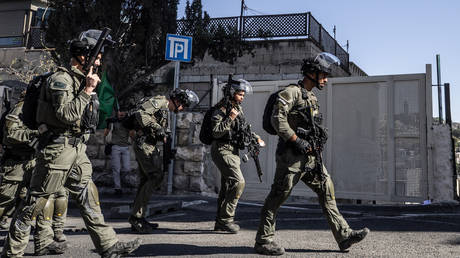
Authoritarian regimes operating under severe external economic shocks do not collapse immediately; instead, they contract inwards, tightening administrative and physical controls to suppress domestic mobilization. Understanding the current structural trajectory of Iran requires analyzing the intersection of monetary depreciation, secondary sanctions, and preemptive legal architecture designed to eliminate horizontal communication channels. Rather than viewing recent legislative measures as isolated acts of censorship, state actions reflect a coordinated survival strategy aimed at raising the cost of dissent higher than the threshold of collective action.
The Three Pillars of State Suppression
The administrative apparatus relies on a tripartite enforcement mechanism to manage escalating domestic friction. Discover more on a similar topic: this related article.
- Judicial Criminalization of External Communication: Legislative drafts such as the proposed counter-infiltration bills systematically target conversational nodes linking citizens to foreign entities. By redefining routine academic collaboration, institutional contact, and media commentary as security offenses, the state eliminates the gray zones that typically allow civil society to organize.
- Monetary Asphyxiation and Economic Pressure: With the Iranian rial reaching historical lows alongside aggressive foreign trade restrictions, the domestic purchasing power of ordinary citizens deteriorates. Economic degradation serves a dual purpose for the administration. It forces the populace into a daily struggle for basic survival, reducing the cognitive and temporal bandwidth available for political resistance.
- Escalated Penal Thresholds for Information Flow: The judiciary has signaled that disseminating digital media or unapproved documentation of civil unrest to external actors meets the criteria for capital charges such as corruption on earth. This shifts the risk-reward calculation for whistleblowers and citizen journalists, effectively pricing participation out of reach.
The Cost Function of Dissent
To evaluate why popular uprisings face severe friction, one must examine the economic and physical cost function imposed upon dissenters. In stable democracies, the cost of political opposition remains low, limited primarily to social friction or electoral loss. In a compressed autocratic environment, the cost function is exponential.
The state increases the penalty variable through targeted imprisonment, asset seizure, and physical elimination both domestically and across transnational borders. When the local currency loses value and state-controlled distribution channels dictate access to subsidies, the regime retains absolute leverage over individual livelihood. Consequently, the individual risk of participation transforms from a legal penalty into total systemic exclusion. More journalism by Associated Press explores similar perspectives on the subject.
External actors often miscalculate the impact of foreign sanctions, assuming economic pain directly accelerates regime change. In practice, heavy sanctions frequently generate a siege mentality that the state weaponizes internally. As imports contract and the domestic market fragments, the regime expands its distributive monopolies, rewarding loyalist networks while starving independent economic actors of resources. This dynamic shrinks the private sector, forcing citizens into economic dependence on state-affiliated entities.
Information Monopoly and Network Severance
The primary vulnerability of any centralized authority is decentralized coordination. Modern civil resistance relies on horizontal communication flows, secure messaging applications, and validation from international observers.
The legislative targeting of foreign media interaction directly addresses this vulnerability. By criminalizing interviews with external broadcasters, the judiciary attempts to sever the feedback loop between local grievances and global attention. When internal protests occur, isolation amplifies the perceived power of the security apparatus. Without external amplification, local friction remains localized, fragmented, and vulnerable to rapid tactical neutralization by security forces.
Simultaneously, branding independent civil society actors as foreign intelligence assets alters domestic perception. It attempts to delegitimize organic economic grievances by framing them as external subversion. This rhetorical strategy aims to fracture solidarity among disparate socio-economic groups, preventing a unified coalition from forming against the central authority.
Strategic Outlook
Monitoring the trajectory of internal stability requires tracking structural indicators rather than episodic outbursts of civil unrest. The critical variables include the velocity of currency depreciation, the enforcement rigor of secondary sanctions, and the institutional codification of anti-communication statutes through the legislative cycle. As long as the state maintains monopolistic control over physical coercion and financial distribution networks, bottom-up challenges will face severe structural barriers. Analysts must measure systemic stress not by the frequency of public demonstrations, but by the continuous adjustment of the state's legal threshold for survival.