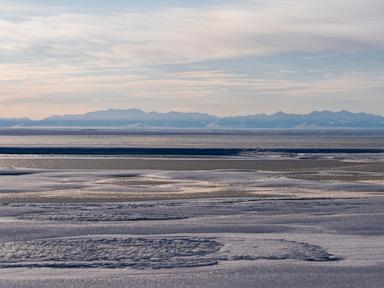
The Bureau of Land Management scheduling an oil and gas lease sale in the Coastal Plain of the Arctic National Wildlife Refuge for June 5, 2026, presents a paradox. While political mandates treat these public auctions as critical mechanics for revenue generation and domestic resource capture, actual corporate interest remains fundamentally frozen. The gap between legislative intent and market execution stems from a basic failure to account for capital allocation realities in high-cost, high-risk frontier basins.
To evaluate the actual viability of Arctic energy production, analysts must look past political rhetoric and examine the underlying mechanics. The true value of an oil lease in a remote wilderness is dictated by three primary forces: geopolitical and regulatory volatility, structural extraction costs, and changing corporate capital frameworks. You might also find this connected coverage interesting: Why Indias Massive New Tax Break For Foreign Bond Investors Might Not Fix The Rupee.
The Triple Risk Matrix of Frontier Leasing
The upcoming auction of 400,000 acres in the 1.56-million-acre Coastal Plain is the first of four sales required under recent federal legislation, including the One Big Beautiful Bill Act. Although statutory guidelines dictate these sales occur, federal mandates cannot force private operators to risk capital. Corporate risk assessment for the region breaks down into three distinct layers.
                  ┌────────────────────────────────────────┐
                  │        FRONTIER LEASING RISK           │
                  └───────────────────┬────────────────────┘
                                      │
         ┌────────────────────────────┼────────────────────────────┐
         ▼                            ▼                            ▼
┌──────────────────┐        ┌──────────────────┐        ┌──────────────────┐
│  REGULATORY CHURN│        │ INFRASTRUCTURE   │        │ ESG & REPUTATION │
│  - Policy swings │        │  DEFICIT         │        │ - Brand damage   │
│  - Litigation    │        │  - No pipelines  │        │ - Capital bans   │
│  - Permitting    │        │  - Permafrost    │        │ - Legal costs    │
└──────────────────┘        └──────────────────┘        └──────────────────┘
1. Regulatory Churn and Legal Friction
The primary threat to long-term capital deployment in the region is policy instability. The Coastal Plain leasing framework has been repeatedly weaponized and reversed over multiple administrations: As extensively documented in recent articles by The Economist, the implications are worth noting.
- The 2017 Framework: Initial opening via the Tax Cuts and Jobs Act.
- The 2021 Moratorium: Executive suspension and subsequent cancellation of the seven original leases held by the Alaska Industrial Development and Export Authority.
- The 2025 Reinstatement: Legal vacating of those cancellations by the District Court of Alaska, followed by new administrative directives to resume leasing.
This constant policy shifting destroys project value over time. An oil and gas lease is not an immediate production asset; it is a long-dated option. In an asset class requiring 7 to 15 years from initial exploratory signature to first production, a four-year political pendulum guarantees that any capital deployed will face regulatory gridlock, extended permitting delays, and ongoing lawsuits from environmental coalitions.
2. The Infrastructure Deficit and Cost Functions
The geographical isolation of the Coastal Plain changes the basic math of development costs. Unlike the National Petroleum Reserve in Alaska, which sits closer to existing operational hubs, the Coastal Plain lacks gravel roads, deepwater ports, and pipeline extensions.
The cash flow formula for a remote asset depends entirely on the initial capital expenditures required to build this basic infrastructure before the first barrel of oil can even be extracted. Because these up-front costs are so high, operators face massive financial risk early on. To justify building pipelines across miles of protected permafrost, a field must hold massive, high-density reserves.
If the actual reservoirs turn out to be small or fragmented, the project cannot generate enough revenue to pay back the initial infrastructure costs. This makes the project highly sensitive to geological uncertainty.
3. ESG Mandates and Capital Allocation Shifts
The financial ecosystem supporting major oil companies has shifted over the last decade. Institutional investors now enforce strict environmental, social, and governance criteria, with a specific focus on protecting pristine ecosystems.
Major global financial institutions have explicitly banned direct financing for oil and gas projects in the Arctic. This capital restriction leaves public exploration and production companies in a tough spot: entering the Coastal Plain risks damaging their brand and losing access to broader commercial paper markets and credit facilities.
The Historical Baseline: Projections vs. Reality
The upcoming June 2026 lease sale is not happening in a vacuum. History shows a massive disconnect between official government revenue projections and actual market demand.
| Metric | 2017 Legislative Projection | January 2021 Auction Reality | January 2025 Auction Reality |
|---|---|---|---|
| Projected Gross Revenue | $1.82 Billion (10-Year Horizon) | $16.5 Million | $0.00 |
| Private Operator Engagement | Expected Tier-1 Supermajors | 2 Minor Independent Bidders | Zero Bids |
| Primary Leaseholder | Diversified Commercial Consortiums | State Public Corp (AIDEA) | None |
When Congress authorized the program in 2017, the Congressional Budget Office estimated the first two lease sales would bring in $1.82 billion in gross revenues, to be split equally between the federal government and the State of Alaska. The actual results exposed a complete lack of market demand.
The January 2021 sale generated just $16.5 million. Private capital completely skipped the event; only two small, independent entities placed bids, while a state-owned public corporation, the Alaska Industrial Development and Export Authority, stepped in as a bidder of last resort to pick up nine tracts at the absolute minimum bid of $25 per acre.
By January 2025, when a second sale offered 400,000 acres focused purely on areas with high hydrocarbon potential, the auction received zero bids.
While the Congressional Budget Office has lowered its expectations—now projecting $452 million in federal revenue from 2025 through 2034 under the mandated sales—this new estimate still assumes private companies will suddenly start bidding aggressively. This assumption ignores the structural realities of the industry.
Market Dynamics and Strategic Realities
The core flaw in federal leasing strategies is treating all domestic oil acreage as a single asset class. In reality, capital flows to the highest returns with the fastest payback periods.
The primary competitor for an extraction dollar is not other international frontier basins, but the domestic Permian Basin and similar shale plays.
       HIGH-COST FRONTIER ASSET                    LOW-COST TIGHT SHALE
          (e.g., Coastal Plain)                       (e.g., Permian Basin)

         ┌─────────────────────┐                     ┌─────────────────────┐
         │ $70 - $80+ / barrel │ ── Break-Even Cost ──│ $35 - $45 / barrel  │
         └─────────────────────┘                     └─────────────────────┘
         ┌─────────────────────┐                     ┌─────────────────────┐
         │    7 - 15 Years     │ ── Time-to-First ───│    Months / Weeks   │
         └─────────────────────┘       Barrel        └─────────────────────┘
         ┌─────────────────────┐                     ┌─────────────────────┐
         │     Billions ($)    │ ── Upfront CapEx ───│     Millions ($)    │
         └─────────────────────┘                     └─────────────────────┘
Short-cycle tight oil assets offer a rapid return on capital. An operator can drill, fracture, and hook up a shale well to a pipeline within weeks for a fraction of the cost of an Arctic project. This quick turnaround lets companies adjust their production levels on the fly based on global oil prices.
In contrast, an Arctic project requires billions in up-front infrastructure spending before a single barrel is produced, running an operational break-even estimate of $70 to $80+ per barrel, compared to $35 to $45 per barrel in core shale plays.
Faced with these options, corporate boards have shifted their strategy from chasing long-term production volume to prioritizing capital efficiency, near-term free cash flow, and reliable dividend payouts. Spending massive capital on high-risk, politically volatile frontier assets like the Arctic Coastal Plain directly contradicts this strategy.
Strategic Forecast for the June 5 Auction
Given these economic, regulatory, and geological realities, the June 5, 2026 lease sale is highly likely to repeat past failures.
Large, well-capitalized energy companies will almost certainly avoid the auction. The risk to their reputation, combined with severe regulatory uncertainty and high infrastructure costs, makes the area unviable for public corporations focused on near-term returns.
Any bidding that does happen will likely come from state-backed entities like the Alaska Industrial Development and Export Authority or small, speculative independent operators. These groups may try to secure acreage at the minimum bid price of $25 per acre, betting on long-term legal changes or future asset sales.
However, even if a few leases are issued, actual physical exploration—like seismic testing and exploratory drilling—will remain stalled. The combination of intense legal challenges from environmental groups and the lack of pipeline infrastructure creates a major bottleneck that will keep any leased land completely idle.
Ultimately, the policy of mandating lease sales in the region serves as a stark example of structural misalignment. It highlights a widening divide between rigid legislative mandates and the dynamic, risk-managed realities of modern energy markets.