International humanitarian law establishes strict parameters governing the conduct of hostilities, requiring military operations to balance military necessity against civilian protection through the principles of distinction, proportionality, and precaution. When United Nations-backed human rights experts released findings asserting reasonable grounds to believe that United States military actions in Iran violated these thresholds, the declaration reignited a long-standing structural tension between international investigative bodies and sovereign states. Deconstructing these legal allegations requires examining the evidentiary frameworks, the mechanics of targeting assessments, and the systemic barriers that prevent formal legal enforcement in modern geopolitical conflicts.
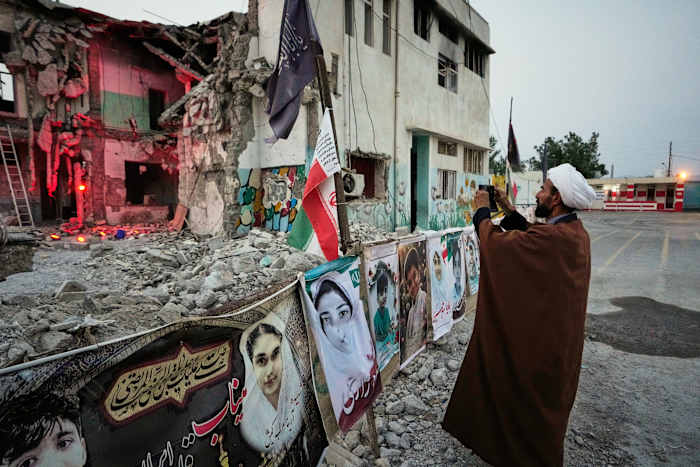
The core of the UN-backed fact-finding mission's legal assessment centers on specific engagements, notably airstrikes impacting civilian infrastructure, including a school in Minab and a sports complex area in Lamerd. Under Additional Protocol I of the Geneva Conventions, parties to a conflict must continuously verify military objectives and refrain from launching attacks that fail to distinguish between civilian objects and legitimate military targets. The analytical friction in evaluating these strikes lies within the asymmetric information environment. Independent international bodies operate with limited on-the-ground access, relying on open-source intelligence, satellite imagery analysis, and witness testimonies. Conversely, military planning cells operate behind classified intelligence architectures, utilizing proprietary sensor data and real-time collateral damage estimation methodologies.
This divergence creates a fundamental gap in the cost function of modern warfare. For international legal monitors, a high civilian casualty ratio or damage to protected cultural and educational structures serves as a primary indicator of potential recklessness or deficient target verification. For military commands, operational assessments evaluate proportionality based on the perceived value of the target relative to expected incidental harm at the exact moment of execution. When external investigators conclude that reasonable grounds exist for war crimes, they are signaling that the observed outcome—civilian loss of life and structural destruction—exceeds the margin of error permissible under a rigorous application of the principle of proportionality.
A major structural vulnerability in these accountability mechanisms is the absence of reciprocal engagement. Independent investigative teams frequently face institutional stonewalling from state actors involved in the conflict. When national defense departments decline to share intelligence justifications, operational logs, or post-strike damage assessments, investigators must construct their evidentiary baseline from external proxies. This lack of bilateral cooperation distorts the analytical record, leaving strategic decisions opaque and forcing external bodies to rely on inductive reasoning derived from physical aftermaths rather than deductive analysis of intent and intelligence inputs.
At the same time, the broader geopolitical utility of these findings is constrained by institutional design. Human rights councils and independent investigative commissions possess mandates to document violations and establish historical records, but they lack compulsory jurisdiction or enforcement capabilities. The International Criminal Court operates under complementary jurisdictional rules that require state referral, UN Security Council action, or territorial jurisdiction—none of which apply uniformly to major nuclear-armed states that are not parties to the Rome Statute. Consequently, legal pronouncements function primarily as normative pressure points rather than actionable judicial indictments.
Evaluating the trajectory of these accountability frameworks reveals a widening chasm between normative legal standards and the realities of modern state conflict. As precision-guided munitions and remote-piloted systems redefine the speed and execution of military operations, the legal doctrines governing proportionality remain anchored to traditional interpretations of human judgment and real-time battlefield visibility. Bridging this gap requires transparent post-action reviews and standardized forensic protocols that can satisfy both military operational security and international humanitarian oversight, a balance that remains elusive in contemporary state-to-state confrontations.
Initiate formal institutional dialogue channels through neutral intermediary states to establish standardized protocols for post-strike forensic data sharing, ensuring that future civilian casualty assessments utilize verified operational telemetry rather than relying exclusively on external observational estimates.