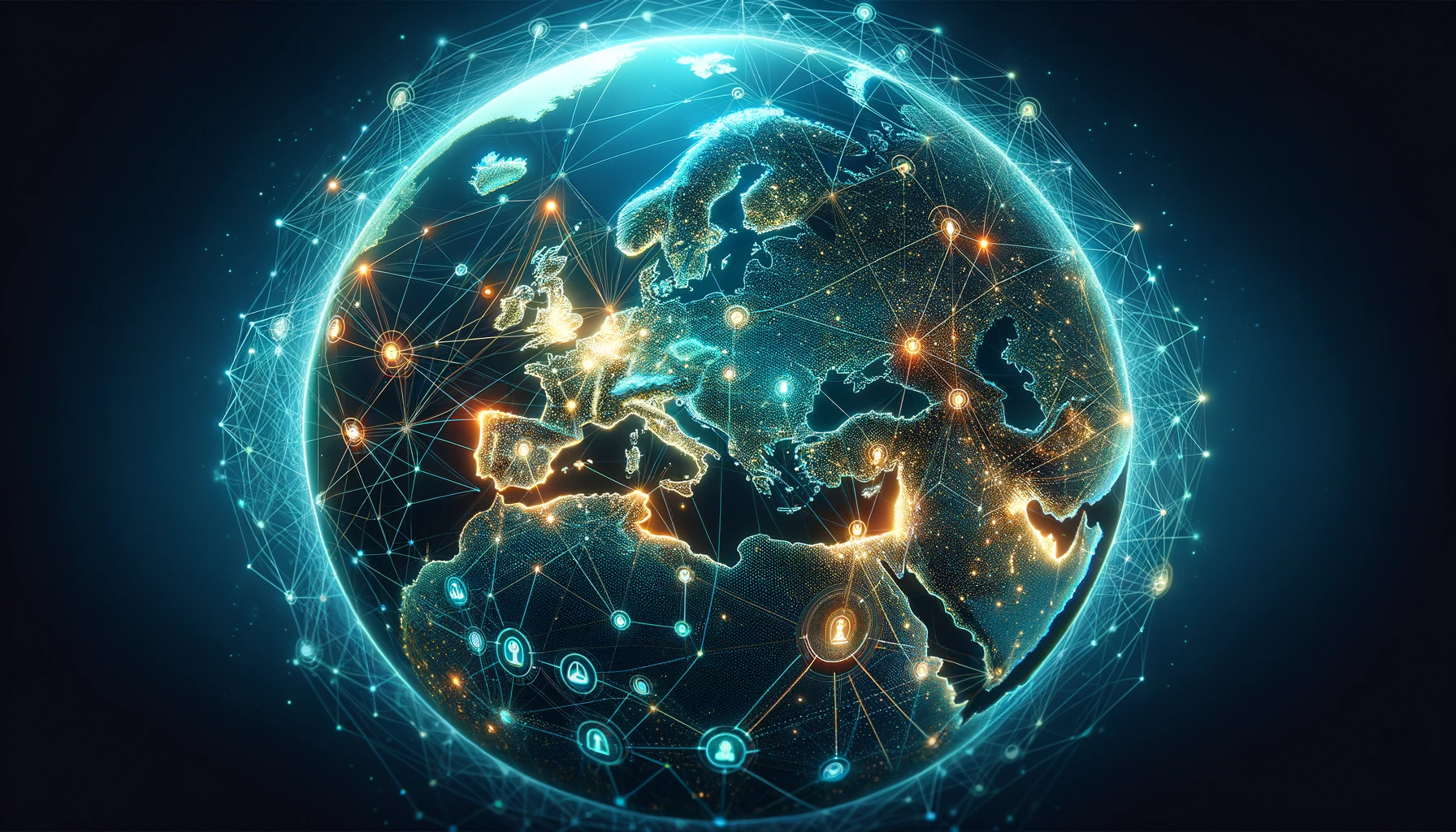
A young man sits in a café, his thumb scrolling rhythmically across a cracked glass screen. He is not a soldier. He is not a strategist. He is a data point. Every "like" on a social media post, every ping to a cell tower as he moves from his home to the market, and every WhatsApp message sent to a cousin in another neighborhood creates a digital breadcrumb. He thinks he is communicating. In reality, he is being mapped.
Somewhere in a temperature-controlled room, miles away from the dust and heat, a machine is humming. It does not have a soul, but it has an objective. It looks at the young man’s digital life and assigns him a number. Today, that number is high enough. The machine marks him as a target.
This is the reality of Lavender and Where’s Daddy, the AI-driven systems currently reshaping the face of modern warfare. We used to believe that war was a series of human decisions—terrible, weighted choices made by people who would eventually have to look themselves in the mirror. But the mirror has been replaced by a monitor. The person making the choice has been replaced by a probability score.
The Weight of a Percentage
In the traditional theater of intelligence, identifying a target was a painstaking, manual process. Humans vetted humans. They cross-referenced sightings, wiretaps, and physical surveillance. It was slow. It was inefficient. But it was inherently human.
Now, efficiency is the only metric that matters.
Lavender, the AI system developed by elite intelligence units, processes vast oceans of data to identify suspected militants. It doesn't look for a smoking gun. It looks for patterns. It analyzes the frequency of calls, the membership of Telegram groups, and the physical proximity of one phone to another. If your digital behavior mimics that of a known combatant, the algorithm flags you.
The machine doesn't "know" you are a militant. It simply calculates that there is a 90% statistical likelihood that you are. In the cold logic of the system, that 10% margin of error—the human beings who are just unlucky enough to have the wrong friends or live in the wrong building—is considered an acceptable cost of doing business.
Consider a hypothetical teacher named Omar. Omar isn't involved in the conflict. But Omar’s brother is. They speak twice a week. Omar lives in an apartment complex where three other residents have been flagged. To the AI, Omar’s digital signature is indistinguishable from a cell leader’s. The machine doesn't see a teacher; it sees a cluster of risky connections. It sees a target.
The Waiting Game
The horror of this technology isn't just in the identification. It’s in the timing.
There is a secondary system with a name so chillingly domestic it sounds like a nursery rhyme: "Where’s Daddy?"
This system is designed to track individuals until they return to their homes. The logic is brutally simple. It is easier to hit a target when they are stationary, inside a known structure, rather than moving through a crowded street or a fortified bunker. The AI waits. It watches the GPS coordinates of a phone. It waits for the signal to stop moving for a sustained period in a residential zone.
When the signal settles, the notification goes out. The target is home.
In that moment, the "Where’s Daddy?" system creates a tragic irony. The home, traditionally the one place of sanctuary, becomes the most dangerous place on earth. Because the system prioritizes efficiency over surgical precision, the strike doesn't just take out the individual identified by the algorithm. It takes out the structure. It takes out the family eating dinner. It takes out the neighbors on the other side of a shared wall.
The "human" in this loop is often reduced to a rubber stamp. Reports indicate that officers might spend as little as twenty seconds reviewing a target before authorizing a strike. Twenty seconds to decide if a machine’s statistical guess is worth a human life. In those twenty seconds, there is no time to check for children, no time to verify the "10% error," and no time for conscience.
The Erosion of Accountability
We are entering an era of "algorithmic impunity." When a commander makes a mistake, there is a trail of accountability. When a machine makes a mistake, we blame the data. We blame the "noise" in the system. We treat the loss of life as a technical glitch rather than a moral failure.
This isn't just about one conflict or one region. This is a blueprint for the future of global security. Once the threshold is crossed—once we decide that it is acceptable to kill based on a probability score generated by a black-box algorithm—there is no going back.
The technology is seductive because it promises safety through automation. It tells us that we can eliminate our enemies without the messy, traumatic work of traditional warfare. It promises a clean, digital solution to a bloody, physical problem. But there is nothing clean about it.
The data being fed into these systems is often flawed. If a phone is passed from a father to a son, the AI doesn't know. If a SIM card is sold on the black market, the AI doesn't know. It follows the signal, not the soul.
Imagine the psychological toll on a population that knows their every digital interaction could be a death warrant. You stop calling your friends. You stop joining groups. You start to fear the very device that connects you to the world. The phone in your pocket becomes a ticking clock that you can't see or hear.
The Invisible Stakes
We often talk about AI in terms of convenience. We use it to write emails, to generate art, to suggest what movie we should watch next. We have become comfortable with the idea of an algorithm "knowing" us. But we have reached a point where that knowledge has been weaponized in the most literal sense.
The stakes are not just about the people currently in the crosshairs. The stakes are about what happens to our collective humanity when we outsource the most somber decision a human can make—the decision to take a life—to a line of code.
If we allow the "Where’s Daddy?" logic to become the gold standard of modern engagement, we are essentially saying that the individual no longer exists. There are only data sets. There are only proximity alerts. There are only "acceptable" margins of collateral damage.
The machine continues to hum. It doesn't feel regret. It doesn't feel the weight of the twenty seconds it took to confirm a strike. It simply moves on to the next data point, searching for another pattern in the silence.
The young man in the café closes his phone. He stands up to walk home. He has no idea that a thousand miles away, a cursor has just turned red. He has no idea that his life has been reduced to a percentage. He walks into the evening light, a ghost in a system that has already decided his ending.
Somewhere, a light flashes on a console. The algorithm is satisfied. The data has been processed. The silence is about to become permanent.