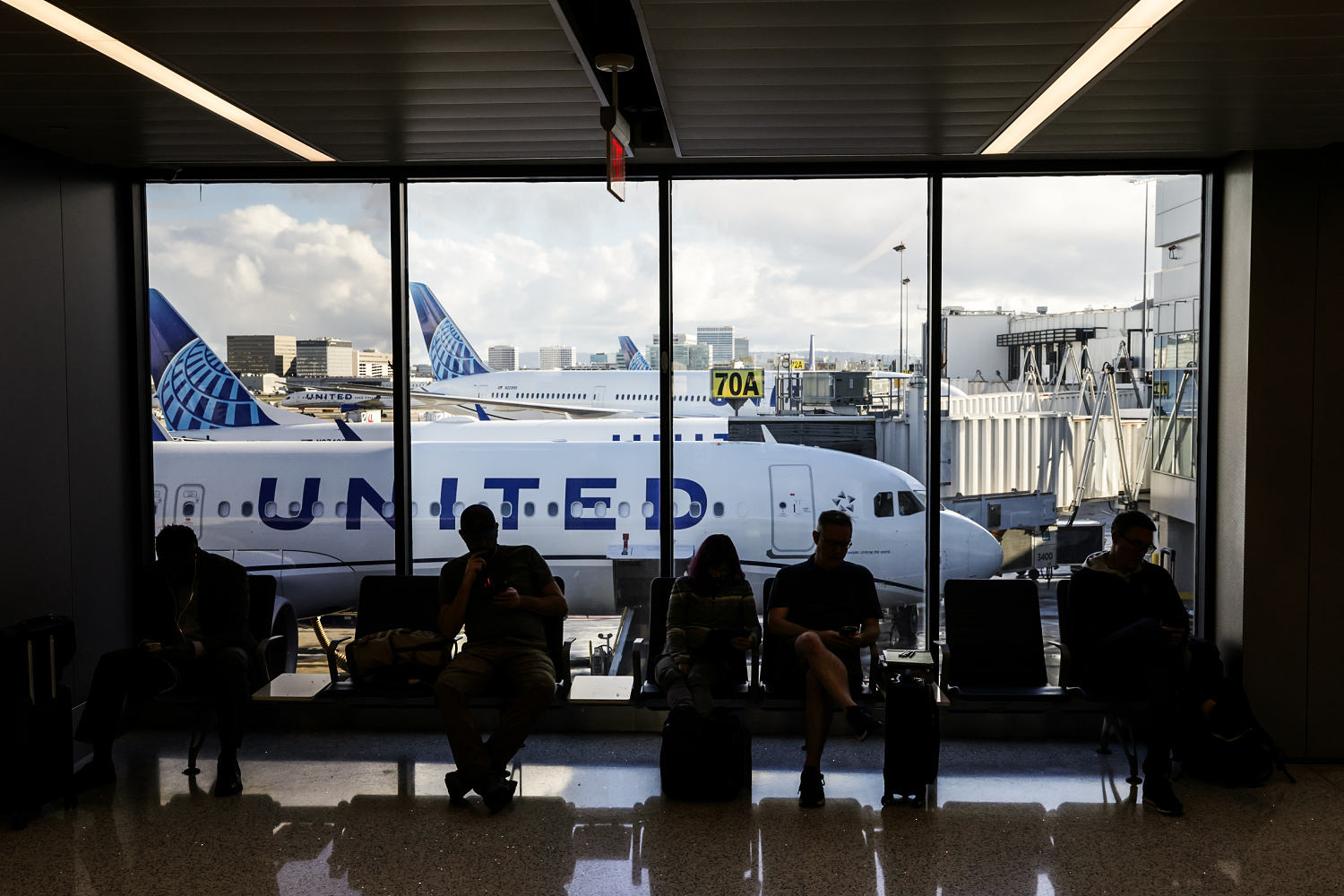
Your gate screen suddenly freezes, the airline app goes blank, and an agent picks up the intercom to announce a "widespread system outage."
If you've ever been stranded at O'Hare, Newark, or Denver when United Airlines experiences a major technology failure, you know that specific sinking feeling. It isn't just about the delay. It's the total vacuum of reliable information that follows.
Even after an airline officially announces that a widespread system outage has been resolved, the real chaos at the airport is usually just getting started. Resolving the software glitch fixes the backend servers, sure. It doesn't magically teleport flight crews back into legal duty windows or clear a backlog of 400 delayed departures across three time zones.
Why "Outage Resolved" Doesn't Mean You're Taking Off
Most travelers hear that a carrier has fixed its technical issue and immediately assume their flight will board within twenty minutes. That's rarely how commercial aviation works.
When United Airlines or any legacy carrier suffers a system-wide IT failure, the ripple effects hit three distinct operational layers at once. Fixing the computer network only solves the first one.
The Weight and Balance Bottleneck
Modern commercial jets cannot legally push back from the gate without a finalized weight and balance manifest. This calculation depends on real-time passenger counts, checked bag weights, cargo distribution, and fuel loads.
During a widespread system outage, automated dispatch tools go dark. Gate agents and load planners have to revert to manual calculations or wait until servers resync across every hub. Even when the primary outage ends, hundreds of flights enter a digital queue simultaneously for dispatch clearance.
Crew Timeout Dominoes
Federal Aviation Administration (FAA) regulations strictly govern how long pilots and flight attendants can remain on duty. The clock doesn't stop ticking just because an airline's computer system crashed.
If an outage lasts two or three hours, dozens of crews sitting on tarmac-bound planes or waiting in terminals suddenly hit their maximum legal duty limits. Once a crew "times out," that aircraft isn't going anywhere until a reserve crew arrives—assuming reserve crews haven't already been exhausted by the same disruption.
Aircraft Misalignment Across Hubs
Airlines operate on tightly choreographed hub-and-spoke schedules. The plane supposed to take you from Chicago to San Francisco might be stuck on a runway in Houston because of the exact same technology glitch.
By the time engineers resolve the root technical failure, planes and crews are scattered in the wrong cities. It routinely takes 24 to 48 hours of cancellations and schedule resets to get the physical fleet back in sync.
The Real Reason Airline IT Infrastructure Keeps Breaking
You might wonder why multi-billion-dollar airlines still get brought to their knees by software bugs and server crashes. Honestly, it comes down to decades of mergers and legacy architecture.
When United merged with Continental Airlines in 2010, engineers had to stitch together two massive, incompatible computer systems. That kind of technical debt doesn't just vanish over time. Legacy carriers still rely on older mainframe reservation systems—like SHARES or Sabre—that communicate with dozens of modern cloud applications, mobile APIs, and third-party vendor tools.
A single broken update, a corrupted configuration file, or an expired security certificate can sever the connection between the core reservation database and the departure control system. We saw this across the entire industry during the July 2024 CrowdStrike outage, and we've seen carrier-specific versions happen repeatedly when internal network switches or third-party dispatch vendors fail.
Airlines spend millions on redundancy, yet those backup systems often share the same underlying data feeds. When bad data corrupts the primary system, it frequently replicates straight into the backup.
What You Should Do the Second an Outage Hits
Standing in a 200-person customer service line at the terminal is the absolute worst way to handle an airline system failure. When the airline's internal network is down, the agent standing behind the podium is staring at the exact same frozen screen you are.
Take control of your own rebooking before the recovery wave hits.
- Use the self-service rebooking tools first. As soon as systems flicker back online, the mobile app's automated rebooking engine updates faster than human agents can type commands into green-screen terminals.
- Call the international support desk. If domestic phone lines are jammed with two-hour hold times, dial United's international customer service numbers in the UK, Canada, or Australia using a VoIP app. Those agents access the exact same reservation database with a fraction of the call volume.
- Check partner airline inventory. Look up seats on Star Alliance partners like Air Canada, Lufthansa, or Avianca if you're traveling internationally, or check competing domestic carriers if you absolutely must arrive that same day.
- Screenshot everything. Capture your original itinerary, boarding pass, and any error messages in the app. When systems crash, digital records occasionally drop flight segments or lose track of checked bag tags.
Knowing Your Rights During a Technology Failure
Airlines love to blame external factors for delays, because "acts of God" like severe weather exempt them from paying for your hotel room or meal vouchers. A widespread system outage is different.
Under the U.S. Department of Transportation (DOT) Airline Customer Service Dashboard, controllable delays and cancellations include maintenance issues, crew scheduling problems, and airline IT system outages.
If United Airlines cancels your flight or delays it significantly due to an internal system failure, you are entitled to specific protections under their customer service commitments:
- Rebooking on the next available flight at no additional cost, including on partner airlines if necessary.
- Meal vouchers if your delay stretches past three hours.
- Complimentary hotel accommodations and ground transportation if the outage forces you into an unexpected overnight stay away from home.
- A full cash refund to your original form of payment if your flight is canceled or significantly delayed and you choose not to travel—even if you bought a non-refundable Basic Economy ticket.
Don't accept travel credits if you're ditching the trip altogether. Under federal rules finalized by the DOT, airlines must issue automatic cash refunds when a significant schedule change occurs and the passenger declines the alternative itinerary.
How to Bulletproof Your Next Trip Against Tech Meltdowns
You can't prevent an airline's servers from crashing, but you can stop a technology outage from ruining your itinerary.
Always book the earliest nonstop flight of the day whenever possible. Morning departures rely on aircraft and crews that arrived the night before, insulating you from the cumulative afternoon delays that spiral out of control when a system glitch hits at noon.
Never check a bag if you're taking a tight connection or flying during peak travel weekends. During a widespread system outage, automated baggage sorting systems often lose track of routing data, leaving thousands of suitcases sitting in sorting rooms days after passengers finally reach their destinations. Drop an AirTag or similar Bluetooth tracker inside every bag you do check so you aren't relying on the airline's broken tracking portal to locate your luggage.
Finally, keep a backup booking strategy in mind. When an airline announces an outage is resolved, treat that announcement as the starting gun for a race against every other stranded passenger in the terminal. Open the app immediately, grab the first confirmed seat out on the next flight, and sort out your meal or hotel vouchers once your new boarding pass is safely saved to your phone.