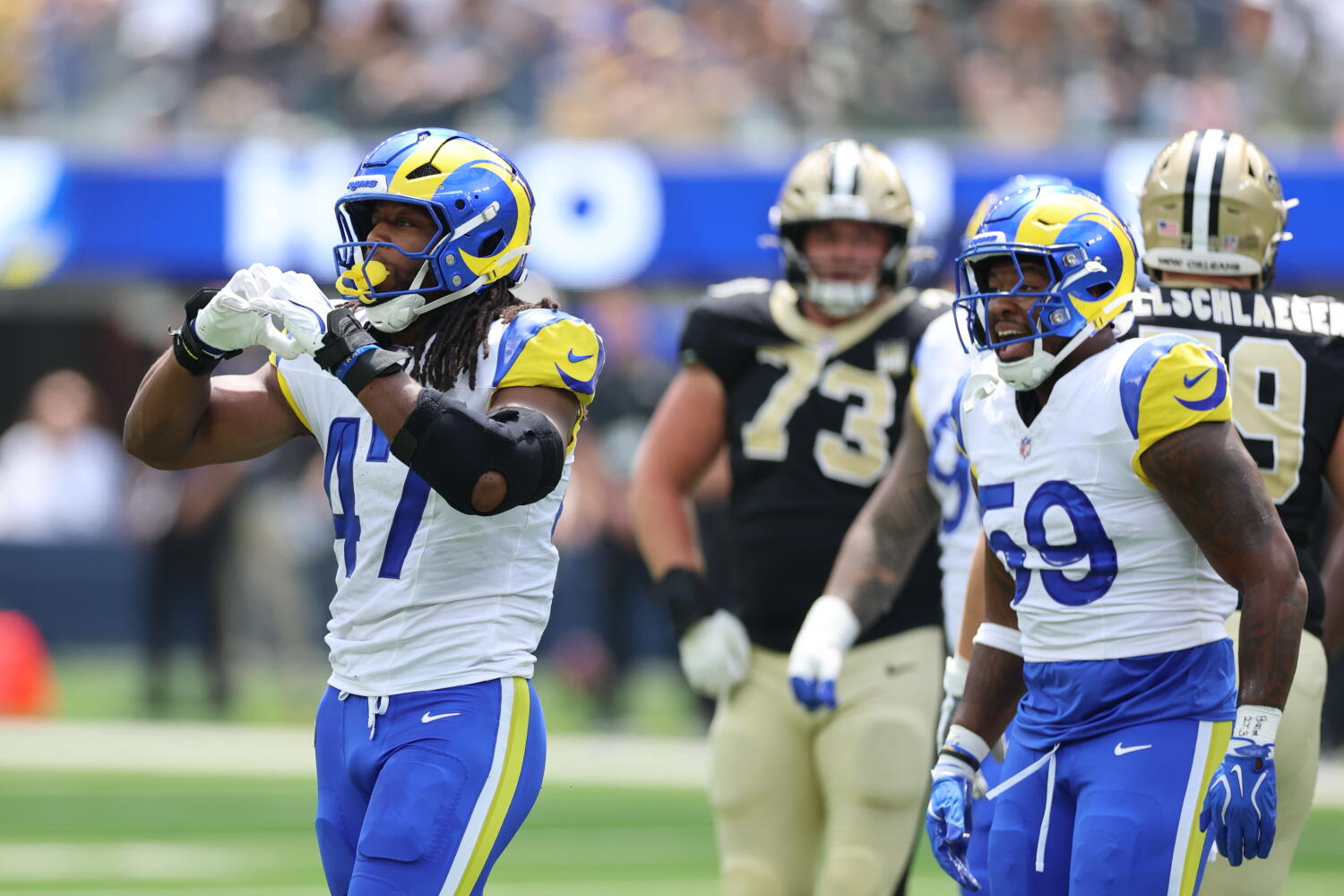
Aaron Donald walking back through the doors of the Los Angeles Rams facility changes the entire gravitational pull of the National Football League. When a player who redefined defensive interior play decides to lace his cleats up again after stepping away, the sports world stops. Yet beneath the surface of the headline-grabbing return lies a calculated gamble by a franchise staring at a closing window.
The primary narrative spun across sports media frames this as a romantic final chapter. A legendary defensive tackle missing the fire of competition, returning to help push his former team toward another championship ring. That is the PR version. The reality is far more transactional, grounded in the brutal economics of roster construction, salary cap manipulation, and the stark realization that replacing a generational talent is mathematically impossible.
For months, the franchise operated under the assumption that life after number 99 had begun. They drafted replacements, shifted defensive schemes, and prepared for a transition phase. But theory collapses when faced with game-day reality.
The Anatomy of a Retirement That Never Quite Felt Permanent
Retirements in modern professional sports rarely carry the finality they once did. Athletes walk away physically spent, only to realize that the vacuum left by competition cannot be filled by golf courses or television studios. Donald walked away in March 2024 after ten grueling seasons, eight-time First-Team All-Pro selections, and three Defensive Player of the Year awards. He left a Hall of Fame career behind because the daily toll of training camp and double teams had extracted its pound of flesh.
Why reverse course now?
The answer sits in the competitive pressure cooker of the NFC West. General manager Les Snead and head coach Sean McVay have never believed in traditional rebuilds. They trade future draft capital for immediate veteran impact as a matter of organizational philosophy. When the defense struggled to generate consistent interior pressure during critical stretches, the internal discussions shifted quickly from hypothetical contingencies to direct phone calls.
To understand why Donald's return alters the championship math, look at how modern defensive coordinators design pressures. Without a dominant three-technique tackle who commands consistent double teams, blitzers must manufacture pressure from the perimeter. That leaves cornerbacks exposed in single coverage. With Donald on the field, the entire offensive line slide protection shifts toward his side of the formation. Every other defender on the field suddenly operates with a wider margin of error.
The Financial and Cap Maneuvers Required to Make It Happen
Bringing a player of this magnitude back into the fold requires heavy lifting from the front office. Salary cap gymnastics are standard operating procedure in Los Angeles, but re-integrating a high-salary veteran late in the cycle demands creative structuring.
Contracts at this level do not happen in a vacuum. The front office had to restructure existing deals, push bonus money into future years, and ensure that the locker room chemistry remained intact. Veterans returning from retirement often command respect immediately, but younger players who earned snaps during the transition period face reduced playing time. McVay's ability to manage ego and snap counts will dictate whether this experiment succeeds or creates friction.
Consider the historical precedent. Players like Brett Favre or Rob Gronkowski proved that a year away can either preserve a body or expose the rust of inactivity. Donald spent his time away maintaining his legendary conditioning regimen, avoiding the surgical procedures that usually accompany a full NFL schedule. That distinction matters immensely. He is not returning from a major knee reconstruction or a chronic back injury. He is returning from rest.
How Opposing Coordinators Are Rewriting Their Game Plans
The strategic impact on opposing offenses is immediate and severe. Offensive line coaches across the league spent the last two offseasons deleting the specific protections designed exclusively for number 99. Now, those playbooks are open again.
When facing a defense anchored by an elite interior disrupter, running quarterbacks become liabilities because the middle of the pocket collapses instantly. Pocket passers are forced to throw hot routes within two seconds of the snap. Deep developing passing concepts disappear from the opponent's game plan entirely.
Coordinators will attempt to neutralize him with quick-hitting perimeter screens and outside zone runs designed to stretch the defense laterally. Yet, forcing an offense to abandon its preferred identity is half the battle. If a team has to completely alter its offensive philosophy just to survive four quarters against one player, the defensive coordinator has already won the chess match.
The Rams are betting everything on this brief window of convergence. Quarterback Matthew Stafford is playing through the final productive chapters of his career. Cooper Kupp and the offensive core understand that the clock is ticking loudly. Adding the most dominant defensive player of his generation back to the roster is not a nostalgic reunion. It is an aggressive, high-stakes declaration that the front office refuses to let their championship window close quietly.