The northern air does not carry sound the way it does in the south. In the dense pine forests stretching across the Finnish border, winter creates a silence so absolute that a snapping twig sounds like a gunshot. For generations, the people living along this boundary have understood the value of that quiet. It is a stillness bought with historical awareness, a calm maintained by a quiet but relentless preparation.
Now, listen closer. Above the tree line, the silence is being recalibrated.
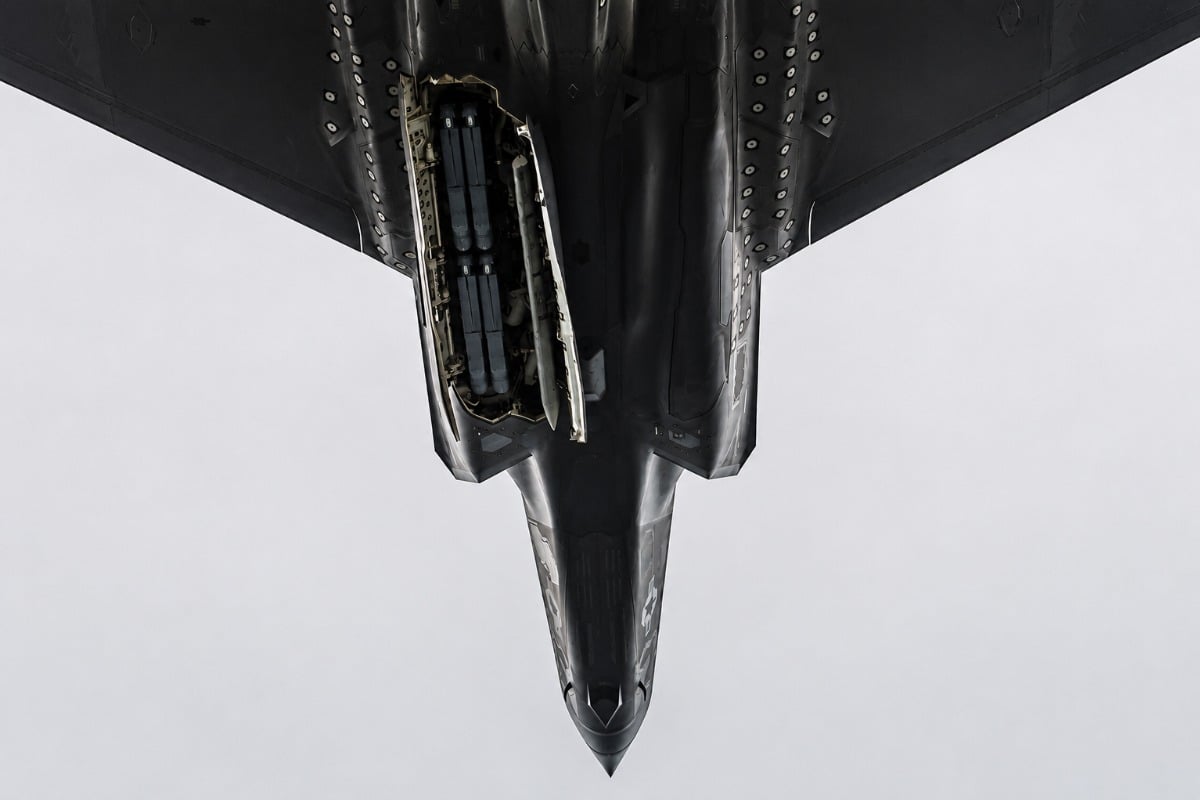
Finland is quietly rearming its sky. The nation recently finalized a major procurement of advanced, precision-guided munitions—specifically Joint Direct Attack Munition (JDAM) and Small Diameter Bomb (SDB) integration kits—for its upcoming fleet of F-35A Lightning II fighter jets. On paper, it looks like a standard defense line item. It reads like a cold ledger of hardware, tonnage, and defense budget allocations.
But military procurement is never just about hardware. It is about psychology. It is about drawing an invisible line in the dirt and ensuring that everyone knows exactly what happens if that line is crossed.
Consider a hypothetical radar operator named Matti. He sits in a hardened bunker somewhere in Rovaniemi, the glowing green screens casting a pale light over his face. Matti does not think about geopolitics in the abstract. He thinks about flight times. He thinks about the 800 miles of shared border that his country maintains with a volatile neighbor. To Matti, the acquisition of smart bombs is not a political talking point. It is a calculation of deterrence. It is the difference between a vulnerability and a fortress.
For decades, Finland practiced a doctrine of strategic ambiguity. They call it sisu—a stoic, stubborn resilience that does not boast but refuses to bend. They watched the world change around them, quietly building one of the most formidable conscript armies in Europe while maintaining a polite, frosty diplomatic stance.
Then, the world shifted. The invasion of Ukraine shattered the illusion that old treaties could guarantee modern sovereignty. The silence in the northern woods suddenly felt less like peace and more like a breath being held.
The transition to the F-35 platform was already underway, a massive investment to replace the aging fleet of F/A-18 Hornets. But a fighter jet without the right teeth is just an expensive surveillance drone. By acquiring these specific smart bomb kits, Finland is converting its air force from a defensive shield into a highly precise, lethal instrument of deterrence.
These are not the unguided gravity bombs of the twentieth century. The JDAM is a guidance tail kit that converts existing unguided free-fall bombs into near-all-weather "smart" munitions. Using global positioning systems and inertial navigation, they can find a target through heavy cloud cover, smoke, and dust. The Small Diameter Bomb allows a single aircraft to carry multiple precision weapons, engaging several distinct targets on a single mission from standoff ranges.
The analogy is simple: if old munitions were a sledgehammer, these systems are a scalpel. You do not need to destroy an entire grid when you can precisely neutralize a single threat before it ever crosses the threshold.
This capability changes the entire calculus of the region. A potential adversary looking across the border no longer just sees a vast expanse of difficult terrain and stubborn soldiers. They see a sky that can strike back with pinpoint accuracy from dozens of miles away, long before a single enemy boot touches Finnish soil.
The cost of this preparation is staggering. It requires citizens to look at their tax bills and realize that peace is the most expensive commodity on earth. It requires a collective agreement that some things are too valuable to lose.
Walk through the streets of Helsinki on a crisp evening. The cafes are full. The lights from the design district reflect off the damp pavement. Children walk home from school unattended, a testament to a society built on trust and safety. The people here do not live in fear. They do not hoard supplies or speak in hushed tones about impending conflict.
That normalcy is the real objective. The massive defense contracts, the training sorties over the Baltic, the integration of American precision weaponry into Nordic hangars—it all exists solely to keep those Helsinki cafes full. The irony of modern deterrence is that the ultimate measure of success for these weapons is that they are never used. They exist to sit in climate-controlled storage, their value realized entirely through their presence.
The sky over the border remains clear for now. The F-35s will arrive, their sleek, radar-evading profiles cutting through the northern mists. In their bellies, the new precision kits will be ready.
Matti will watch his screens. The forest will hold its breath. And the silence, expensive and hard-won, will endure.