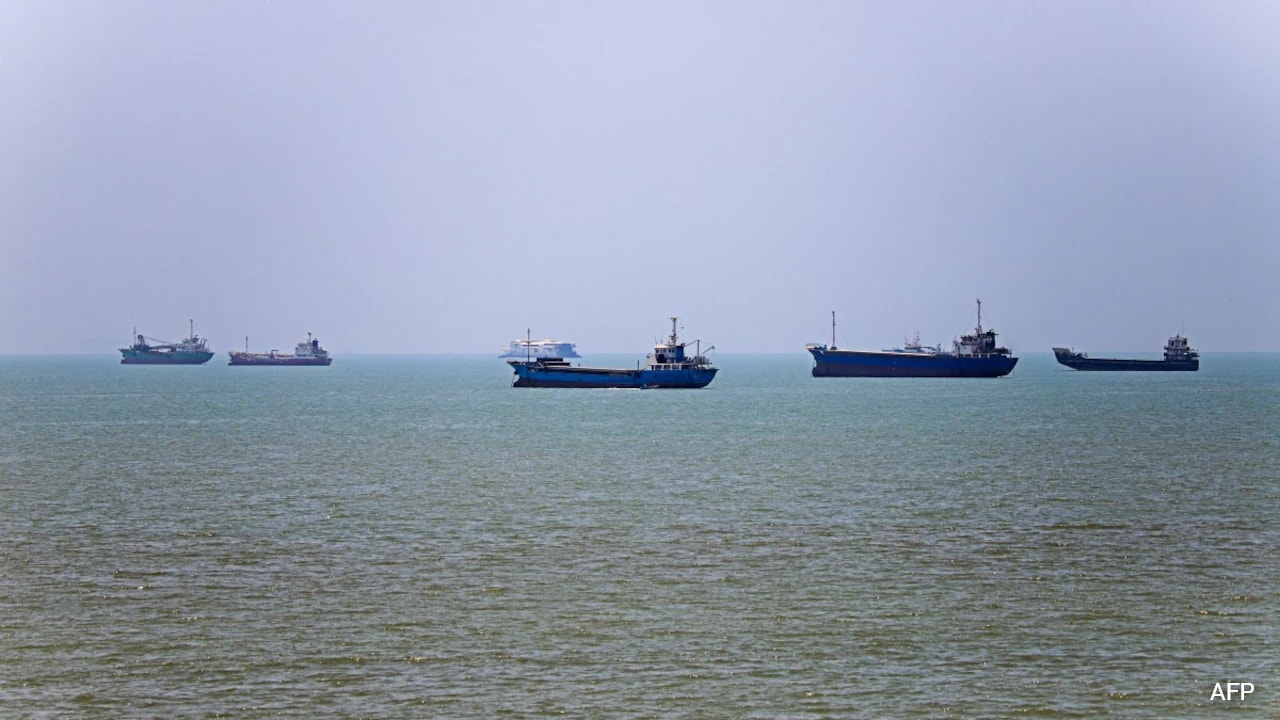
Right now, nearly 6,000 human beings are trapped on hundreds of cargo ships floating aimlessly in the Persian Gulf. They can't leave. They can't go home. They are effectively hostages to a geopolitical chess game they never asked to play.
When international headlines talk about the collapsing US-Iran ceasefire or fluctuating crude oil prices, they focus on numbers and nations. They forget the people out on the water. This isn't just a shipping delay. It's a massive humanitarian crisis happening right under our noses. Discover more on a related topic: this related article.
The Reality of Being Trapped in a Combat Zone
Imagine going to work and finding out your office is suddenly surrounded by ballistic missiles and naval mines. That's the daily reality for these crews. Since the broader conflict flared up in late February, the International Maritime Organization (IMO) confirmed at least 46 attacks on commercial shipping in and around the Strait of Hormuz. Fourteen seafarers have already lost their lives.
With the sudden collapse of the short-lived truce, the danger skyrocketed. Iranian forces struck three merchant vessels, triggering heavy retaliatory airstrikes on Iranian coastal installations near Bushehr. The temporary diplomatic safety net is gone. Additional reporting by NBC News delves into comparable views on this issue.
These crews are facing extreme psychological trauma. They are rationing supplies, staring at the horizon, and wondering if an incoming missile will hit their hull next. Ships that used to transit the Strait at a rate of 130 a day have slowed to a trickle.
The Broken Systems Leaving Crews Behind
Many people wonder why these ships don't just turn around and sail away. It isn't that simple. Maritime logistics is a tangled web of international laws, corporate contracts, and flag-state regulations.
When a conflict escalates, shipping companies and operators face impossible choices. Leaving the Gulf requires passing through the narrow Strait of Hormuz, the exact bottleneck where the attacks happen. Captains cannot legally or safely move millions of dollars of cargo through an active crossfire without security assurances.
The flag states, the countries where these ships are registered, often provide little direct protection. Many vessels fly "flags of convenience" from small nations that lack the military might to escort them out of danger. The crews, largely made up of mariners from developing nations, are left holding the bag while billionaire shipowners argue with insurance underwriters over war-risk premiums.
Why This Crisis Will Hit Your Wallet Soon
If you think a shipping crisis in the Middle East won't affect your daily life, think again. The Persian Gulf handles a massive chunk of the world's energy supplies. The UN Economic Commission for Europe explicitly warned that this prolonged disruption will trigger severe energy market volatility.
Local markets are already seeing supply crunches. When global oil and gas distribution slows down, energy costs spike everywhere. You will see it at the gas pump and on your monthly utility bills. Supply chains are deeply interconnected, and a prolonged bottleneck in the Gulf ripples through global manufacturing and retail markets within weeks.
What Needs to Happen Next
The current hands-off approach from international bodies isn't working. Statements calling for restraint don't protect a sailor on an unarmored cargo vessel.
Immediate, concrete steps are needed from the global community to resolve this standoff.
- Maritime authorities must establish protected, internationally escorted humanitarian corridors to allow trapped vessels to exit the Gulf safely.
- Shipping companies must halt all non-essential transits through the Strait until verifiable security guarantees are established.
- Flag states must enforce immediate crew rotations, ensuring mariners who have exceeded their contract terms are safely evacuated via land or air ports in cooperative regional states.
The international community needs to treat these 6,000 mariners as trapped civilians, not acceptable collateral damage of energy logistics.