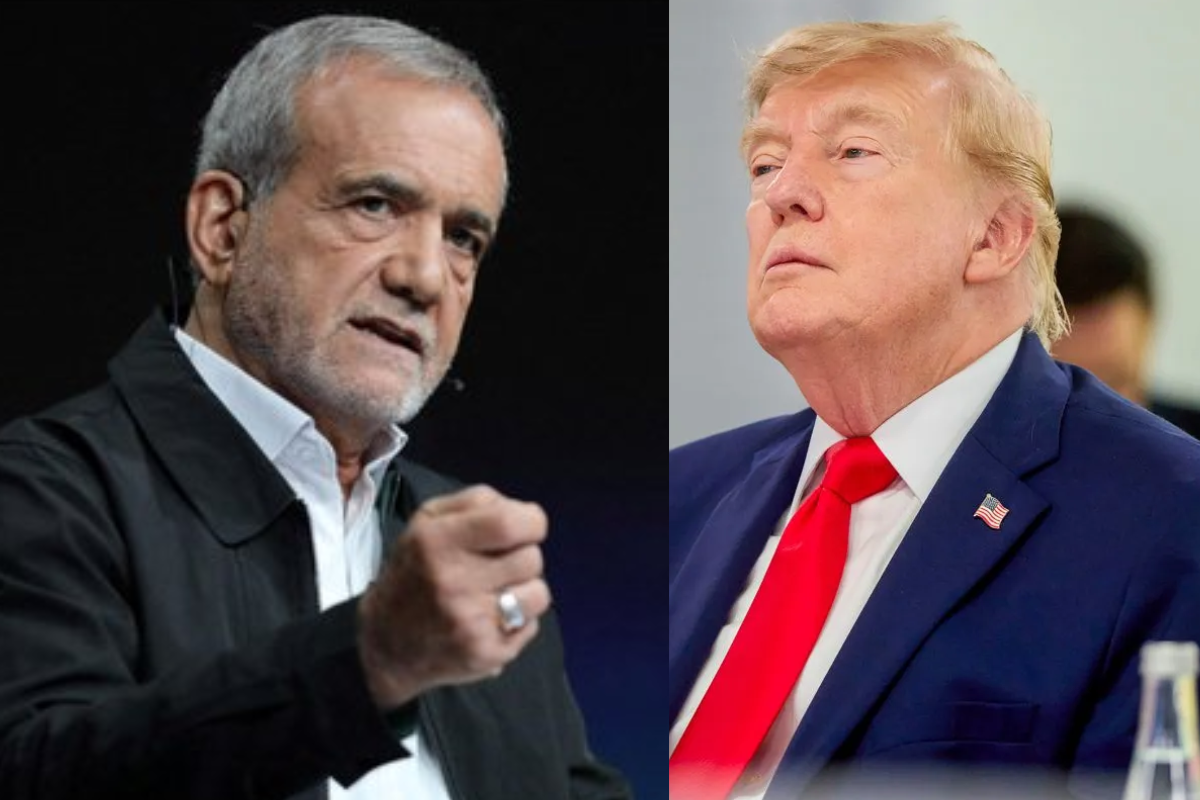
The global media landscape is obsessed with a shouting match that misses the mechanics of international finance. The narrative is simple, dramatic, and entirely wrong. On one side, the Iranian regime boasts about reclaiming $6 billion in frozen funds via a Qatari banking pipeline. On the other side, Donald Trump thumps his chest on the campaign trail, declaring that Iran will not see "even 10 cents" of that money.
Both sides are selling you a fairy tale.
The media treats this $6 billion like a giant suitcase of cash sitting in a Doha vault waiting to be spent on ballistic missiles or state-sponsored operations. It is a fundamental misunderstanding of how the global banking architecture, specifically the clearing system for sanctioned nations, actually functions. Having spent years tracking illicit capital flows and the hyper-regulated movement of sovereign wealth through correspondent banking networks, I can tell you the reality is far more bureaucratic—and far more cynical—than either Washington or Tehran wants to admit.
Iran does not get a blank check, and Trump cannot completely freeze funds that have already been legally repurposed through international agreements without collapsing the diplomatic credibility of the United States’ closest Gulf allies.
The Illusion of the 6 Billion Dollar Windfall
To understand why the mainstream coverage is flawed, you have to look at what this money actually is. This is not US taxpayer money. It is South Korean fiat currency. South Korea owed Iran $6 billion for oil purchases made legally under past sanctions exemptions. When those exemptions vanished, Seoul froze the funds in two South Korean banks, Industrial Bank of Korea and Woori Bank, to avoid triggering secondary US sanctions.
The agreement brokered to move these funds to Qatar did not hand Iran liquid cash. The funds were converted from South Korean won to euros, routed through European central banks, and deposited into six Qatari retail banks.
Here is the mechanism that the talking heads completely ignore: The money is locked in a strict, humanitarian channel.
Under the terms monitored by the US Treasury’s Office of Foreign Assets Control (OFAC), Iran cannot directly access these accounts. Instead, Swiss and Qatari intermediaries handle the transactions. If Iran wants to buy wheat, medical equipment, or life-saving pharmaceuticals, a vetted third-party vendor submits an invoice to the Qatari banks. The bank pays the vendor directly. The goods are shipped to Iran.
Not a single euro note enters Iranian territory.
The Flawed Premise of Money is Fungible
The most common counterargument from hawkish foreign policy analysts is that "money is fungible." The logic goes like this: If Qatar pays for Iran’s medicine, Iran can take the $6 billion it would have spent on medicine and redirect it to regional proxies or military hardware.
This sounds intellectually sharp, but it ignores the brutal economic reality of modern Iran.
Iran was never spending $6 billion of its domestic budget on high-quality medical imports or specialized food security programs for its citizens. The regime routinely starves its civilian infrastructure to fund its defensive and offensive military apparatus. The domestic budget for healthcare is already minimal. You cannot "free up" money that you were never planning to spend in the first place.
Furthermore, the domestic Iranian economy operates under severe hyperinflation and a massive budgetary deficit. When the regime gets access to a humanitarian channel, it does not create a surplus of local currency; it merely alleviates a critical shortage of physical goods that prevents domestic riots. The fungibility argument falls apart when you analyze the balance sheets of the Iranian Central Bank. The regime cannot pay a local missile technician or an Iraqi militia commander in specialized medical invoices cleared by a Qatari compliance officer.
Trump’s 10 Cents Rhetoric Meets SWIFT Reality
Now let us dismantle the other side of the political theatre. When Donald Trump claims Iran will not get "10 cents," he is playing to a domestic audience while ignoring the structural realities of international law and Gulf diplomacy.
Can a US President single-handedly pressure Qatar to freeze these funds indefinitely? Yes, through executive orders and threat of secondary sanctions. But doing so carries a massive, unadvertised downside that state departments rarely talk about openly.
Qatar is a Major Non-NATO Ally of the United States. It hosts Al Udeid Air Base, the forward headquarters of the US Central Command. The transfer of the $6 billion was executed with explicit American guarantees to the Qatari government that acting as a financial intermediary would not jeopardize their standing or expose their sovereign banks to legal liability.
If Washington arbitrarily tears up that agreement because of a change in political administration, it signals to every Middle Eastern ally that American diplomatic guarantees have a shelf life of exactly four years. It destroys the weaponization of the dollar. If allies realize that the US will retroactively punish them for participating in US-sanctioned humanitarian channels, they will accelerate their pivot toward non-dollar clearing systems, such as China’s CIPS (Cross-Border Interbank Payment System).
By attempting to deny Iran its "10 cents," a heavy-handed US policy risks losing the very compliance mechanisms that allow Washington to monitor these funds in the first place. Inside the Qatari channel, the US Treasury sees every single invoice. Pull the plug completely, and you push Iran deeper into the black market shadow banking network based in the UAE and East Asia, where Western intelligence has zero visibility.
The Real Winner is Neither Washington Nor Tehran
If Iran cannot spend the money on weapons, and the US cannot permanently freeze it without breaking its diplomatic word, who actually benefits from this geopolitical deadlock?
Look at Doha.
Qatar is not managing $6 billion out of the goodness of its heart. Large-scale, hyper-compliant sovereign funds sitting in commercial banks generate massive liquidity benefits. Qatari financial institutions hold these euro-denominated balances, gaining capital depth that supports their own domestic lending and international investments. The transaction fees alone for clearing highly complex, multi-vetted humanitarian invoices are incredibly lucrative.
Meanwhile, the Iranian public gets trickle-down access to basic medical supplies, while the regime in Tehran uses the mere announcement of the $6 billion to temporarily stabilize the crashing open-market value of the Iranian rial. It is psychological economics. The regime lies to its public, claiming they won a massive financial victory over the West, while the US political machine lies to its voters, claiming they are either starving a rogue state or maintaining absolute control.
Stop asking whether Iran will use the $6 billion to build rockets. They can’t. Stop asking if the US can cleanly take the money back. They can’t without cracking the foundations of their own alliance network. The $6 billion is not a financial weapon; it is a permanent diplomatic hostage, designed to keep both sides talking while the intermediaries cash the checks.