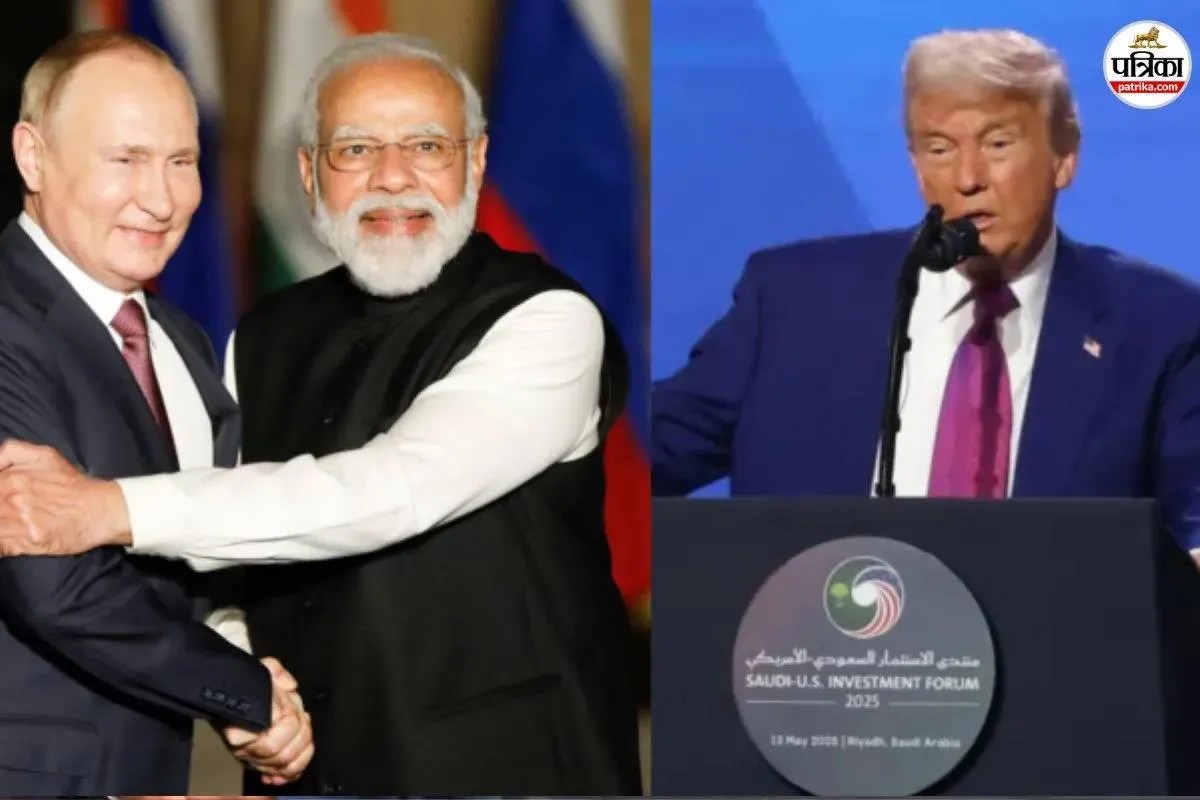
The financial press is having another collective panic attack over Western sanctions. Following the latest round of US restrictions targeting Russia’s shadow banking networks and third-country enablers, headlines are screaming about a catastrophic 500% tariff threat hanging over India. It is a spectacular exercise in fear-mongering. Analysts are breathlessly debating whether New Delhi will succumb to secondary sanctions or if the rupee-ruble trade mechanism will collapse under Washington's pressure.
They are asking the wrong questions because they fundamentally misunderstand how geopolitical leverage works in a multipolar trade system.
The premise that the United States will slap retaliatory 500% tariffs on Indian goods for buying discounted Russian crude or maintaining defense ties is economically illiterate and politically impossible. I have watched analysts misread Washington’s enforcement mechanisms for a decade, always predicting a hammer that never falls. The reality is far more transactional, cold, and favorable to New Delhi. Washington is not about to tank its most critical Indo-Pacific alliance over a spreadsheet dispute in Moscow.
The Flawed Premise of the 500 Percent Penalty
To understand why the panic is manufactured, look at where that absurd 500% figure actually comes from. It does not exist as a standard punitive measure for sanctions evasion. In US trade law, anti-dumping and countervailing duties can occasionally reach astronomical percentages—such as the historic tariffs on certain Chinese steel imports—but these are strictly regulated domestic economic protections administered by the International Trade Commission. They are not arbitrary foreign policy weapons used to punish a strategic partner for buying oil.
Applying a blanket tariff of that magnitude on Indian IT services, pharmaceuticals, or textiles would trigger an immediate supply-chain crisis inside the United States. American corporations rely too heavily on Indian tech talent and generic drugs to survive a sudden trade severed by ideological purity.
When Washington levies secondary sanctions, it does not use blunt tariffs. It uses targeted financial isolation—cutting specific banks off from the SWIFT network or freezing dollar-denominated assets. Threatening India with a 500% trade penalty is a phantom menace designed to generate clicks, not a viable policy option on any desk in the State Department.
Washington Needs New Delhi More Than It Admits
The lazy consensus ignores the foundational reality of modern geopolitics: the United States needs India as a counterweight to China far more than it needs to completely plug the leaks in the Russian oil embargo.
Every time a new package of sanctions drops from the Office of Foreign Assets Control (OFAC), the media treats it as an absolute decree. In practice, sanctions are a game of managed exceptions. I have negotiated compliance frameworks under various western regimes; the system runs entirely on waivers, carve-outs, and deliberate blind spots.
Consider the mechanics of the G7 price cap on Russian crude. The policy was never designed to stop Russian oil from flowing to global markets. If Russian oil vanished tomorrow, global crude prices would spike past $150 a barrel, triggering a massive political backlash for the ruling party in Washington. The goal was to keep the oil flowing while forcing Russia to sell it at a discount, stripping the Kremlin of premium profits.
India played this hand perfectly. By purchasing discounted Russian Urals, refining it, and exporting the processed petroleum products straight back to Europe and the US, Indian refiners stabilized global energy markets. Washington knows this. They publicly grumble to satisfy domestic political audiences, but behind closed doors, they breathe a sigh of relief that New Delhi's buying power kept global inflation from spiraling completely out of control.
The Indian Banking Pivot That the Media Misses
The real friction is not happening in the tariff department; it is happening in the compliance offices of state-owned banks. This is where the contrarian reality sets in for India. While the country will not face a trade war, it does face a genuine operational headache.
When the US treasury targets third-country financial institutions that facilitate transactions with Russia's military-industrial base, Indian banks do not fight back with ideological rhetoric. They quietly comply. State Bank of India and other major lenders have consistently halted transactions that cross clear red lines because their access to the US dollar clearing system is non-negotiable.
The disruption is not a macro-level economic collapse; it is an administrative bottleneck. The rupee-ruble trade mechanism has stalled repeatedly not because of political hostility, but because of a basic trade asymmetry. India buys vast amounts of energy from Russia but exports relatively little back. This leaves Russian banks holding massive reserves of Indian rupees that they cannot easily spend or convert.
Fixing this does not require surviving a tariff war. It requires diversifying trade routes, utilizing alternative currencies like the UAE dirham, and expanding non-sanctioned manufactured exports to Russia to balance the ledger.
The Cost of the Contrarian Stance
Let us be completely transparent about the downside of this strategy. India’s defiant pragmatism is not free. By walking the tightrope between Western financial networks and Eurasian energy markets, Indian multinationals face a permanent "compliance tax."
Every cross-border transaction requires double the legal scrutiny. Mid-sized Indian engineering and tech firms that want to expand into Central Asia or eastern Europe are forced to vet every single client through layers of Western software to ensure they do not accidentally trigger an OFAC red flag. It slows down business velocity. It raises the cost of capital. That is the real penalty India pays—not a spectacular 500% tariff wall, but a slow, grinding administrative friction that complicates global expansion.
Stop Preparing for a Trade War That Is Not Coming
Corporate boards in India need to stop reacting to sensationalist headlines about impending Western economic sanctions. The bilateral trade relationship between the US and India surpassed $190 billion recently for a reason: it is anchored by deep mutual economic necessity and shared strategic anxieties regarding Beijing.
If you are running a business, do not waste resources drafting contingency plans for a sudden, massive tariff hike on Indian exports. That is a ghost story told by commentators who do not understand the difference between an anti-dumping investigation and a secondary sanctions regime.
Instead, focus your energy on the real vulnerabilities. Audit your supply chains for indirect exposure to sanctioned Russian entities, ensure your treasury departments can navigate shifting multi-currency settlement systems, and accept that doing business in a fractured world means paying a premium for bulletproof compliance. The West will keep issuing press releases, India will keep buying what it needs, and the trade will continue to flow. Move past the noise.