You can't buy back your history once you sell it to a television network.
Today, getting a ticket to Worthy Farm requires entering a high-stakes online lottery, uploading biometric data, and spending hundreds of pounds just to stand in a corporate-sponsored field. Corporate logos gleam under the Somerset sun. Well-behaved crowds film headline sets on smartphones, completely aware that millions are watching the high-definition live stream at home. Recently making news lately: The Weight of the White Stetson.
It wasn't always a brand.
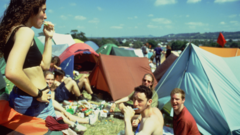
The 1993 Glastonbury Festival stands as a monument to a lost world. It was the absolute last time the event existed entirely for the people inside the fence, completely unobserved by the outside world. There were no BBC cameras broadcasting every angle. Phone masts didn't exist on the property. No one checked your identity at the gate because there weren't any high-tech gates to begin with. More information into this topic are detailed by E! News.
A hundred thousand people gathered in a Somerset valley, and for three days, they were completely themselves.
The Field Before the Fences
What made 1993 special wasn't just the music. It was the utter lack of modern control systems. If you wanted to go, you bought a physical ticket from an indie record shop, or you simply found a weak spot in the perimeter and climbed over. Gatecrashing was a core part of the infrastructure. Travelers, punks, ravers, and dropouts mixed with paying punters, creating a social experiment that simply cannot exist under modern event licensing laws.
Look at how the festival functioned that year. The Green Fields operated on an economy of barter and goodwill. The Stone Circle at sunrise wasn't a curated photo opportunity; it was a chaotic, spiritual decompression chamber. People didn't watch the event through screens because they were too busy living inside the chaos.
When you look back at the footage captured by independent filmmakers that summer, the contrast with today is staggering. You see massive parachute games in the middle of muddy lanes. You see endless queues for free Hare Krishna food. It was an unscripted, raw gathering where the boundary between performer and audience barely existed.
Bands Playing for the Field, Not the Cameras
The lineup in 1993 captured a transitional moment in British music history. The indie scene was mutating, electronic music was taking over the underground, and Britpop was just starting to open its eyes.
Consider these moments from that weekend:
- The Verve made their very first festival appearance, playing an early afternoon slot that felt more like a psychedelic riot than a standard rock set.
- Spiritualized took the stage and reportedly spent their entire performance fee on a massive, unauthorized fireworks display that lit up the Somerset sky. They didn't do it for a broadcast highlight reel. They did it because they wanted to melt the brains of the people standing in front of them.
- The Orb turned a tent into an ambient space station, keeping thousands of sleep-deprived ravers moving through the damp dawn hours.
- The Lemonheads and Porno for Pyros brought a messy, American alternative energy that felt dangerous and unpredictable.
None of these artists were checking their social feeds after walking offstage. There were no digital reviews dropping five minutes after the final encore. The music lived and died in the air above the grass.
The Arrival of the Corporate Superfence
The sheer freedom of the early nineties eventually broke the system. By the end of the decade, the number of gatecrashers drastically outnumbered ticket holders. The 2000 festival saw an estimated 250,000 people flood the site, despite only 100,000 tickets being officially sold. Local councils panicked, safety regulators threatened to pull the license, and the old-school model faced cultural bankruptcy.
The turning point came quickly. The festival took a fallow year in 2001 to completely reinvent its security infrastructure. When it returned in 2002, everything changed.
The organizers brought in outside logistics management and installed a massive, impenetrable "superfence." It worked perfectly to control the crowd numbers, but it permanently altered the spirit of the event. The wall kept out the chaotic element—the travelers, the penniless romantics, and the anarchic punks who gave the festival its dirt and its soul.
How to Touch that Spirit Today
You can't go back to 1993, and you certainly can't build a time machine to experience Worthy Farm before the corporate cash arrived. But you can still find pockets of that unfiltered culture if you know where to look.
First, stop trying to get into the major commercial festivals. The magic has moved away from the main stages. Seek out smaller, independent gatherings that intentionally limit their capacity to under five thousand people. Events like Green Man or local, unlisted underground forest raves still prioritize community over profit margins.
Second, put the phone away. If you find yourself at a live show, commit to the space you're actually standing in. The obsession with documenting every second for an digital audience kills the spontaneous energy that made old-school gatherings legendary.
The lesson of 1993 is simple. The best moments happen when no one is watching. Go find a field, leave the network behind, and learn to get lost again.
If you want to understand the raw reality of this era without the modern corporate polish, watch the independent documentary Glastonbury the Movie. This film captures the raw essence, the muddy paths, and the unfiltered midsummer madness of the festival's legendary 1993 run without any voiceovers or talking heads telling you what to think.