The water of a Texas lake in late spring isn’t clear. It is a thick, murky green, heavy with silt and the smell of sun-baked algae. Standing on the shore, you can usually hear the gentle lap of small waves against the mud, the buzz of dragonflies, and the distant hum of a highway.
But on this particular afternoon, the soundtrack was entirely different. It was the sound of a high-torque electric motor whining against resistance. It was the sound of spinning tires churning through wet clay. And then, the terrifyingly sudden sound of absolute silence.
We have all seen the promises stamped in cold, hard stainless steel. For the past few years, automotive marketing has shifted away from miles-per-gallon and safety ratings toward something far more primal: total invincibility. We are sold apocalyptic fortresses on wheels. Vehicles designed not just to commute, but to survive.
When Tesla announced the Cybertruck, one of the most polarizing claims thrown into the public ether was its supposed capability to double as a boat. "Wade Mode" became a talking point in forums and bars across the country. The truck would pressurize its cabin, raise its air suspension, and conquer the elements. It was a intoxicating idea. Buy this truck, and you are no longer bound by the infrastructure of man. You can drive through the apocalypse. Or, at the very least, across a local lake.
Then reality entered the chat.
Imagine a hypothetical truck owner named David. He isn’t a bad guy. He is successful, tech-savvy, and perhaps a little too trusting of the engineering promises made by billionaires on social media. David spent months waiting for his VIN delivery notification. He proudly parked the angular, brutalist wedge in his driveway, turning the heads of every neighbor on the block. He felt bulletproof.
So, when David and his friends found themselves down by the water on a hot Texas day, the temptation was entirely predictable. The shoreline beckoned. The "Wade Mode" button on the massive touchscreen interface practically dared him to press it.
What followed was not a triumphant display of futuristic amphibious engineering. It was a slow-motion disaster.
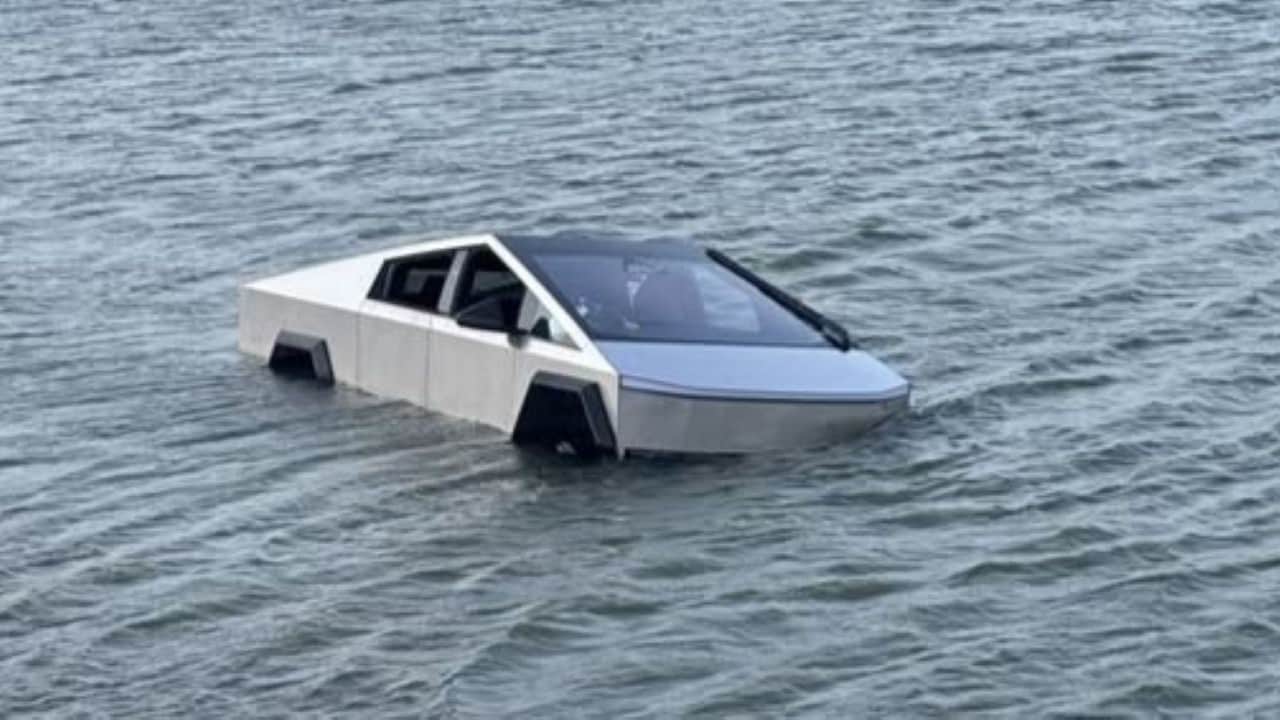
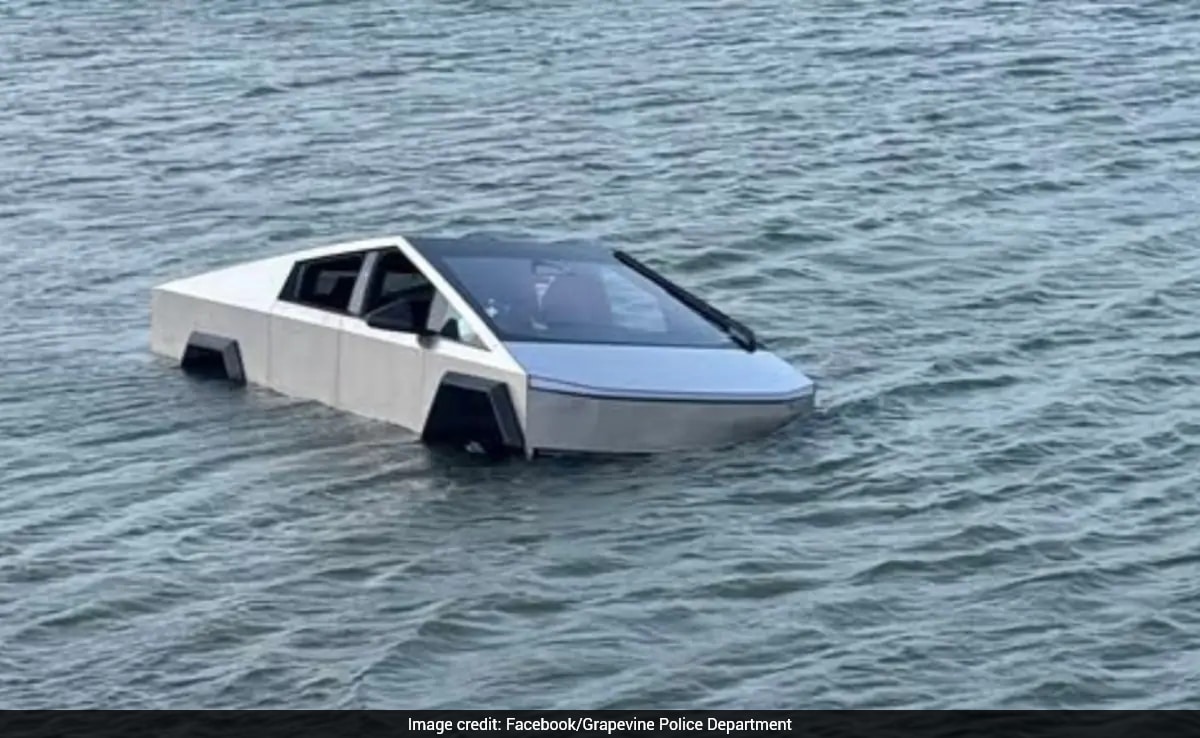
The truck rolled into the water, its massive all-terrain tires splashing through the shallows. For a moment, it felt like magic. The stainless steel body gleamed against the muddy water. But lakes do not have concrete bottoms. Beneath the surface lies a treacherous, unpredictable world of shifting silt, drop-offs, and dense mud that acts like quicksand under heavy loads.
The Cybertruck is not a light vehicle. It weighs over 6,600 pounds. When that massive amount of concentrated mass meets a soft, sloping lakebed, physics takes over, completely indifferent to marketing hype.
The tires lost traction. The truck began to slide deeper into the murky water, tilting backward as the weight of the heavy battery pack and rear drive units dragged it down. Within minutes, the cabin was breaching. Water crept up the geometric door panels. The electronics, designed to withstand a heavy downpour or a deep puddle, began to short-circuit under the immense pressure of a full submersion.
Onlookers pulled out their phones, capturing the exact moment the dream of the amphibious super-truck sank to the bottom of a Texas lake. A hundred thousand dollars of cutting-edge technology, reduced to an expensive anchor.
This isn’t just a story about a rich guy ruining an expensive toy. It points to a much deeper, more troubling friction point in modern society: the widening chasm between digital simulation and physical reality.
We live in an era where software updates can change how a physical machine behaves overnight. If your phone is buggy, a patch fixes it. If your electric truck lacks a feature, an over-the-air update unlocks it. This constant mutability gives us a false sense of control. We begin to believe that software can override the fundamental laws of nature.
But the physical world does not care about code.
Hydrodynamics is a brutal, unyielding science. To make a vehicle float and navigate through water safely, it requires specific displacement, hull design, and water-tight sealing that goes far beyond a pressurized cabin and a raised suspension. True amphibious vehicles look like boats with wheels for a reason. They have props, rudders, and bilge pumps. They are shaped to displace water, not slice through it like a futuristic blade.
When you drive a three-ton block of steel and lithium-ion batteries into a body of water, you are playing a high-stakes game with buoyancy. If the vehicle's volume doesn't displace an amount of water equal to or greater than its massive weight, it will sink. Every single time. No software update can patch gravity.
Consider the psychological aftermath of an event like this.
The crowd on the shore didn’t watch with solemn respect. They laughed. They cheered. They uploaded the footage to TikTok and X within seconds, watching the view counts climb into the millions. There is a specific kind of public schadenfreude reserved for the failure of ultra-expensive, hyper-hyped technology.
When a standard sedan floods in a flash flood, it is a tragedy. When a Cybertruck sinks in a lake because the driver wanted to test its limits, it becomes a meme.
The driver didn't just lose a truck that day; they lost the armor of cool anonymity. They became the main character of the internet for a grueling forty-eight hour news cycle. That is the hidden tax of owning the future. When it works, you look like a visionary. When it fails, you are a cautionary tale.
But the real problem lies elsewhere, buried deep within our collective relationship with modern consumer tech.
We are being conditioned to outsourcing our common sense to algorithms and feature lists. We trust the backup camera over our own mirrors. We trust the GPS over the road signs telling us a bridge is out. And we trust a mode called "Wade Mode" to protect us from a watery grave.
Decades ago, if you drove a truck into a lake, everyone knew exactly who to blame: the driver. There was no ambiguity. You misjudged the depth, you got stuck, you paid the price. Today, the lines of accountability are incredibly blurry. Drivers feel misled by bombastic corporate claims, while manufacturers include tiny lines of fine print in the owner's manual that legally absolve them of any liability when a user actually tries to do what was teased on stage during a keynote presentation.
The manual for the Cybertruck does, in fact, mention Wade Mode. It also mentions that damage caused by water submersion is not covered under warranty. It warns that the feature is meant for crossing shallow, stagnant water—not acting as a jet ski. But who reads the fine print when they are standing on the edge of a lake with a crowd of friends watching?
The rescue operation for a sunken electric vehicle is a nightmare of its own making.
You cannot simply hook a standard tow strap to the bumper of a submerged EV and pull it out with a buddy's Jeep. The weight alone makes it an incredible engineering challenge. Then there is the risk of a compromised battery pack. Lithium-ion batteries and prolonged submersion in lake water can lead to catastrophic internal shorts. Even after the vehicle is dragged out of the mud, the risk of a thermal runaway fire remains high for days.
Imagine the scene as the flatbed tow truck finally arrives. The onlookers have gone home. The sun is setting, casting long, orange shadows across the water. The truck emerges from the lake, dripping with slime, mud clinging to the pristine stainless steel panels. The interior is ruined. The smell of wet carpets and fried wiring fills the air.
It is a monument to hubris.
We will continue to see these clashes between marketing narratives and the natural world. As vehicles become more advanced, the temptation to push them to their absolute limits will only grow. We want to believe that we can buy our way out of vulnerability. We want to believe that the right piece of engineering can make us untouchable.
But the lake always wins. Mud doesn't care about brand loyalty. Silt doesn't care about stock prices.
The next time you find yourself at the edge of the water, looking at a path that cuts through the wild, remember the sight of that silver wedge tilting helplessly into the Texas mud. The greatest feature a vehicle can ever possess isn't found in a touchscreen menu or an air suspension matrix.
It is the judgment of the person behind the wheel.